
 GST : 09AMPPJ0457M1ZI
 Write a Review
Our Services
Leading Manufacturer, Supplier & Retailer of Aerial & Mobile Lidar Survey Service, Total Station Survey Service, Contour Survey Service, Development Survey Service and Land Survey Service.

Our Aerial & Mobile LiDAR Survey Service delivers highly accurate, fast and detailed 3D geospatial data for diverse surveying needs. Using advanced LiDAR technology mounted on drones, aircraft and mobile vehicles, we capture precise terrain, infrastructure and environmental information with exceptional clarity. Our service supports urban planning, highway design, mining, utilities, land development and environmental studies. We provide point cloud processing, digital elevation models, contour mapping and feature extraction with superior accuracy. With efficient data collection, reduced field time and enhanced safety, we offer reliable LiDAR solutions that help clients make informed decisions and execute projects with confidence.

Total Station Surveyor – Precision Surveying with Advanced Instruments
A Total Station Surveyor is a professional who uses advanced electronic surveying instruments known as Total Stations to measure angles, distances, and elevations with high accuracy. These surveyors play a vital role in land development, construction, infrastructure projects, and property documentation by delivering precise survey data and digital maps.
The Total Station integrates electronic distance measurement (EDM), angle measurement, and data recording, allowing surveyors to collect field data quickly and accurately. A Total Station Surveyor can generate detailed topographic maps, 3D terrain models, and CAD-based layouts, which are crucial for engineering design and project execution.
Key Applications of Total Station Surveys:
Land & Property Surveys: Accurate boundary marking and legal documentation.
Construction Layouts: Aligning foundations, columns, roads, and utilities.
Topographic & Contour Mapping: Recording terrain levels for planning.
Infrastructure Projects: Supporting roads, bridges, railways, pipelines, and drainage systems.
Volume Calculations: Estimating earthwork for excavation and embankments.
Hiring a professional Total Station Surveyor ensures speed, accuracy, and efficiency compared to traditional survey methods. Their data eliminates manual errors, saves time, and provides precise inputs for architects, engineers, and developers. Total Station surveys are also widely accepted for government approvals, legal disputes, and land registration due to their reliability.

A contour survey maps the elevation and shape of a parcel of land by using contour lines, which connect points of equal height. This type of survey is crucial for civil engineering and construction projects, as it helps determine the terrain's slope, potential for drainage, and suitability for building. It is often the first step in planning any construction project.

Development Surveyor – Supporting Sustainable Urban & Rural Growth
A Development Surveyor plays a crucial role in shaping urban and rural development by providing accurate land measurement, mapping, and planning services for residential, commercial, and infrastructure projects. Their expertise ensures that every project complies with egal regulations, optimizes land utilization, and supports long-term sustainability**.
Using advanced tools such as Total Station, GPS/DGPS, Drone Surveys, GIS Mapping, and AutoCAD Designing, development surveyors deliver precise data required for land acquisition, plot division, layout planning, and construction alignment. This data forms the foundation for approvals from development authorities, municipalities, and government bodies, ensuring smooth project execution.
Key Responsibilities:
Land Assessment & Demarcation: Identifying exact property boundaries to prevent disputes.
Topographic & Contour Surveys:Mapping terrain details for accurate site planning and infrastructure design.
Layout Design & Planning: Preparing CAD-based layouts for housing colonies, townships, industrial parks, and commercial complexes.
Infrastructure Support:Conducting surveys for roads, drainage systems, pipelines, and utilities within projects.
Legal & Compliance Assistance: Facilitating approvals from local development authorities (e.g., LDA) and ensuring adherence to RERA norms.
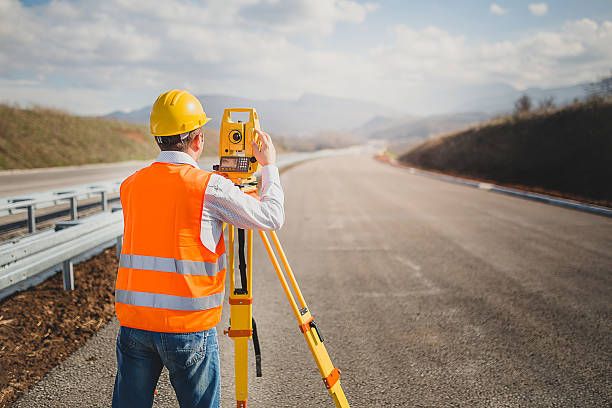
Land surveying is the science and technology of precisely measuring and mapping land to determine the location of natural and man-made features, establish property boundaries, and map the earth's surface. It uses mathematics, specialized tools like total stations and GPS, and legal principles to create accurate maps and legal documents essential for construction, property sales, and land development.
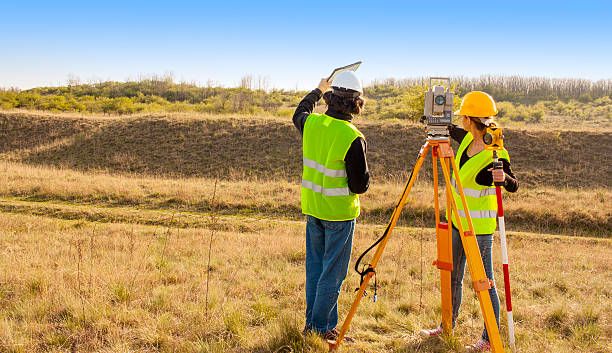
A topographic survey is a detailed map of a land area that records its natural and man-made features, including elevation, contours, and other physical characteristics. It provides a foundation for planning and design, helping with projects like construction, engineering, and land use management by showing the site's physical layout, slopes, and features like rivers, buildings, and vegetation.

Road Surveyor – Precision Surveys for Road & Highway Projects
A Road Surveyor plays a key role in the planning, design, and construction of roads, highways, and expressways. Their primary responsibility is to conduct detailed surveys that provide accurate data on land levels, alignment, gradients, and terrain conditions, which is crucial for engineers and planners to design cost-effective, safe, and durable road networks.
Using advanced instruments such as Total Stations, GPS/DGPS, Auto Levels, Drones, and GIS Mapping, road surveyors collect precise measurements of the land. These surveys include topographic mapping, contour studies, cross-section, and longitudinal profiles, vital for road alignment and construction planning.
Key Tasks of a Road Surveyor:
Road surveyors work closely with civil engineers, contractors, and government authorities to deliver reliable data that supports both new road construction and maintenance projects, reducing errors, minimizing costs, and ensuring long-lasting infrastructure.

Highway Surveyor – Precision in Road Network Development
A highway surveyor plays a crucial role in the planning, designing, and construction of modern road networks. Highway surveying involves the precise measurement and mapping of land to determine the most suitable routes for highways, expressways, and road infrastructure projects. Using advanced instruments such as Total Stations, GPS/DGPS, Auto Levels, and drones, highway surveyors ensure accuracy in alignment, gradients, curves, and elevations—vital for smooth and safe road construction.
The survey process begins with reconnaissance and feasibility studies, where surveyors evaluate terrain, soil conditions, and existing obstacles. Detailed topographic and alignment surveys are then conducted to prepare contour maps, cross-sections, and longitudinal profiles. These surveys help engineers and planners design cost-effective and sustainable highways while minimizing environmental and social impacts.
Skilled highway surveyors also provide construction layout services, ensuring that designed plans are executed correctly on-site. They mark centerlines, levels, and boundaries required for excavation, embankments, pavement layers, bridges, culverts, and other road features. Their expertise supports seamless coordination between engineers, contractors, and government authorities.
Highway surveyors are also essential for road widening projects, bypass construction, hill road development, and maintenance surveys. By leveraging modern surveying technologies, they help reduce errors, save time, and enhance efficiency in highway development.

GIS Mapping (Geographic Information System Mapping)** is a modern technology that captures, stores, analyzes, and visualizes spatial data to create highly accurate maps and models. It integrates geographic coordinates with descriptive information, making it an essential tool for urban planning, land management, infrastructure development, environmental monitoring, and resource management.
Using advanced tools like DGPS, Remote Sensing, Drones, and Satellite Imagery, GIS mapping provides detailed layers of information such as terrain features, land use patterns, utilities, roads, water bodies, and vegetation. These layers can be analyzed together to support decision-making for government bodies, engineers, developers, and researchers.
Key applications of GIS mapping include:
griculture & Irrigation: Soil analysis, crop monitoring, and water distribution planning.
GIS mapping is widely used by government agencies, surveyors, planners, engineers, and private organizations for its accuracy and efficiency. It not only reduces manual errors but also helps in predictive analysis, spatial planning, and real-time monitoring.

Drone Mapping Survey Services
Our Drone Mapping Survey services deliver high-accuracy aerial data for land surveying, planning, and construction projects. Using advanced UAV (drone) technology combined with RTK/PPK GPS and photogrammetry software, we capture detailed images and geospatial data of large and complex sites in minimal time.
Drone mapping provides precise orthomosaic maps, contour maps, elevation models (DEM/DTM), and 3D site models with centimeter-level accuracy. It is ideal for topographical surveys, land development, infrastructure projects, mining, road alignment, volume calculation, and progress monitoring.
Compared to traditional surveying methods, drone surveys are faster, cost-effective, and safer, especially for large or difficult-to-access areas. Our drone mapping solutions help engineers, architects, builders, and landowners make better planning and design decisions with reliable and up-to-date site information.


DGPS (Differential Global Positioning System) surveying is a high-accuracy method that uses a network of ground-based reference stations to correct standard GPS signal errors. By comparing a stationary reference station's known position with GPS signals, it generates correction data that is transmitted to mobile receivers, improving positional accuracy from meters to centimeters. This makes it ideal for applications requiring precision, such as land surveying, construction, and agriculture.

Bridge Surveyor – Expert Surveying for Safe and Durable Bridges
A Bridge Surveyor is a specialized professional responsible for conducting surveys required for the planning, design, construction, and maintenance of bridges. Bridge surveyors ensure accurate measurement of terrain, riverbeds, valleys, and approach roads, providing the technical foundation for safe and durable bridge structures. Their role is vital in infrastructure projects where precision and compliance with engineering standards are critical.
Using modern instruments such as Total Station, DGPS, Auto Level, Drone Mapping, and GIS technology, bridge surveyors collect detailed data on ground levels, water flow, soil conditions, topography, and structural alignments. This information is used by engineers to prepare alignment drawings, contour maps, cross-sections, and 3D models for bridge design.
Key Responsibilities of a Bridge Surveyor:
Bridge surveyors work closely with civil engineers, architects, contractors, and government agencies to ensure projects meet technical, environmental, and safety standards. Their expertise is crucial for highways, railways, metro systems, flyovers, and pedestrian bridges.

Railway Track Survey – Precision Planning & Mapping for Rail Infrastructure
A Railway Track Survey is a highly specialized survey conducted for the planning, design, construction, and maintenance of railway lines. It involves precise measurement and mapping of terrain to determine the most feasible and cost-effective alignment for tracks. Railway surveys ensure **safety, durability, and efficiency while complying with *engineering standards and government regulations.
Using advanced instruments such as Total Station, DGPS, Auto Level, Drone Mapping, and GIS technology, railway surveyors record data on ground levels, curves, gradients, and obstacles. This data is used to create topographic maps, alignment drawings, longitudinal and cross-sectional profiles, forming the foundation of railway engineering.
Key Applications of Railway Track Survey:
Route Selection & Alignment: Identifying the shortest, safest, and most economical path.
Earthwork Estimation: Calculating cut-and-fill quantities for track beds and embankments.
Bridge & Tunnel Planning: Surveying terrain for supporting structures.
Track Upgradation: Assessing existing lines for gauge conversion or capacity enhancement.
Drainage & Safety Checks: Designing proper slopes to prevent waterlogging and accidents.
Railway track surveys are essential for new railway lines, metro projects, high-speed corridors, freight corridors, and station expansions. They provide accurate data that helps engineers reduce construction costs, ensure smooth train movement, and minimize long-term maintenance.

Our GIS & CAD Survey Service provides accurate, data-driven mapping and drafting solutions for engineering, planning and land development projects. We combine advanced GIS technologies with precise CAD drafting to deliver detailed site maps, contour plans, utility layouts, topographic information and spatial analysis. Our team captures, processes and integrates geospatial data to create clear, scalable and project-ready drawings. Ideal for infrastructure planning, construction, land records, asset management and urban development, our service ensures reliability and clarity at every stage. With a focus on accuracy, efficiency and professional presentation, we deliver survey outputs that support informed decision-making and seamless project execution.


Canal Surveyor – Expert Planning & Surveying for Water Management
A Canal Surveyor is a specialized professional responsible for surveying, mapping, and planning canals for irrigation, drainage, navigation, and water management projects. Canal surveys are critical for ensuring proper water flow, alignment, and capacity, directly impacting agricultural productivity, flood control, and sustainable water distribution**.
Using advanced instruments such as Total Station, DGPS, Auto Level, Drones, and GIS Mapping tools, canal surveyors collect precise data on ground levels, cross-sections, longitudinal profiles, and surrounding topography**. This information helps engineers design canals that are structurally sound, cost-effective, and environmentally sustainable**.
Key Services of a Canal Surveyor:
Canal surveyors work closely with government irrigation departments, construction companies, farmers’ cooperatives, and water resource engineers to ensure accurate planning and execution. Their surveys provide the technical foundation for new canal construction, repairs, and expansion projects.


Layout Designing Survey – Accurate Planning for Residential, Commercial & Industrial Projects
A Layout Designing Survey is an essential step in the planning and development of residential, commercial, and industrial projects. It involves the precise measurement, division, and mapping of land into plots or sections according to approved design plans and legal regulations. This survey ensures accurate demarcation of boundaries, road alignments, open spaces, utility areas, and amenities, creating a clear and reliable blueprint for property developers, real estate companies, and landowners.
Using advanced instruments such as Total Stations, GPS/DGPS, Auto Levels, and Drone Technology, layout designing surveyors provide accurate data for drafting layouts that comply with local authority guidelines such as LDA (Lucknow Development Authority) approvals, RERA norms, and municipal standards. Proper layout planning not only enhances the functionality and aesthetics of a project but also ensures that land utilization is efficient, legally compliant, and future-ready.
 Mr. PJ Khan (ICS Technologies)
 1B1, Geeta Puri, Gomti Nagar, Lucknow, Uttar Pradesh - 226010, India
 https://www.mysurveyor.in
 Share us via