
 GST : 07BKFPK3598F1ZX
 Write a Review
Our Products
Abrasion Tester
2 Products availableTesting Apparatus
2 Products availableDie Cutting Machine
2 Products availableDensity Testing Equipment
1 Products availableJaw Crusher
1 Products availableCivil Engineering Test Equipment
1 Products availablePlastic Testing Equipment
1 Products available
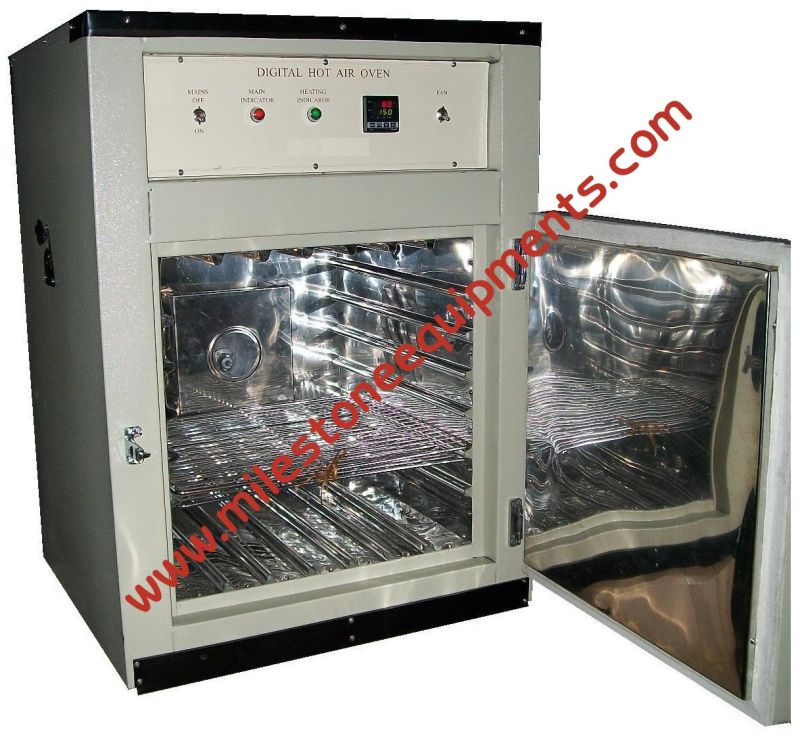
Double walled construction. Inner chamber made of anodized Aluminum / S. Steel Outer body made of mild steel is powder coated/painted. Temperature controlled by Digital Indicator and controller. The gap between the inner & outer chamber is filled with high grade glass wool to avoid the thermal losses and having perforated adjustable trays. Two pilot lamp on/off switch. Work on 220/230 VAC. Many Different size are available
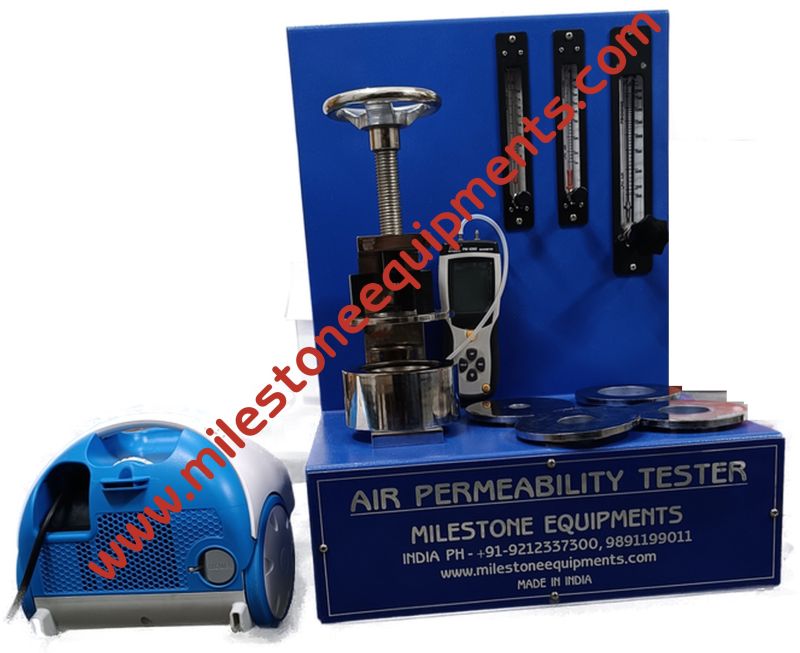
Air Permeability tester up to with four different type adaptor 5 cm2, 10 cm2, 20 cm2 & 38 cm2, with Manometer & Rota Meter.

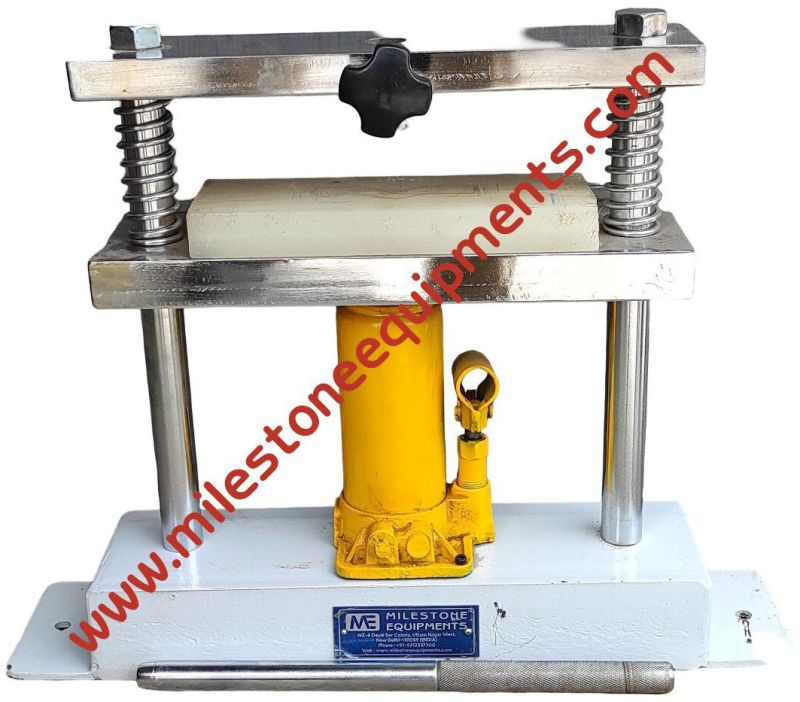
| Capacity | 10 Ton |
| Automation Grade | Semi Automatic |
| Type Of Testing Machines | Digital |
| Material | Mild Steel |
| Voltage | 440 or 220V |
| Size/Dimension | 150x700 mm or 100 x 500mm |
| Weight | 200 kg |
| Display Type | Digital |
| Speed | 1 KN |
| Ram dia | 63 mm |
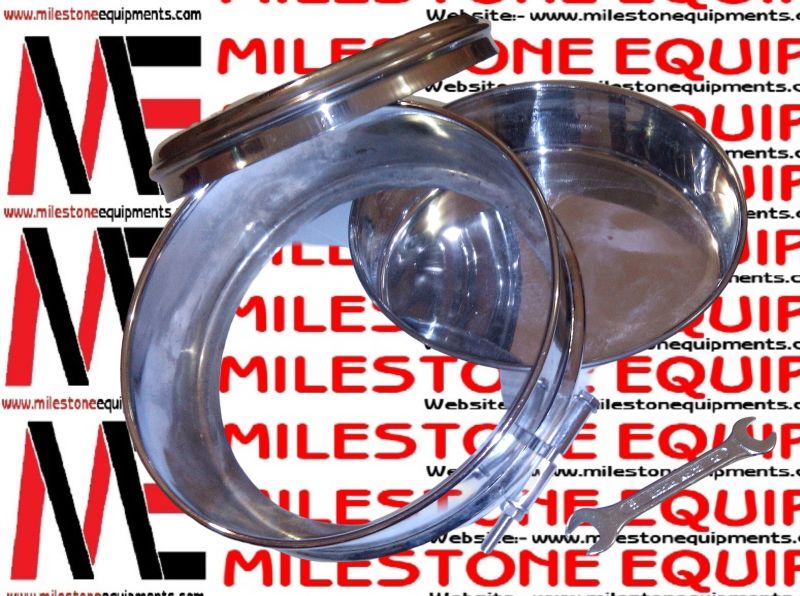
The test involves sieving rounded particle sizes for which 5% or less by weight pass through the geotextile. The Apparent Opening Size (AOS) is defined as ‘Retained On’ size of that fraction expressed as a standard sieve number (size). The test is widely used for relative comparison amongst the geotextiles. Thus AOS is a means of correlating geotextile pore structure to an equivalent screen mesh size. The apparatus consist of a 20 cm dia brass frame with clamp, a receiver and a lid Dry Sieve Test Apparatus.
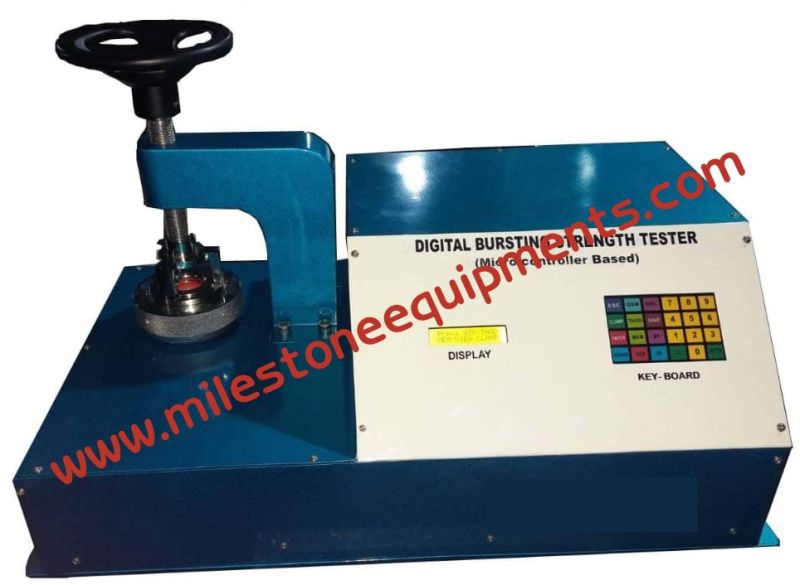
The Bursting Strength Tester is designed to find bursting strength of geotextile/fabric/leather/paper/paper board. A test specimen is held between two annular clamps under sufficient pressure to minimize slippage. The upper clamping surface which is in contact with the test specimens has a continuous spiral grooves. A circular diaphragm of rubber is clamped between the lower clamping plate & pressure cylinder so that before the diaphragm is stretched by pressure underneath it the center of its upper surface is below the plane of the clamping surface. The equipment is fitted with a motor driven cam mechanism, which increases fluid displacement on the lower side of the diaphragm at a specified rate. The equipment is fitted with an arrangement, which automatically brings down the pressure and stops the motor on completion of the test cycle. A maximum reading type pressure gauge gives the bursting pressure. The equipment is raggedly designed to give a long & trouble free life.
TECHNICAL SPECIFICATION
Capacity: 35kg /cm² and above
Opening in upper clamp: 30.5 mm diameter
Opening in lower clamp: 38.1 mm diameter
Rate of fluid displacement: 95 cc/ minute
Test fluid: Glycerin
Gear Box: Worm reduction type
Note: Digital type pressure gauge with and without pneumatic clamp type also available.

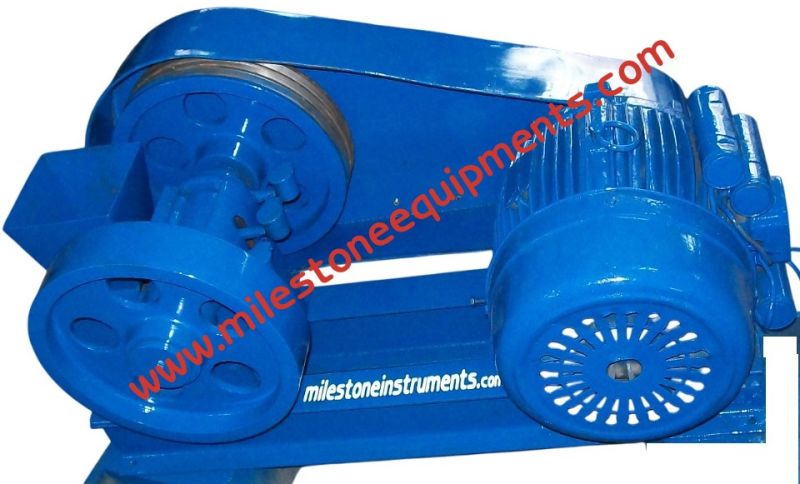
A crusher is a machine designed to reduce large rocks into smaller rocks, gravel, or rock dust for the lab testing purpose. Crushers may be used to reduce the size, or change the form, of waste materials so they can be more easily disposed of or recycled, or to reduce the size of a solid mix of raw materials (as in rock ore), so that pieces of different composition can be differentiated. Crushing is the process of transferring a force amplified by mechanical advantage through a material made of molecules that bond together more strongly
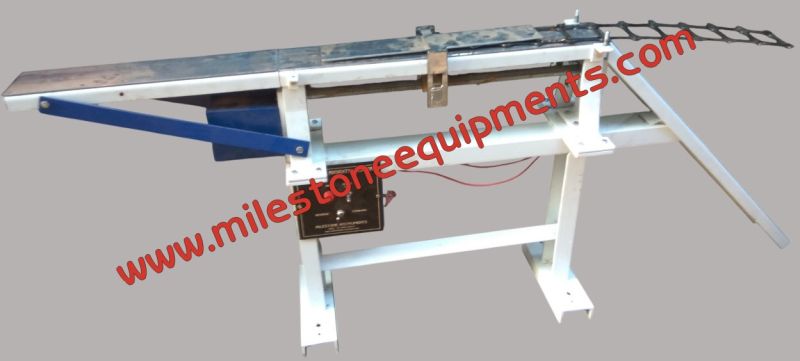
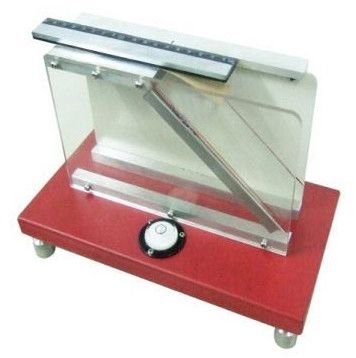
Flexural rigidity stiffness tester, specimen is slid along a table top parallel to its long dimension, until its leading edge projects from the edge. The overhang length is measured when the tip of the specimen is depressed under its own mass to the point where the line joining the top to the edge of the platform makes a 0.724 radians (41.5°) angle with the horizontal. From the measured length both bending length and flexural rigidity are calculated.
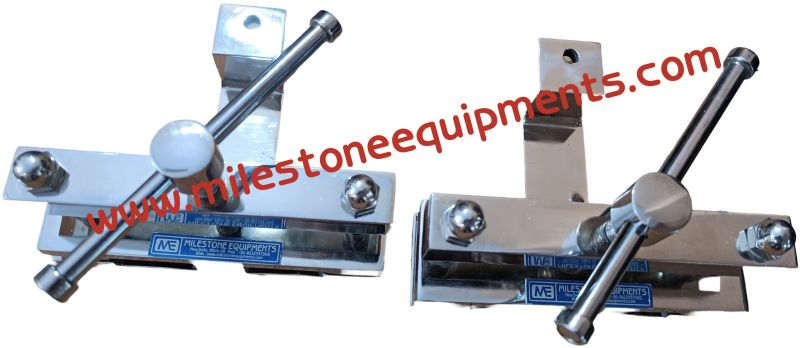
This test measures the ability of the geotextile to distribute concentrated loads. Specially devised clamps (25 mm wide) with a gauge length of 100 mm are placed across 200 mm square samples or 200 mm x100 mm samples. The sample is then subjected to tension at a specified rate until failure occurs. It is widely used by manufacturers as a quality control tool and as such is the most commonly reported tensile strength value. It can also be used for relative comparisons between geotextiles of the same type.
Meets: - ASTM D-4632,
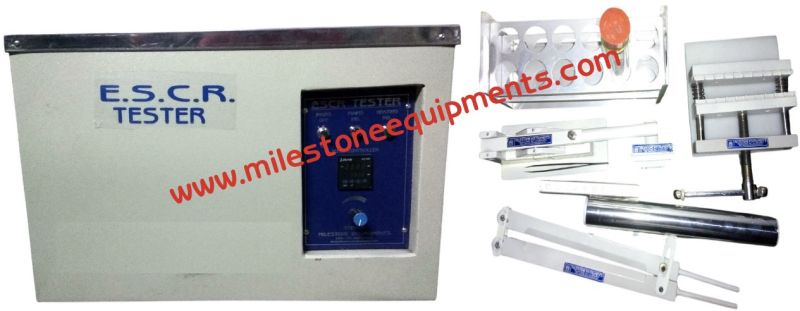
ESCR testing is used to test bending the test specimens and placing them in a holding clamp. The clamp and specimens are then placed in a test tube and immersed in reagent. The test tube is sealed and placed in a constant-temperature bath. Reference Standard ASTM D 1693
Technical details
Inner bath size: 12" X 12" X 14" (08 tubes), 20" X 20" X 15" (16 tubes),
MOC: Inner SS304 Outer MS.
Temperature Controller: Microprocessor based PID
Temperature Range: Ambient to 100 °C
Resolution: 0.1 °C.
Accessories: Test tube & rubber corks 6 nos. each.
Sample Bending tool: 01 No,
Sample Transferring tool: 01 No.
"C" Channel: 06 No's
Aluminium foil: 1 No each.
Sample Cutting Die: 1 No Each
Power consumption: 230 VAC/ 60 Hz.
Power: 1.25 kW or above
Paint: Powder coated
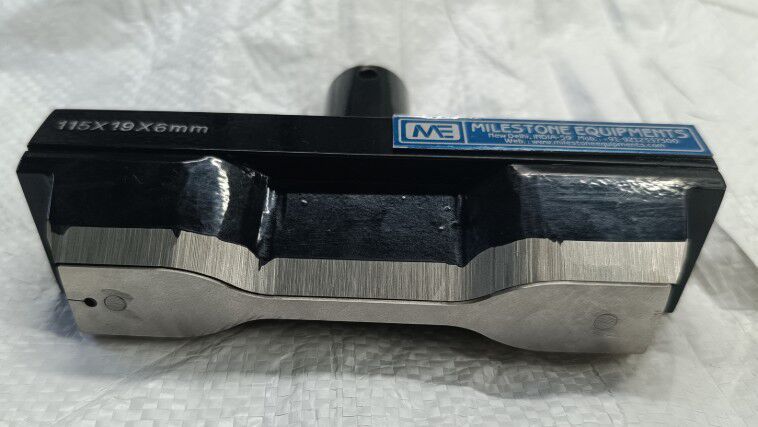
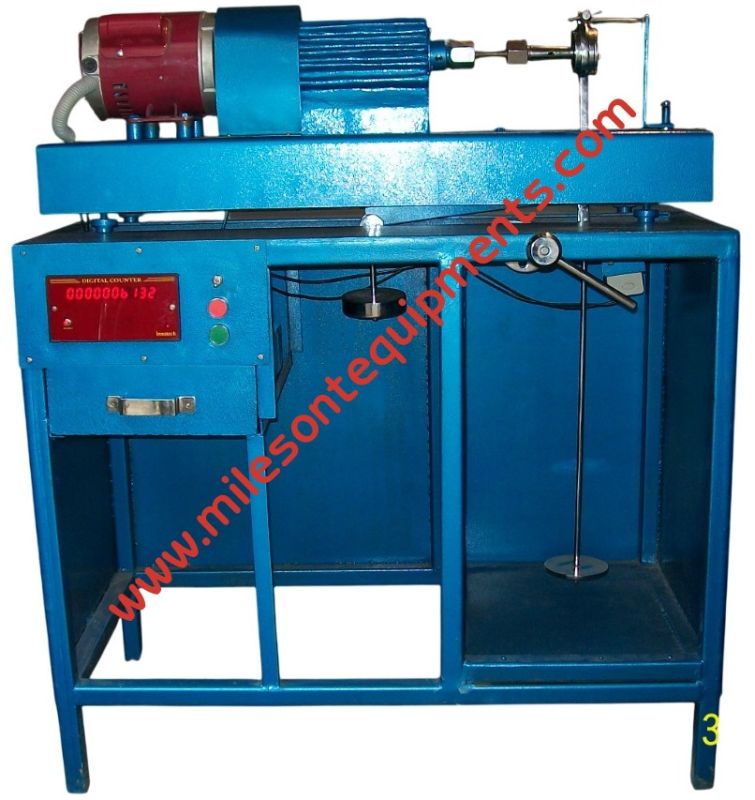
Testing machines are precisely manufactured using optimum quality components and progressive technology in line with industry norms. Moreover, these testing machines are checked against different quality measures so as to ensure their quality. We deliver these testing machines from our end after testing them against various parameters.
The standard 8 mm dia specimen is held in special holders at its ends
The bending moment is applied with the lever system and can be easily changed by moving a weight over the lever
A complete cycle of reversed stresses in all fibers of the specimen is produced during each revolution
Total number of revolution at which the specimen fails are recorded by a mechanical counter
An interlocking system puts off the motor at specimen failure
6 digit electronic counter instead of mechanical counter can be supplied at additional price
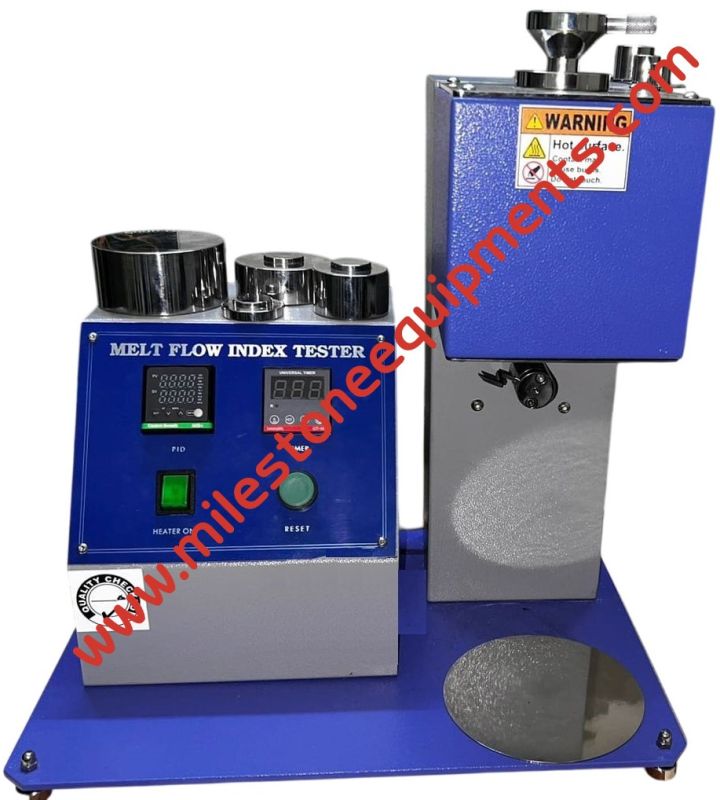
These testers are essential for measuring the flow properties of thermoplastic polymers. The melt flow index (MFI) is an important parameter in the quality control and development of plastic materials, providing insights into their viscosity and processability. Techplast's equipment is known for its precision, reliability, and compliance with industry standards.

The apparatus consists of two test drums of 14 cm dia and 10 cm effective length with 16 nos. of 4 mm dia rods provided circumferentially at equal spacing to hold the geotextile specimen in position. Two troughs to contain the test drums are supported on horizontal axis, facilitating free rotation and capable of being filled with distilled water to a level of 20 mm below the drum axis. The clearance between the trough and the geotextile could be maintained at about 40 mm. The apparatus is provided with a motor drive and a change gear assembly to enable rotation of the drums at a speed of 20 rpm.
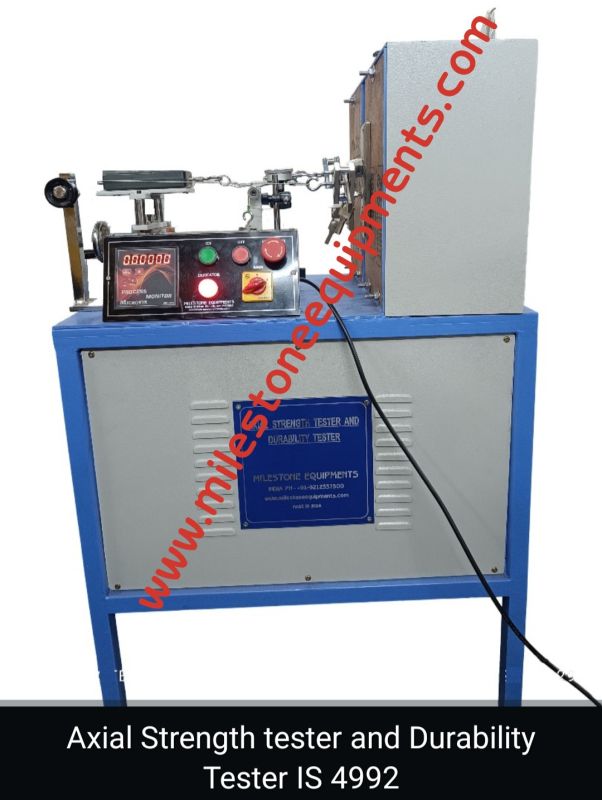
Durability test is having arrangement to rotate the handle with AC motor having gear box. The pre set type indicator is provide to check the total count. The arrangement is also provided to apply the load on the lever for testing.
Axial Strength test has been provided with the Digital force gauge (HTC make) having capacity of 100 Kg it is having the arrangement that force can be set by rotating wheel and one dial gauge also provided to check the deflection of the lever. The arrangement is also provided to apply the load on the lever while testing

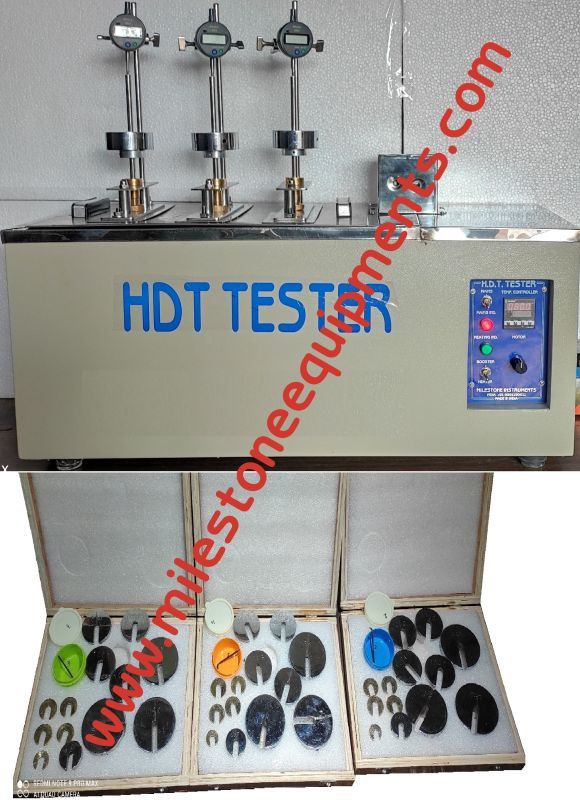
The Heat Deflection Temperature Tester consists of a specimen support, an immersion bath, a set of weights under deflection –measuring device. this instrument is mostly used in deflection test of plastic under load and temperature.

RoTap Sieve Shaker machines have been engineered with reliable, rugged steel and alloy materials ready to withstand the everyday, harsh duty cycles. These units are fitted with heavy duty electric motor (1/4 HP) that enables the machine to provide efficient circular and hammering motions. Also available with Digital timer

ELECTROMAGNETIC SIEVE SHAKER, which have been developed applying the latest technological advances of power control. The sieve shakers micro processor controller is used to set both the process time from 1 min to 99 min and the amplitude from 0.5 to 3.5.
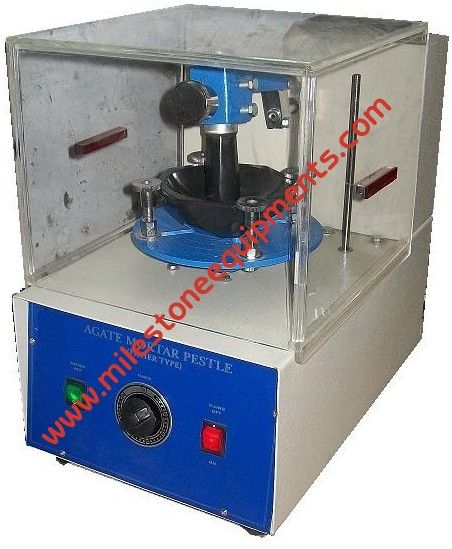
For unattended grinding of no gummy and non-fibrous material. Extensively used for preparing coal sample for calorific tests the motor revolves and the pestle moves back and forth in a pattern reaching all parts of the motor. Its metallic housing with a F.H.P motor driven detachable turn able of cast aluminum has adjustable posts to hold motor of 75 to 135 mm dia. The arm of the pestle driving mechanism has hinged, heavy head, which can be raised to inspect or remove the sample or additional material to be added as desired. A built-in-timer permit selection of grinding operation up to 60 min. The grinding vessel and motor are all completely covered by a clean acrylic cover. To operate 220V AC.
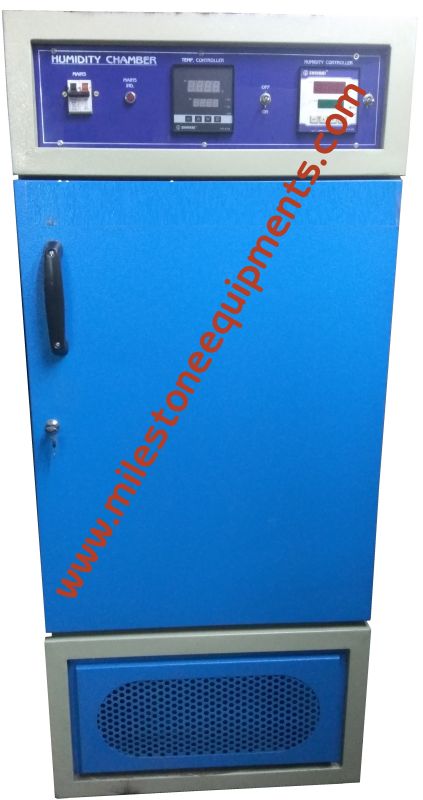
Double walled inside S.Steel and outside M. Steel painted with stove enamel door provided with glass window. Stainless steel water bath with heater is provided inside the chamber to create humidity in the chamber, provided with refrigeration to control temperature range from 5ºC to 60ºC +/- 2ºC and humidity is ambient to 90% Stainless steel water bath with heater is provided inside the chamber timer is provided to regulate the cyclic illumination. +/-5% and fitted with digital temp. & humidity indicator cum controller. Humidity is displayed in percentage.
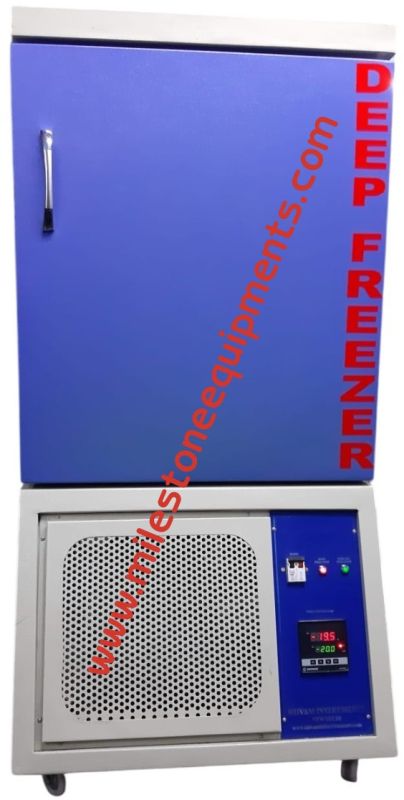
Double walled construction Inner Body: Inner chamber made of Stainless steel (304 Grade). Outer Body: outer chamber develop using high grade mild steel with powder coated finish. This coating keeps safe the unit from rust and normal scratches. Insulation: Insulation between inner & outer wall with high density polyurethane foam (PUF) for minimal thermal losses. Compressor: Heavy duty hermitically sealed compressor air cooled refrigeration system. Refrigerant should be CFC free. Temperature Range: available in 4 i.e. -20°C, -30°C, -40°C, -80°C in variation of ± 1 Deg. C. Temperature Controller: The Temperature is totally microprocessor based P.I.D. controller or Digital Temperature Controller cum Indicator controlled for accurate temperature rating. Shelves: Stainless steel perforated/wire road shelves adjustable and sliding. Door: Double walled door insulated and is fitted with magnetic gasket for air tight closing for no temperature loss & full view inner Glass door enables inspection and monitoring of inner chamber specimens without disturbing the process temperature. Power: Power input to be 220-240 Volts AC, 50/60 Hz fitted with Indian plug.
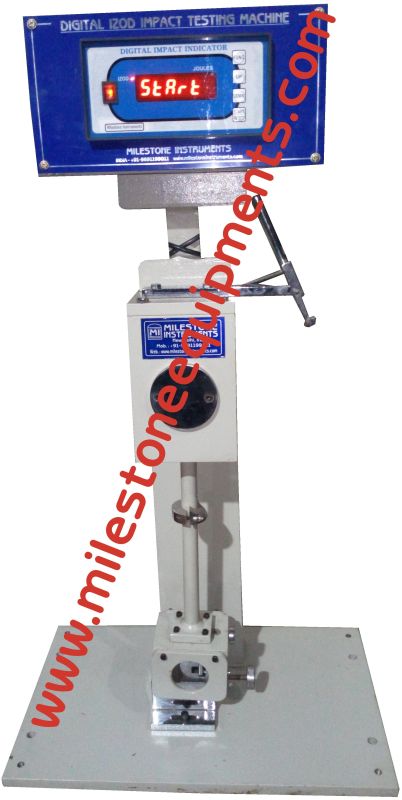
Izod Impact Tester is manufactured as per ASTM D-256. The method of determining impact strength of rigid plastics or reinforced plastics. A notched sample is generally used to determine impact strength. The test determines the amount of energy absorbed by a material during factual.
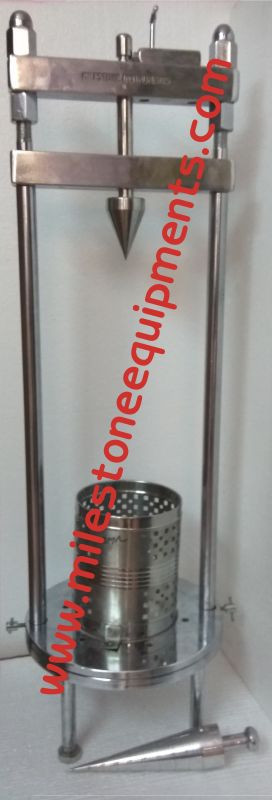
Method to determine the resistance of geosynthetics to penetration by steel cone dropped from a fixed height, as a simulation of dropping sharp stones on their surface. Generally applicable to all geosynthetics. However, the test principle may not be applicable to some types of products. The specimen is clamped between two steel rings. A steel cone (45° tip angle, 1000 g) is dropped from a height of 500 mm onto the centre of the specimen. The degree of penetration is measured by insertion of a graduated cone into the hole.
 Mr. Pankaj Kumar (Milestone Equipments)
 WZ 8 Dayal Sar Colony, Uttam Nagar, Delhi - 110059, India
 https://www.milestoneequipments.co.in
 Share us via



 View Contact Number