 Write a Review
Our Products
We are leaders in the market for providing best range of Aluminum Bricks, Blast Furnace Bricks, Boiler Bricks, Acid Proof Bricks and Coke Oven Bricks
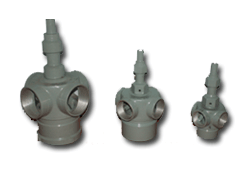
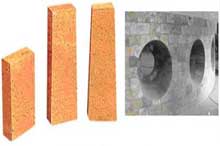
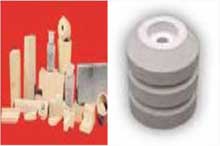
All kinds of boilers require lining of refractory and unshaped products for production. We manufacture shaped and unshaped bricks used in various regions of the boiler.
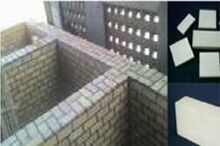
Acid & Alkali proof bricks are specially made for regions which require acid and alkali proofing. The acid attack may take place where there is use of sulphur based materials which causes wear of ferrous lining of furnaces and tanks.
Acid & alkali proof bricks have a varied usage in the following industries
Oil Refineries and Distillarie
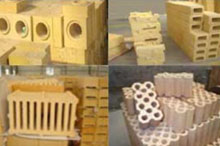
A coke oven battery is a complex structure of many different refractories shapes but it can be divided in general in to two sections; the regenerators which are the lower section and the coking and combustion chambers which represent the upper section.
The refractories used require good mechanical strength, thermal shock resistance abrasion resistance, volume stability and in the upper section good hot strength. Fireclay and silica are the principal refractories used with the latter in the upper section.
Silica with very carefully controlled granulometry and tridymite and quartz content are essential to withstand the severe operational requirement of the coking and combustion chambers as coke ovens, with the appropriate repairs are expected to have a life of >30 years.
IN DIFFERENT AREAS OF COAK OVEN
| Product Name | KA-35-2 | KA-40-2 | ||||||||||
| Application
|
Oven Roof
|
Oven Wall Head, Regenerator, Regenerator Checkers |
||||||||||
|
|
|
||||||||||
|
|
|
||||||||||
|
|
|
||||||||||
|
|
|
||||||||||
|
|
|
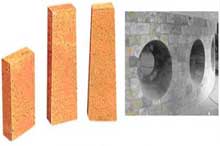
As blast furnaces and converters have become larger and more efficient, the use of torpedo cars has increased as it prevents heat loss from hot metal and the cost of construction as well as maintenance is comparatively low
The torpedo car was originally used for transportation and storage of hot metal. But now hot metal pre-treatment (i.e. desiliconisation, desulphurization and dephosphorisation) has been separated from decarburization processing (done in a converter) and it is done in the torpedo car.
Based on the need for corrosion resistance against FeO, Na2O and CaF2, Al2O3-SiC-C bricks have been developed comprising of alumina as the main aggregate, graphite which provides resistance to spalling and slag penetration and SiC which protects graphite from oxidizing.
In different areas of Blast Furnace Ladle Car / Torpedo Ladle
| Properties | Metal contact | Slag line | Ceiling | Impact Zone |
| Chemical composition, % Al2O SiO2 SiC Residual Carbon |
86 5 7 16 |
73 2 7 16 |
75 1 5 16 |
66 0.5 9 20 |
| Apparent porosity, % | 7 | 8 | 7 | 7 |
| Bulk density, g/cm3 | 2.89 | 2.89 | 3.02 | 2.85 |
| Cold crushing strength, MPa | 52 | 30 | 47 | 47 |
| Apparent porosity, % | 16-18 | 12-14 | 15-19 | 20-23 |
| Modulus of rupture at room tem. MPa | 12 | 10 | 12 | 11 |

In general, in the hot spot area where there is a higher thermal load, water cooled panels (made of cast Cu) are used and the other wall areas have water cooled panels of steel.
If water cooled panels are not used magnesia-carbon bricks are installed in the hot spot area, with metal used unfired chrome magnetite brick in the other wall areas.
The slag line area blow the water cooled panels is lined with Refractories that well withstand slag and molten steel and resist opening of brick joints and spalling. In former times, fusion cast magnesia chrome bricks and fired dolomite & magnesite bricks were used but at present, magnesia carbon bricks are widely used.
In Wall of electric Arc Furnace
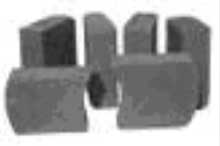
The following factors are considered to be most influencing ones for the lining life of steel ladles:
Slag basicity and fluidity of molten steelLong holding time of high temp. molten steelStirring action of molten steelThermal spalling from tem.Fluctuation Ladle handling method Ladle structural deignProcess constraintsTap conditionsLining/repairing method, etc.
Lining of steel teeming ladle is divided into several zones including slag zone metal zone and bottom zone. The required characteristics of Refractories for each zone are as under
| ZONE in steel ladle | Basic slag resistance | Abrasion resistance | Spalling resistance | Hot strength | Type of bricks used |
| Slag Zone | 0 | X | 0 | 0 | Mgo-C |
| Metal zone | X | X | $ | $ | AMC / MgO-C |
| Bottom zone | X | 0 | $ | 0 | High alumina/Zircon/ MgO-C |
0 - Most important$ - ImportantX - Moderate
For metal zone, high alumina bricks were widely used. However, it has many problems such as structural spalling by slag penetration, damage to joints by slag & metal and shrinking after 25-30 campaigns.
Alumina-magnesia spinal bricks show batter performance than high alumina brick in this area due to high corrosion resistance, slag resistance and tight brick joints.
Recently, Alumina-magnesia graphite (AMG) bricks are used successfully. The opening at the brick joints is overcome by combining MgO in Al2O3-C bricks to provide a controlled/gradual continuous expansion of brick by spinal formation. With this combination, the joints will bot open during thermal cycling of the ladle, thus reducing pre-mature wear at the joints and avoiding steel & slag penetration to the cold end and consequently unexpected ladle break through MgO addition also improves corrosion resistance. However, excessive addition of MgO causes excessive expansion of the bricks, which may cause peeling.
In Metal Zone of Ladles
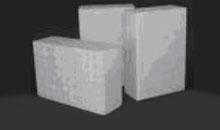
Several courses of fireclay bricks are used in an electrolytic pot cell. Molten aluminum is an active reducing agent, which reacts with free silicon in refractory brick producing silicon as impurity in the metal. Similarly, free ferric oxide reacts with molten aluminum with a yield of iron.
 Rishi Agarwal (New Bharat Refractories Ltd.)
 1-B, Trikut, 181, Block ‘G ‘New Alipore
Kolkata – 700 053, West Bengal - 700053, India
1-B, Trikut, 181, Block ‘G ‘New Alipore
Kolkata – 700 053, West Bengal - 700053, India Share us via








