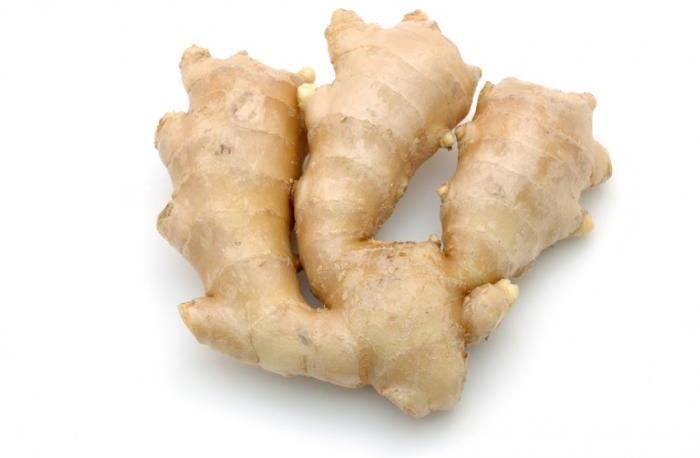
Ginger was given its official botanical name Zingiber officinale; it belongs to the family Zingiberaceae. Linnaeus derived the genus title Zingier from its Indian Sanskrit name singabera which means shaped like a horn. (Christopher et. al., 2000). Ginger the underground stem, or rhizome, of the plant Zingier officinale has been used as a medicine in Asian, Indian, and Arabic herbal traditions since ancient times.
Details :
- In China, for example ginger has been used to help digestion and treat stomach upset, diarrhea, and nausea for more than 2, 000 years. Ginger has also been use to help treat arthritis, colic, diarrhea, and heart conditions. (Althman et. al., 2001). In addition to being used as a medicine, ginger is used throughout the world as an important cooking spice.
- The traditional medicine form of ginger historically was called Jamaica ginger; it was classified as a stimulant and carminative and used frequently for dyspepsia, gastro paresis, slow motility symptoms, constipation, and colic. In Nigeria, three types are in use.
- Tafin giwa (elephant foot or yellowish variety) with plump rhizome, Yat sun biri monkey finger or Black ginger with small compact rhizomes and a third foreign rather smaller and darker often referred to as, Main and China.
- Two varieties of ginger are popularly grown in Nigeria at present. These are yellow ginger (Taffin giwa) and Black ginger (Yaltsun biri). These are highly rated for their oil and oleoresin. The crop is locally called Chitta in Hausa language, Oso-ala or Oso-Chikwu in Igbo and Atale in Yoruba.

 Lagos, Nigeria
 Write a Review
 Kamorudeen Nurudeen Tope (Bgil Export)
 Share us via