
 Write a Review
Our Products
Leading Manufacturer, Supplier & Retailer of Open Pan Boiling Plant, Activated Carbon Rotary Carbonizer and Vacuum And Pressure Boiling Plant.
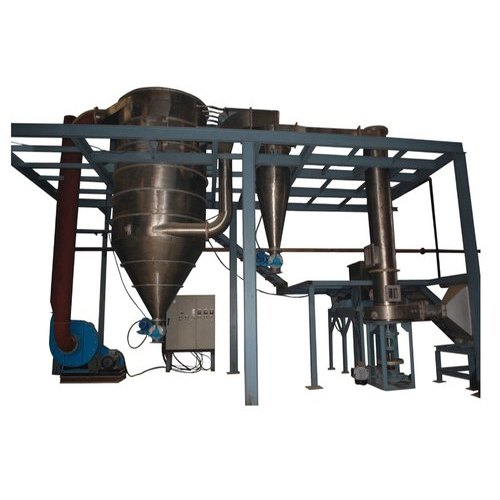
Juice ExtractionThe extraction of juice can be done by using horizontal three roller mills using hydraulic pressure on mills. The milling tandem should contain two or three mills, each of three rollers. This reduces the moisture content in the bagasse and loss of the sugar in bagasse. The extraction of juice in the Khandsari sugar industry ranges from 55-65%.The cold raw juice is received alternatively in two underground tanks in the mill house. This juice, which is acidic (pH 5.2-5.4), milk of lime is addedand the pH of the juice is raised to 10. With addition of milk of lime in the given proportions, pH of the juice rises as the natural free organic acids are neutralized and juice becomes alkaline.
Juice PurificationThe purification of juice was carried out sulphitation tank. In this process sulphur is burnt in a special furnace with the help of an air compressor using atmospheric air and the SO2 gas is produced. The gas is made to bubble through the juice in the sulphitation tank through a perforated coil located in the bottom of the tank at a high pressure until the pH of the juice is reduced to 6.8-7.0. After neutralization, the juice is heated to 100°C in the round bottom pan of the bel and then pumped into the settling tanks. Here the impurities are allowed to settle down to the bottom leaving a supernatant layer of clear juice. The time required for settling is approximately 45 minutes. The clear juice is drawn off in the tank by means of suitable cocks placed at different levels and is allowed to flow into standard bel for being concentrated to rab (massecuite). The muddy juice remaining at the bottom of the settling tank is pumped to filter presses for filtration for the recovery of any sucrose. The filtrate fromthese bag filter press and the washings are directed into the standard bel for being mixed with the rest of the clear juice.
Juice ConcentrationBy Open Pan BoilingThere are several different configurations of boiling pans for concentration of sugarcane juice by open pan (in round bottom vessel called “bel” in local language) boiling. These bels are heated by firing bagasse in the furnace. The juice is heated to 96-98°C and then concentrated at temperatures between 105-106°C in various pans.
Solidification of concentrated JuiceThe solidification and crystallization of the concentrated juice is done in crystallizers. The rab (106°C) is then transferred to crystallizer and allowed to remain there for about 36 hours for the growth of crystals. The crystallizers are fitted with special stirrers rotating slowly continuously for the formation and growth of crystals. When the rab has cooled down to room temperature after about 36 hours and is fully mature, is taken to centrifuge machine. Crystals are slightly washed with water in the centrifuge. The separated crystals are dried and bagged as first quality sugar. The mixture of heavy and light molasses obtained after the separation of the crystals from the first rab is called ‘first molasses’. This is again boiled to give second rab. The second rab is allowed to cool and mature in crystallizers, which are also fitted with stirrers but these crystallizers are smaller in size. The second rab takes about 60-70 hours to mature and cool down to room temperature. The sugar separated from the second rab by centrifuging is sun dried and bagged as ‘second sugar, which is slightly inferior to the first sugar. The mixture of heavy and light molasses resulting from the purging of the second rab is known as ‘second molasses"
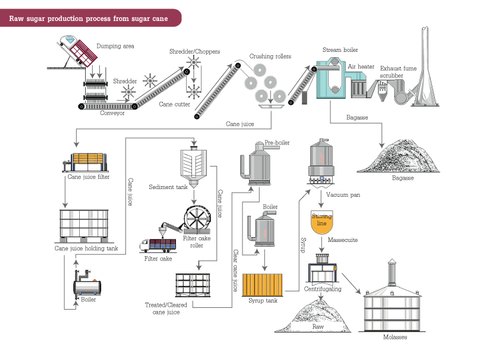
Crushing MillsAfter tipping the cane passes through a shredder, which reduces the billets of cane to a fibrous mass. The shredded cane then passes through a series of mill tandem to extract as much cane juice as possible. Most of the crushing mills are driven by electric motor. The juice from the first crushing mill is analysed in the laboratory for sugar content (CCS). Payment to growers is based on weight of cane and CCS value
Steam Generating PlantThe fibre remaining after the cane has passed through the milling train is called "bagasse". Bagasse is used as fuel for the boiler plant, which provides steam to power the entire factory including our electricity generating turbines. Bagasse is also stored for use in the lead up to the start of the crushing season and when wet weather disrupts harvesting operations. This makes our factory virtually independent of external energy needs during the crushing season
ClarificationThe cane juice, as delivered from the milling tandems, contains some soil and other undesirable impurities. To remove these, the juice is heated and lime is added to settle the unwanted material. The impurities settle out in the clarifier and then go to the rotary vacuum filters, which filter out any remaining juice. The filter mud from the vacuum filters is rich in nutrients and is recycled back to cane fields. Clear amber coloured clarified juice containing about 15% sugar is decanted from the clarifiers to the evaporators
EvaporationThe clarified juice is concentrated to thick syrup by boiling off water in the evaporators. The juice passes continuously from vessel to vessel until it is concentrated to syrup containing approximately 70% sugar. The evaporators are operated under vacuum and in "multiple effects" configuration whereby the vapour space of one vessel is connected to the heating surface of the next throughout the set. This gives maximum efficiency in evaporation and steam usage. Boiling under a vacuum is very energy efficient because the boiling point of the liquid is much lower than at normal atmospheric pressure
Pan StageAt the pan stage the syrup from the evaporators is converted to crystal sugar. A charge of syrup is taken into a vacuum pan and again boiled under a vacuum. A quantity of very fine “seed” crystal is introduced. As water is evaporated fresh syrup is added and sugar is deposited on the seed crystal. This process continues until the crystals have reached the desired size (approx. 1 mm square). The resulting semi liquid mass of sugar crystals and molasses is called ‘massecuite'.
CentrifugationSugar crystals are separated from the syrup in the centrifugals. The centrifugals are perforated metal baskets spun at high speed by an electric motor. While the sugar is spinning in the baskets it is given a short burst of hot water to help wash the sticky molasses off the sugar crystals.
Sugar DryersSugar has to be dried and cooled to precise levels to enhance its storage life. This is done in the sugar driers. Evaporation of excess water from the surface of the crystals results in the desired cooling of the sugar. In the generally wet conditions we use large air-conditioning units to provide the cool dry air to the sugar driers. The dried and cool sugar is now ready for shipment.
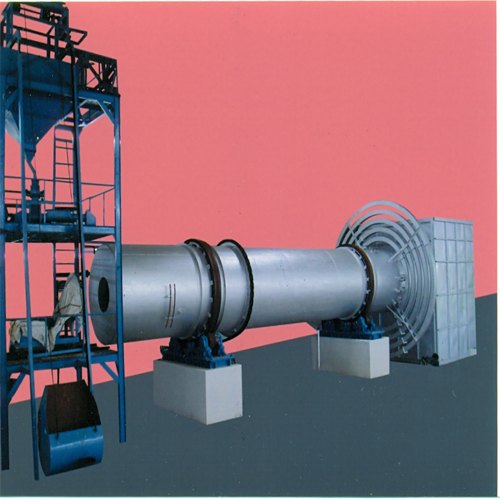
The process of activation is carried out in two stages. Firstly, the coconut shell is converted into shell charcoal by carbonization process which is usually carried out in mud pits, brick kilns and metallic portable kilns. The coconut shell charcoal is activated by reaction with steam at a temperature of 900 OC – 1100 OC under controlled atmosphere in rotary kilns. The reaction between steam and charcoal takes place at the internal surface area, creating more sites for adsorption. The temperature factor, in the process of activation is very important. Below 900 OC the reaction becomes too slow and is very uneconomical. Above 1100 OC the reaction becomes diffusion controlled and therefore takes place on the outer surface of the charcoal resulting in loss of charcoal.
In the process of activation of charcoal, the solid carbonaceous fuel is converted in to combustible gases termed as producer gas by partial combustion with limited supply of air and remaining fixed carbon being converted into Activated Carbon by steam.
The manufacture of Activated Carbon divided into three categories as
 Mr. Lokesh Varshney (NSI Equipments Pvt. Ltd.)
 159 Saipuram, Opposite Block Development Office, Delhi Road, Meerut, Uttar Pradesh - 250001, India
 Share us via