 Write a Review
Our Products
We offer a complete product range of Cylindrical Ball Mill, Continuous Ball Mill, Closed Circuit Ball Mill, Multiple Compartment Cylindrical Ball Mill and Conical Ball Mill
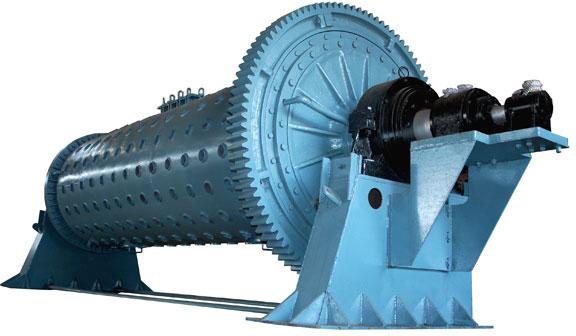
Ball mill is an efficient tool for grinding materials like ores, chemicals, ceramic raw materials, paints etc. into fine powder or fine paste by grinding in a wet way. The Ball Mill operates by rotating a cylinder with grinding balls like steel, CI, ceramic and pebble balls as grinding media. Material fed through the mill is crushed by impact and grounded by attrition between the balls and also the internal cascading effect reduces the material in to a fine powder. Ball Mills usually have liners inside which are replaceable when they wear. Liners will be of wave shape which key the ball charge in to the shell and prevent the slippage.
The rotation of the powder mixer is usually between 4 to 20 revolutions per minute, depending upon the diameter of the mill. The larger the diameter is, the slower the rotation will be. Ball Mills are generally used to grind material " and finer, down to the particle size of 20 - 75 microns.
To achieve reasonable efficiency, the ball mills are to be operated in a closed system, with oversize particles continuously being re-circulated back to the mill and to be reduced
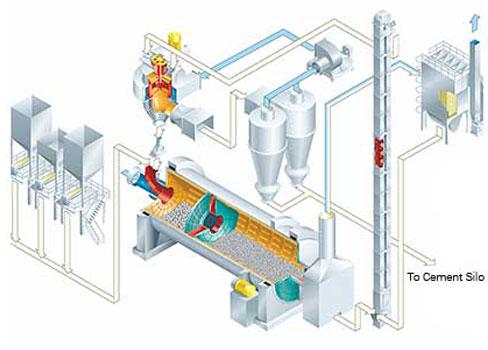
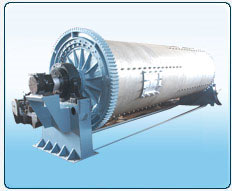
Heavy duty, continuous type ball mill is with three compartment and screen. Replaceable Liners are fixed inside entire mill. Liners material and shape is selected based on material to be grind. Input material is fed in two primary grinding compartments. Large diameter balls for reduce particle size are laying inside first compartment. Material comes into second compartment for further grinding. Small size Balls are laying inside second compartment. Material comes into third for fine grinding. Smaller size media are laying inside third compartment for fine grinding. Diaphragms may place to regulate material level and control retention time. Material is feed and discharged through hollow trunnion at opposite end. Accessories like air classifier, cyclone, blower, return air circuit or dust collector can also be placed for close loop system. Girth gear is fixed on shell, which driven mating gear, gearbox and motor, which are fixed on heavy drive base.
NSI Equipments Pvt. Ltd. Continuous Ball Mill is useful for grinding coarse feed to get fine powder in single continuous operation. It is for grinding Ceramics, Cement, Pencil, Paint, Chemical, Ink, Marble, Coal, minerals, Ferro Alloys etc
Applications:
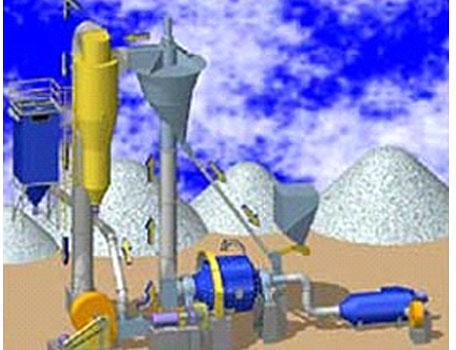

Single compartment Mill is a conventional type of batch mill, consists of cylindrical steel shell with flat steel ends welded to shell. Ball Mill rotates around a horizontal axis partially filled with raw materials to be ground plus the grinding medium. The material and the grinding medium are fed and discharged through an opening manhole on the cylinder shell. Ball Mills usually have replaceable liners inside and replaced when they wear out. Material fed through the mill is crushed by impact and grounded through attrition between the balls
Technical Data :
| Size Dia x L, ft | Max. Ball Load lb. | Motor HP | Normal RPM | Cement clinker | Limestone | Calcined |
| From 97% | from | Gypsum to 95%, | ||||
| <200 - m To | <12.m to 95% | 100m t.p.h. (c) | ||||
| 95% < 325 - | < 100m t.p.h. (b) | |||||
| m bbl / hr. (a) | ||||||
| 4 x 10 | 8.5 | 50 | 28 to 30 | 9 | 2 | 2 |
| 4 x 18 | 15.3 | 100 | 28 to 30 | 17 | 5 | 4 |
| 5 x 22 | 36 | 200 | 25 to 27 | 37 | 10 | 9 |
| 6 x 24 | 70 | 350 | 22 to 24 | 65 | 17 | 16 |
| 7 x 26 | 102 | 500 | 20 to 22 | 95 | 25 | 23 |
| 8 x 30 | 180 | 900 | 18 to 20 | 170 | 45 | 42 |
| 9 x 30 | 223 | 1200 | 16 to 18 | 235 | 65 | 60 |
| 10 x 30 | 278 | 1500 | 15 to 17 | 280 | 80 | 74 |
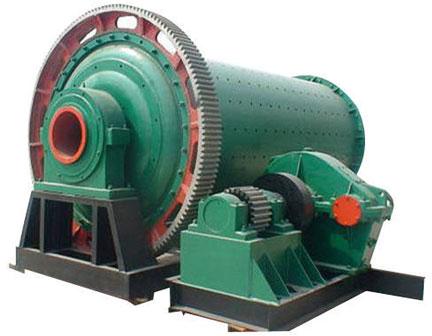
The Conical Ball Mill is most efficient when compare with cylindrical mill. Classification and circulation within the mill is the principle of operation for the conical mill. In a cylindrical mill most of the work is accomplished in only a portion of the mill cylinder length and the end corners are in effective. In conical ball mill it is maximum utilization. More over the structural advantage of a cone are well known. The truss is the strongest type of structure. The conical ball mill is built on this structurally sound principle. Minimum shell surface per unit of grinding volume, less liner weight and thereby reduced dead weight load of the mill, less bearing friction loss and over all power consumption, classification are added advantages.Conical Ball Mill a closed circuit system incorporate the classification system comprising the Rotary Classifier, Dynamic Classifier, Multi cyclone & Bag Filter
Note :
Technical Data :
| Mill dia. ft X cylinder Length in | Ball Load lb | RPM | Motor HP | CAPACITY t.p.h. | |||||
| Lime stone | Cement clinker | Chrome ore From <¾" to 97% <200. m. (e) |
Ilmenite Sand From <40.m To 98% <200.m. (f) |
||||||
| From <¾" to 99% <20. m. (a) |
From <3/8" to 90% <200. m. (b) |
From <1" to 99% <20. m. (c) |
From <20.m to 95% <325. m. (d) |
||||||
| 4½ x 16 | 3,800 | 30 | 20 | 1.6 | 1.0 | 7.0 | 3.1 | 0.67 | 0.44 |
| 5 x 22 | 6,700 | 28 | 40 | 3.3 | 2.0 | 1.5 | 7.3 | 1.1 | 0.90 |
| 6 x 22 | 11,100 | 26 | 60 | 5.7 | 3.5 | 2.8 | 13.0 | 1.9 | 1.50 |
| 7 x 22 | 17,000 | 24 | 100 | 9.0 | 5.2 | 43.0 | 18.0 | 2.8 | 2.20 |
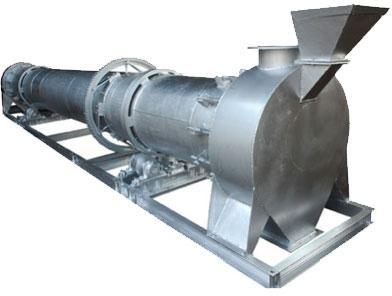
Ball mill is an efficient tool for grinding materials like ores, chemicals, ceramic raw materials, paints etc. into fine powder or fine paste by grinding in a wet way. The Ball Mill operates by rotating a cylinder with grinding balls like steel, CI, ceramic and pebble balls as grinding media. Material fed through the mill is crushed by impact and grounded by attrition between the balls and also the internal cascading effect reduces the material in to a fine powder. Ball Mills usually have liners inside which are replaceable when they wear. Liners will be of wave shape which key the ball charge in to the shell and prevent the slippage.
The rotation of the powder mixer is usually between 4 to 20 revolutions per minute, depending upon the diameter of the mill. The larger the diameter is, the slower the rotation will be. Ball Mills are generally used to grind material " and finer, down to the particle size of 20 - 75 microns.
To achieve reasonable efficiency, the ball mills are to be operated in a closed system, with oversize particles continuously being re-circulated back to the mill and to be reduced
Types
Technical Data :
| Size Dia x L, ft | Max. Ball Load lb. | Motor HP | Normal RPM | Cement clinker From 97% <200 - m To 95% < 325 - m bbl / hr. (a) |
Limestone from <12.m to 95% < 100m t.p.h. (b) |
Calcined Gypsum to 95%, 100m t.p.h. (c) |
| 4 x 10 | 8.5 | 50 | 28 to 30 | 9 | 2 | 2 |
| 4 x 18 | 15.3 | 100 | 28 to 30 | 17 | 5 | 4 |
| 5 x 22 | 36 | 200 | 25 to 27 | 37 | 10 | 9 |
| 6 x 24 | 70 | 350 | 22 to 24 | 65 | 17 | 16 |
| 7 x 26 | 102 | 500 | 20 to 22 | 95 | 25 | 23 |
| 8 x 30 | 180 | 900 | 18 to 20 | 170 | 45 | 42 |
| 9 x 30 | 223 | 1200 | 16 to 18 | 235 | 65 | 60 |
| 10 x 30 | 278 | 1500 | 15 to 17 | 280 | 80 | 74 |
 B. Kannan (Nsi Equipments Pvt. Ltd)
 734, Anna Salai, Chennai - 600 006, Tamil Nadu - 600006, India
 Share us via








