Write a Review
Our Products
Our product range contains a wide range of SINGLE MECHANICAL SEAL: and DOUBLE MECHANICAL SEAL:
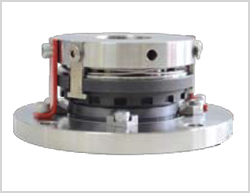
A single mechanical seal consists of two very flat surfaces that are pressed together by a spring and slide against each other. Between these two surfaces is a fluid film generated by the product. This fluid film prevents the mechanical seal from touching the stationary ring. An absence of this fluid film (dry running of the pump) results in frictional heat and ultimate destruction of the mechanical seal.
Mechanical seals tend to leak a vapor from the high pressure side to the low pressure side. This fluid lubricates the seal faces and absorbs the heat generated from the associated friction, which crosses the seal faces as a liquid and vaporizes into the atmosphere. So, it's common practice to use a single mechanical seal if the product poses little to no risk to the environment.
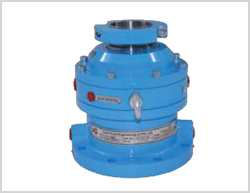
A double mechanical seal consists of two seals arranged in a series. The inboard, or "primary seal" keeps the product contained within the housing. The outboard, or "secondary seal" prevents the flush liquid from leaking into the atmosphere.
Double mechanical seals are offered in two arrangements:
Back to back
Two rotating seal rings are arranged facing away from each other. The lubricating film is generated by the barrier fluid. This arrangement is commonly found in the chemical industry. In case of leakage, the barrier liquid penetrates the product.
Face to face
The spring loaded rotary seal faces are arranged face to face and slide from the opposite direction to one or two the barrier liquid penetrates the product. If the product is considered "hot", the barrier liquid acts as a cooling agent for the mechanical seal.
Double mechanical seals are commonly used in the following circumstances:
a) When aggressive media is used at high pressures or temperatures.
b) For many polymerizing, sticky media stationary seal parts. This is a popular choice for the food industry, particularly for products which tend to stick in case of leakage.
 B. Kannan (Nsi Equipments Pvt. Ltd)
 734, Anna Salai, Chennai - 600 006, Tamil Nadu - 600006, India
 Share us via