Write a Review
Our Products
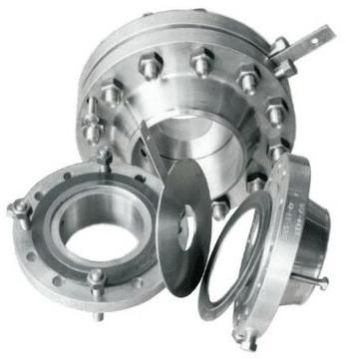
Our Complete range of products are Batch Flow Meter, Digital Flow Meter, Turbine Flow Meter, Bio Gas Flow Meter and Orifice Flow Meter.
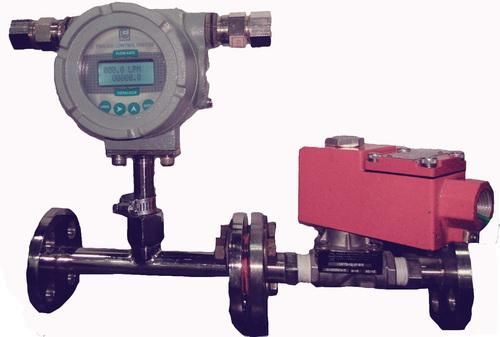
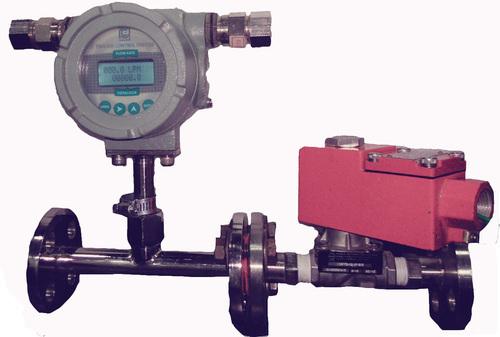
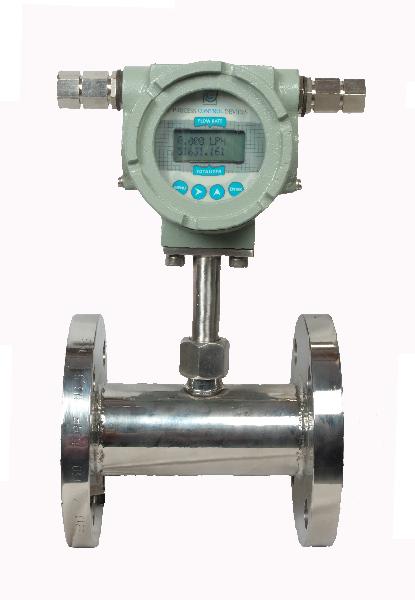
Process Control Devices manufacture various digital flow meter used in industry as per fluid property. Turbine flow meter is used for measuring the instant flow rate of clean liquid as well as gas. It consists of turbine rotor mechanism, pickup coil, and an electronics module. the velocity of flow is directly proportional to the flow rate. Media it can measure is water, oil, diesel, solvent, chemical and any clear liquid. viscosity should be less than 20 CP.
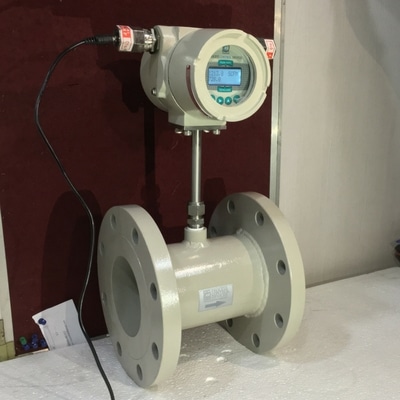
The production of biogas is a key part of any operation in most of industrial, commercial and public sector. It is necessary to measure the flow of biogas to ensure facility efficiency usingbio gas flow meter. Flow measurement helps operators to know how much biogas deliveries to the gas grid.
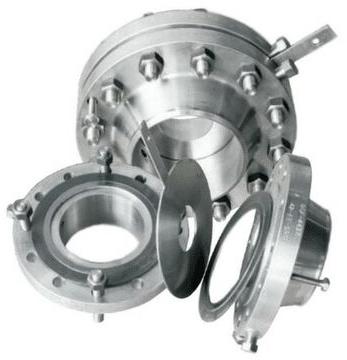
Measuring technologies associated with biogas applications are challenging. Various technologies are available, including thermal mass, turbine, vortex, orifice, annubars and ultrasonic.
Biogas is a dirty gas containing moisture and particulate content. It can clog up flow measuring instruments such as annubars, orifice plates and gum up rotor of turbine meters and similar instruments that have moving parts. Biogas often has a low pressure which makes differential pressure flow measuring device unsuitable since they require large differential pressure to operate. PCD is one of the leadingbiogas flow meter manufacture in India.
Thermal mass flow technology measures the mass flow of gas, have any moving part results in negligible pressure drop. Thus, this flow technology is best suits for low-pressure flow measurement. It is one of the best suitable flow measuring devices which operate over a wide flow range having wide turn downs ratio.
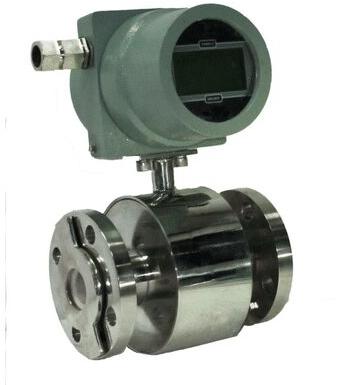
Process Control Devices offers a series of digital flow meters. Design to measures the flow rate of a liquid flowing through the close pipe. The electromagnetic flow meter is volumetric flow meter having no obstruction as there are no moving parts. Hence pressure drop is negligible. The performance is independent of density, viscosity, temperature, and pressure of the flowing liquid. The magnetic flow meter is calibrate using water and can measure the flow of other conductive fluids, with no further correction. This is a special feature that other type of flow meters doesn’t have. PCD is one of the leading Electromagnetic flow meter manufacturers in Mumbai India.
Working Principle of Electromagnetic Flow Meter
Electromagnetic flow meters work on the principle of “Faraday’s Law of electromagnetic induction”. According to the law, “when a conductive liquid cut the magnetic field, voltage Induce”. Further, that voltage signal is sensed by the electrode which is mounted on the wall of the flow tube. That induce voltage signal is process by the electronic transmitter to determine the flow. The generation of voltage is directly proportional to the velocity of the fluid.
Construction of Electromagnetic Flow Meter
Electronic Part consists of head type Flow Indicator which contains Microprocessor Controller chip mounted on the electronic circuit. It has the LCD display, Which shows the Current flow rate & Total commutative flow. Also, has a transmission feature of 4-20 mA output & RS 485 Communication with High & Low Flow Alarm. To operate it requires an external power supply of 24 VDC or 230 VAC.
The mechanical part consists of Flow Tube, Lining such as of PTFE Or Neoprene, Electrode, Magnetic Coil, Flange connection. Flow Tube Material is non-wetted part and should be of the nonmagnetic material such as SS 304 Or SS 316. Selection of Lining Material must be according to temperature, corrosive property & compatibility of the measured fluid. Neoprene can resist general weak acid, alkaline corrosion and can withstand temperature unto 80C, but it has wear resistance. As PTFE (Teflon) has low wear resistance and have good compatibility to almost all strong acid, chemical, alkaline corrosion, ETP Water, Waste Slurry. And can withstand temperature up to 180C. Selection of Electrode Material must be according to corrosiveness of measured fluid.
Mechanical Specification
Line Size: 15 NB to 300 NB
Lining Material: PTFE, EPDM, NEOPRENE
Electrode Material: SS316, Hastelloy C, Titanium, Monel
Design Temperature: Up to 150 DegC
Connection: Flanged to ASA, BS, DIN
Electronics Specifications
Programming: By Membrane Key
Power Supply: 24 VDC Isolated, 230 VAC, 110VAC
Out Puts: 4-20mA, 4wire, Pulse,
Communication : RS 485 MODBUS
Accuracy: ± 1% of FSD & ± 0.5% on request
Linearity: +/- 0.5 %
Repeatability: 0.5%
Silent Features
Additional Information:
Payment Terms : L/C
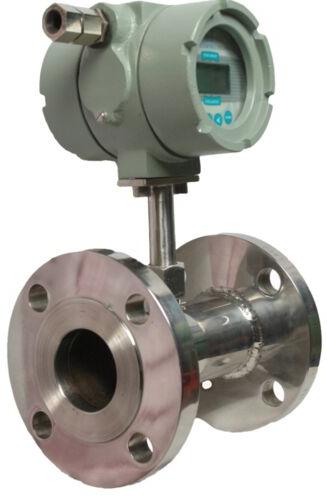
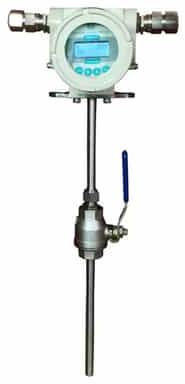
he thermal principle operates by observing the cooling effect of a gas flow as it passes over a heated transducer. In compressed air flow meter, the temperature sensor monitors the actual air temperature whilst the heater transducer is maintained a constant differential temperature by caring the required current to the heating sensor from electronic in order to maintain the differential temperature. Greater the flow, greater will be cooling effect and current required to maintain the differential temperature.
The current produce to maintain this temperature differential is directly proportional to the mass flow rate. Hence there is no need for additional temperature or pressure compensation in the thermal mass flow meter. This makes thermal mass flow meters as a preferred choice for use in compressed air flow monitoring systems.
 Mr. Lanjekar Saeed (Process Control Devices)
 Plot No. 22, Rautara Industrial Estate,rnBeside Hanuman Hotel, Shil-Mahape Road,rnShilphata, Thane 400 612, Mumbai, Maharashtra - 400612
 Share us via