
Company Information
 Member Since 8 Years
 Nature of Business Supplier Year of Establishment 2001
Ask for more detail from the seller
Contact Supplier
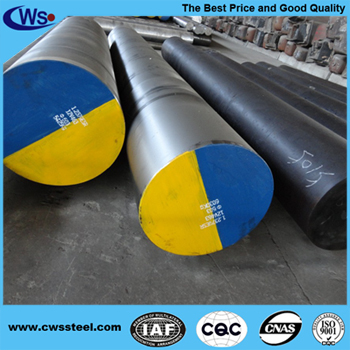
1.2379 cold work mould steelã�âÂ
forging:
heating for forging must be done slowly and uniformly. Soak through at 1850ã�â°-1950ã�â°f and reheat as often as necessary, stopping work when the temperature drops below 1700ã�â°f. After forging, cool slowly in lime, mica, dry ashes or furnace. D2 should always be annealed after forging.ã�âÂ
annealing:
heat slowly to 1550ã�â°-1600ã�â°f, hold until entire mass is heated through, and cool slowly in the furnace (40ã�â°f per hour) to about 1000ã�â°f, after which cooling rate may be increased. Suitable precautions must be taken to prevent excessive carburization or decarburization.ã�â ã�âÂ
stress relieving:ã�âÂ
when desirable to relieve the strains of machining, heat slowly to 1050ã�â°-1250ã�â°f, allow to equalize, and then cool in still air (strain relieving).ã�âÂ
preheat prior to hardening:
preheat slowly to 1350ã�â°-1450ã�â°f and hold at this temperature until material is uniformly heated.ã�âÂ
hardening:
after thorough preheating, heat to 1800ã�â°-1850ã�â°f. Hold the work piece at the hardening temperature until it is completely and uniformly heated.ã�âÂ
quenching:
ã�â d2 is an air hardening steel and will develop hardness on cooling in still air. To avoid scaling and prevent decarburization of theã�â workã�â piece surface, controlled atmosphere or vacuum furnaces are recommended. If these furnaces are not available, pack hardening, salt baths or wrapping the piece in stainless steel foil will provide some degree of surface protection in the hardening process. Parts should be allowed to cool to 150f, or to where they can be held in the bare hand, and then temper immediately.



Connect with us





 For Buyer
  For Seller
  Help
Help 

 Kunshan
 Send Enquiry