
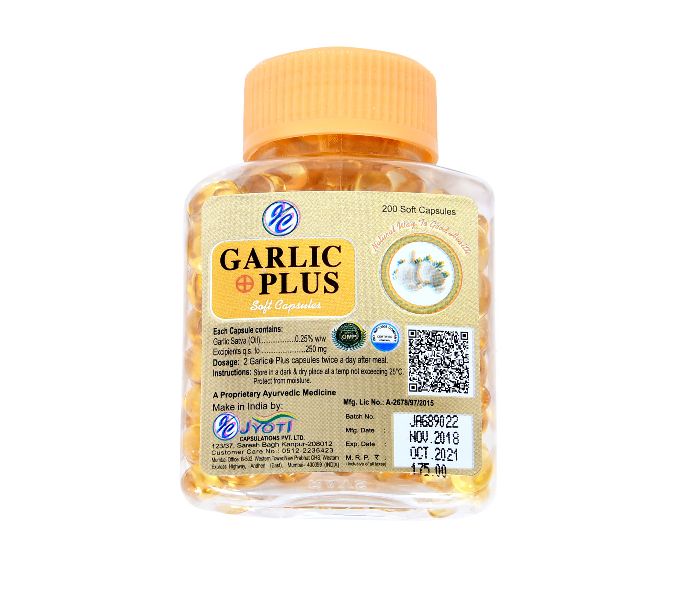
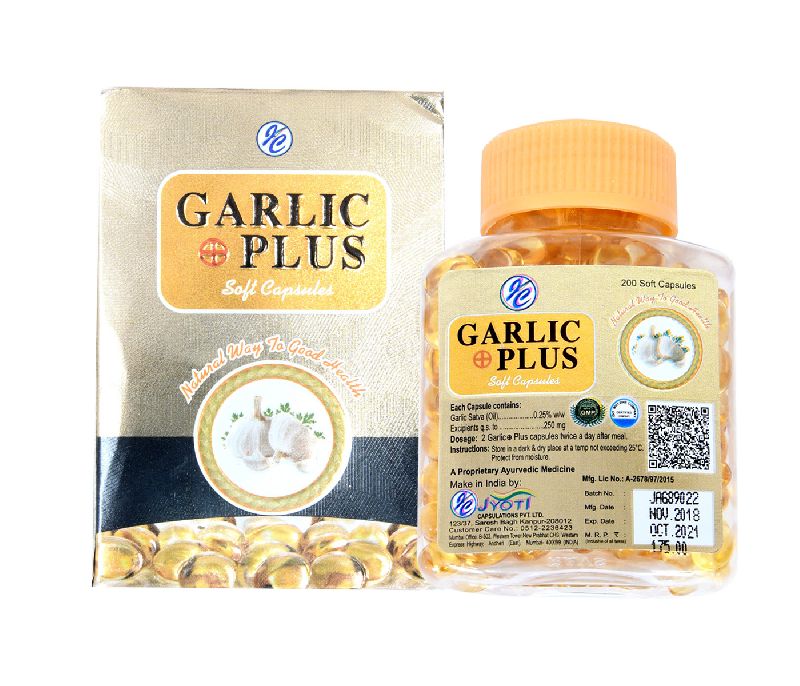

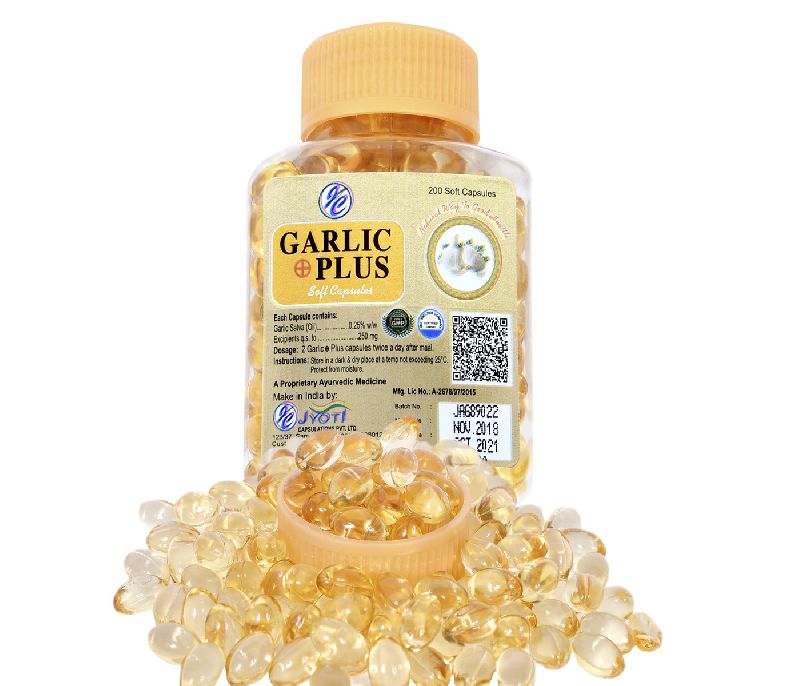
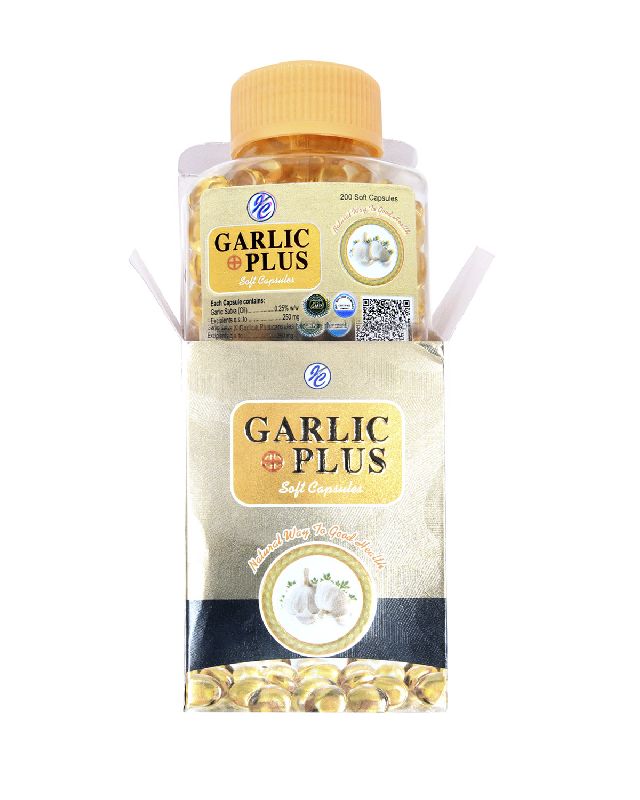
 175 - 185 / inr
Company Information
 Member Since 4 Years
 Nature of Business Manufacturer
 GST No. 09**********ZF
Ask for more detail from the seller
Contact Supplier
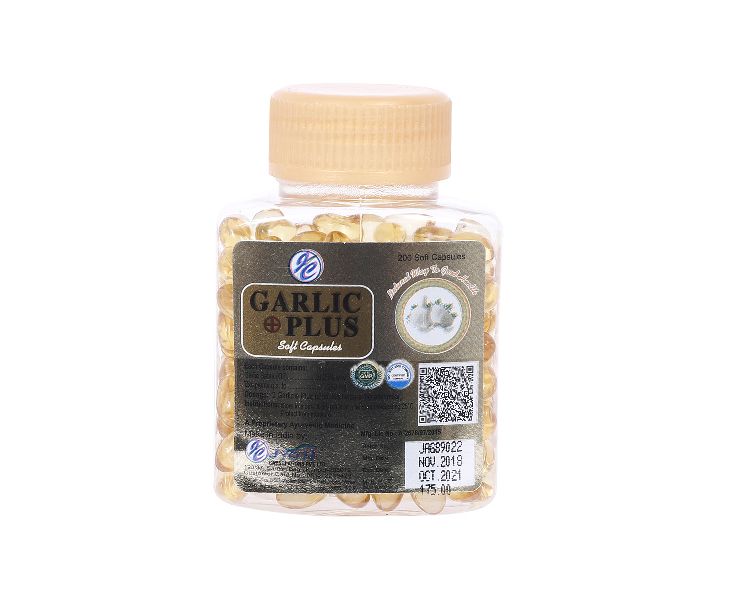
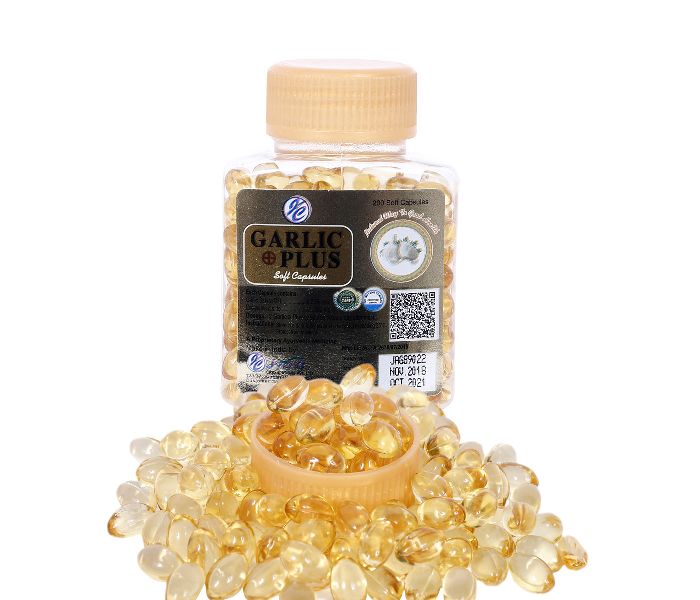
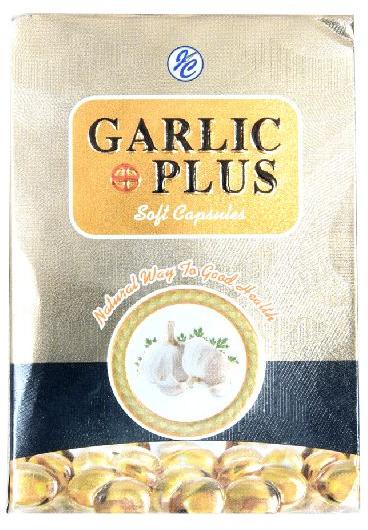
Garlic is considered an antibacterial, antimycotic, and lipid-lowering herb. It inhibits platelet aggregation, enhances fibrinolytic behavior, and slows down bleeding and clotting time. When garlic's constituent Alliin comes into contact with the enzyme Allinase a chemical reaction occurs which produces Allicin. This action occurs when the bulb is crushed, bruised, chopped, or heated. It is this chemical, Allicin, which has demonstrated the antiseptic qualities. Garlic also, reduces serum cholesterol by inhibiting cholesterol absorption. It may have hypolipidemic, or fat reducing action. Garlic has the ability to inhibit the enzymes lipooxygenase and cycloxygenase slowing prostagladindin production.
Garlic contains about 0.5% of a volatile oil composed of sulfur-containing compounds (diallyldisulfide, diallyltrisulfide, methylallyltrisulfide). The bulbs contain an odorless, colorless, sulfur-containing amino acid called alliin (S-allyl-L-cysteine sulfoxide), which has no pharmacologic activity. When the bulb is ground, the enzyme allinase is released, resulting in the conversion of alliin to 2-propenesulfenic acid, which dimerizes to form allicin. Allicin gives the pungent characteristic odor to crushed garlic and is believed to be responsible for some of the pharmacologic activity of the plant.
It is used as a preventative for age related vascular changes. It is also used for the treatment of arteriosclerosis, colds, coughs, fevers, high blood pressure, high cholesterol, infections, intestinal parasites, inflammation of the mouth, inflammation of the pharynx, and for those with a tendency towards infection. It is effective as a supportive to dietary measures for elevated lipid levels in the blood.



Connect with us





 For Buyer
  For Seller
  Help
Help 

 Kanpur, Uttar Pradesh
 Send Enquiry