Company Information
 Member Since 23 Years
 Nature of Business Retailer Year of Establishment 2005
Ask for more detail from the seller
Contact Supplier
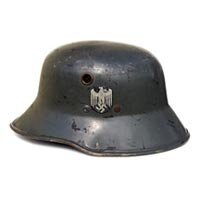
The German Army referred to as the Heer, of World War II rose from the ranks of the Reichswehr Army formed as a result of the Versailles Treaty signed in 1921. Both these formations used steel helmets that were of the older World War I types consisting of "ear cut-out" models. Helmets during this time, were lightweight and made of aluminum. They were used for parade and ceremonial occasions but not worn in the field.
Painting of the helmets was almost always done by hand and brush. The process of upgrading the helmets generally involved repainting the helmet with field gray paint both inside and out. Helmets were painted a light field green color using smooth paint inside and out. Preferred helmets often included those that were void of the large interior chinstrap lugs as the lack of large lugs allowed the helmets to better accommodate the newer liner and chinstrap. Almost every helmet received a single decal which was consistent with regulations held between 1940 and 1943.
The "Ear Cut-Out" helmets have the upward dip along the sides of the helmet shell. They are often referred to as the "cavalry", "artillery", or "telephone talker's" helmet owing to their general appearance and popularity among men serving in these roles. This type of helmet was created as a result of the requests for a helmet that allowed for better hearing in the trenches. Like many transitional helmets, some were stored and later repainted with rough texture paint and then reissued to Wehrmacht troops in 1940. These German helmets are ideal for military enthusiasts, collectors or living history re-enactors.
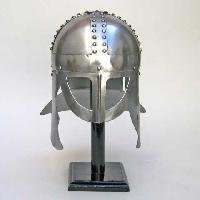
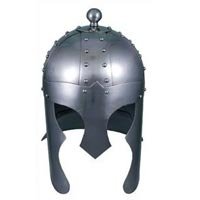
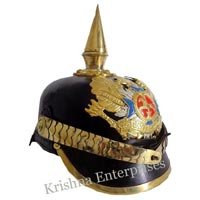
Armor of the Middle Ages wore a variety of different german helmets. While the style varied from region to region the function of medieval german helmets was always the same. Now a days armor german helmet makes a great home decoration and each is full size and can be worn.





Connect with us





 For Buyer
  For Seller
  Help
Help 
 Ghanta Ghar, Meerut, Uttar Pradesh
  Send Enquiry