
Company Information
 Member Since 14 Years
 Nature of Business Manufacturer Year of Establishment 2000
Ask for more detail from the seller
Contact Supplier
Gum Ghatti is the amorphous translucent exudate of the Anogeissus Latifolia tree of the Combretaceae family. The tree occurs throughout the greater part of Africa; more commonly in the dry deciduous forests. It is a large erect deciduous tree, 9-15 meters (sometimes 24 m) with a smooth light colored bark. The tree is leafless during the whole of the cold season; new leaves in April-May.
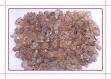
The colour of Gum Ghatti varies from whitish yellow to amber. This variation depends on following factors like storage time, duration it has remained on tree before being picked and the tear to the bark.
we processes Gum Ghatti as follows: hand picking and sorting, removal of adhering bark and sand and cleaning, grinding, sizing and blending to obtain uniform grades of Gum. Our final product for export is either in lump form or powder where the gum is sized to 150 mesh or finer. During the process of particle breakdown, impurities are removed from the gum by sifting, aspiration and density table separation. Powdered Ghatti is light tan in colour and has bland taste and practically no odour.
Gum Ghatti does not dissolve in water to give a clear solution but rather over 90% of the gum disperses in water to form a colloidal dispersion. At the same time it does not form a true gel. It forms viscous solutions at concentrations of about 5% or higher and exhibits typical non-Newtonian behaviour. Gum Ghatti is a moderately viscous gum lying intermediate between Arabic and Karaya. This viscosity profile gives it a unique status in the spectrum of hydrocolloids. The emulsifying properties of Gum Ghatti are excellent and considered to be better than Gum Arabic and thus used in more difficult-to- handle systems The normal pH of the dispersion is 4.8. Gum Ghatti solutions are sensitive to alkali.Viscosity increases sharply with pH upto a maximum at about pH 8 and above that the solutions tend to become stringy. At all pHs, upon aging viscosity increases noticeably over time. The addition of sodium salts (sodium carbonate, sodium chloride) produces a typical viscosity reducing effect of simple electrolytes on a polymer.Gum Ghatti solutions require preservatives since they are subject to bacterial attack. They are easily preserved with a mixture of a maximum of 0.17% methyl and 0.03% propyl o-hydroxybenzoate as well as with glycerin and propylene glycol. Benzoic acid, sodium acid as well as sodium benzoate at 0.1% concentration are effective preservatives.
Contact us for more details.



Connect with us





 For Buyer
  For Seller
  Help
Help 
 Cameroon
 Send Enquiry