
Company Information
 Member Since 11 Years
 Nature of Business Retailer
Ask for more detail from the seller
Contact Supplier
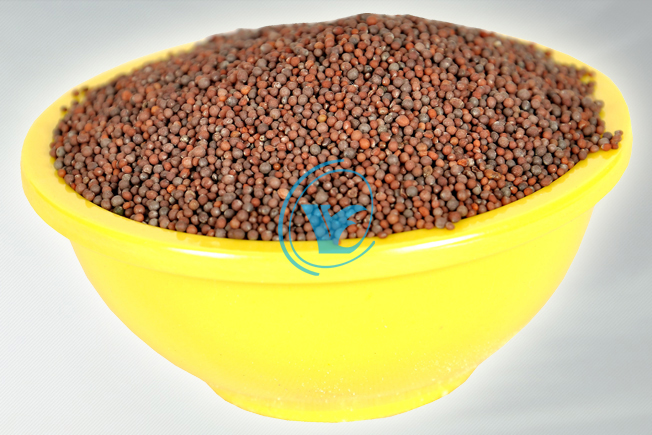
Tiny little mustard seeds, mostly added as a tempering, lend an interesting bite, exotic flavour and tempting aroma to Indian foods. Mustard seeds are from the mustard plant, which is a cruciferous vegetable related to broccoli, Brussels sprouts and cabbage. While there are approximately forty different varieties of mustard plants, there are three principal types used to make mustard seeds:
White Mustard (Brassica alba or Brassica hirta) is a round hard seed, beige or straw coloured. The seed is first processed to remove the outer skin before it is commercially sold. It has a mild flavour and good preservative qualities, which makes it good for making ballpark mustard and in pickling.
| Mustard seed | |||
|---|---|---|---|
| Amount per | 1 tsp (2 g) 1 tbsp (6.3 g) 100 grams | ||
| Calories | 77 | ||
| Calories 508 | |||
| %Daily Value* | |||
| Total Fat 36 g | 0.1 g | 55% | |
| Saturated fat 2g | 0 g | 10% | |
| Polyunsaturated fat 10g | |||
| Monounsaturated fat 23g | |||
| Trans fat 0g | |||
| Cholesterol 0mg | 0% | ||
| Sodium 13mg | 0% | ||
| Potassium 738mg | 21% | ||
| Total Carbohydrate 28g | 9% | ||
| Dietary fiber 12g | 48% | ||
| Sugar 7g | |||
| Protein 26g | 52% | ||
| Vitamin A | 0% | Vitamin C | 11% |
| Calcium | 26% | Iron | 51% |
| Vitamin D | 0% | Vitamin B-6 | 20% |
| Vitamin B-12 | 0% | Magnesium | 92% |



Connect with us





 For Buyer
  For Seller
  Help
Help 

 Odhav, Ahmedabad, Gujarat
  Send Enquiry