
Products / Services
  • Products / Services
  • Companies
  • Buy Leads
    Post Buy Requirement

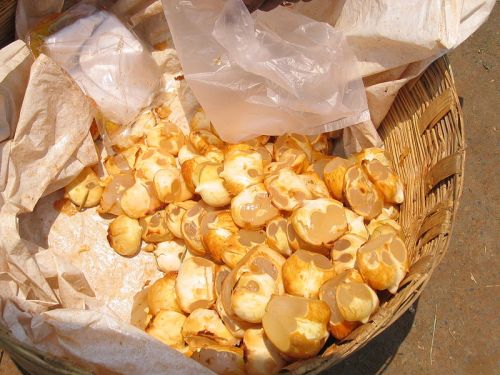
    Palmyra Palm Fruit

    • MOQ453 Piece(s)
    • Supply TypeManufacturer, Exporter
    • Preferred Buyer Location All over the world

    Whether as shrubs, trees, or vines, palms have two methods of growth: solitary or clusters. The common representation is that of a solitary shoot ending in a crown of leaves. This monopodial behavior....
    View More Details
    Send Enquiry

    Company Information

    • calendar Member Since 14 Years
    • building Nature of Business Manufacturer

    Ask for more detail from the seller

    Contact Supplier
    Report incorrect details
    • Product Details

    • Company Details

    no_img_icon

    Whether as shrubs, trees, or vines, palms have two methods of growth: solitary or clusters. The common representation is that of a solitary shoot ending in a crown of leaves. This monopodial behavior may be exhibited by prostrate, trunkless, and trunk-forming members. Some common palms restricted to solitary growth include CAMEROON and AFRICA. Palms may instead grow in sparse to dense clusters. The trunk will develop an axillary bud at a leaf node, usually near the base, from which a new shoot emerges. The new shoot, in turn, produces an axillary bud and a clustering habit results. Exclusively sympodial genera include many of the rattans, Guihaia, and Rhapis. Several palm genera have both solitary and clustering members. Palms which are usually solitary may grow in clusters, and vice versa. These aberrations suggest the habit operates on a single gene.[4]
    Palms have large, evergreen leaves that are either palmately ('fan-leaved') or pinnately ('feather-leaved') compound and spirally arranged at the top of the stem. The leaves have a tubular sheath at the base that usually splits open on one side at maturity.[5] The inflorescence is a panicle or spike surrounded by one or more bracts or spathes that become woody at maturity. The flowers are generally small and white, radially symmetric, and can be either uni- or bi-sexual. The sepals and petals usually number three each, and may be distinct or joined at the base. The stamens generally number six, with filaments that may be separate, attached to each other, or attached to the pistil at the base. The fruit is usually a single-seeded drupe,[6] but some genera (e.g. Salacca) may contain two or more seeds in each fruit.
    Palmyra palm fruit at Guntur, India
    Arecaceae are notable among monocots for their height and for the size of their seeds, leaves, and inflorescences. Ceroxylon quindiuense, Colombia's national tree, is the tallest monocot in the world, reaching heights of 60 meters.[7] The coco de mer (Lodoicea maldivica) has the largest seeds of any plant, 40–50 cm in diameter and weighing 15–30 kilograms each. Raffia palms (Raphia spp.) have the largest leaves of any plant, up to 25 meters long and 3 meters wide. The Corypha species have the largest inflorescence of any plant, up to 7.5 meters tall and containing millions of small flowers. Calamus stems can reach 200 m in length.



    Additional Information

    • Payment Terms Western Union
    • Packaging DetailsWhether as shrubs, trees, or vines, palms have two methods of growth: solitary or clusters. The common representation is that of a solitary shoot ending in a crown of leaves. This monopodial behavior may be exhibited by prostrate, trunkless, and trunk-forming members. Some common palms restricted to solitary growth include WashinCAMEROON and AFRICA. Palms may instead grow in sparse to dense clusters. The trunk will develop an axillary bud at a leaf node, usually near the base, from which a new shoot emerges. The new shoot, in turn, produces an axillary bud and a clustering habit results. Exclusively sympodial genera include many of the rattans, Guihaia, and Rhapis. Several palm genera have both solitary and clustering members. Palms which are usually solitary may grow in clusters, and vice versa. These aberrations suggest the habit operates on a single gene.[4] Palms have large, evergreen leaves that are either palmately ('fan-leaved') or pinnately ('feather-leaved') compound and spirally arranged at the top of the stem. The leaves have a tubular sheath at the base that usually splits open on one side at maturity.[5] The inflorescence is a panicle or spike surrounded by one or more bracts or spathes that become woody at maturity. The flowers are generally small and white, radially symmetric, and can be either uni- or bi-sexual. The sepals and petals usually number three each, and may be distinct or joined at the base. The stamens generally number six, with filaments that may be separate, attached to each other, or attached to the pistil at the base. The fruit is usually a single-seeded drupe,[6] but some genera (e.g. Salacca) may contain two or more seeds in each fruit. Palmyra palm fruit at Guntur, India Arecaceae are notable among monocots for their height and for the size of their seeds, leaves, and inflorescences. Ceroxylon quindiuense, Colombia's national tree, is the tallest monocot in the world, reaching heights of 60 meters.[7] The coco de mer (Lodoicea maldivica) has the largest seeds of any plant, 40–50 cm in diameter and weighing 15–30 kilograms each. Raffia palms (Raphia spp.) have the largest leaves of any plant, up to 25 meters long and 3 meters wide. The Corypha species have the largest inflorescence of any plant, up to 7.5 meters tall and containing millions of small flowers. Calamus stems can reach 200 m in length.
    • Delivery Timeone week only
    Share your requirements for a quick response!
    Tell us what you need?

    Looking for Palmyra Palm Fruit?

    Quantity
    Seller Contact Details
    To list your productBoost Your Business Visibility WorldwideRegister Now
    To list your productBoost Your Business Visibility WorldwideRegister Now
    Waiting for permission
    To search by voice, go to your browser settings and allow access to microphone

    Allow microphone access to search with voice