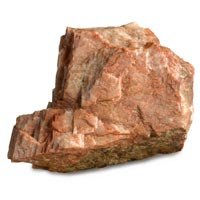
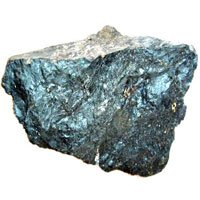
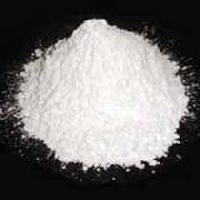
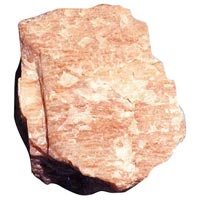
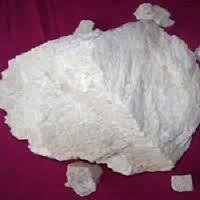
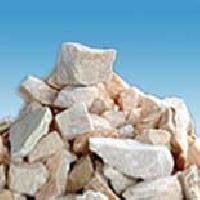
Product Specifications
Characteristics
Application
Ceramic Industry
In making the body composition of several types of Wall tiles, Floor tiles, Porcelain tiles, Sanitary ware, china & earthenware and also in the preparation of glazes and enamel.
For ceramic bodies, the main vitrifying (fluxing) agent is feldspar. The majority of white ware bodies contain good proportions of feldspar. In the ceramic industry, the flux is defined as the portion of the body which develops glass phase. This is provided mostly by feldspar. The amount of flux in a ceramic body should be only in such a proportion as to develop the desired amount of vitrification. If excess of flux is added, the fired body becomes very glassy and consequently brittle.
For Glaze preparations
In the preparation of glazes the fine powder of feldspar is mixed with silica powder and a thin slurry is made. The fired up goods are dipped into the slurry and fired again. This imparts glaze to the surface. Some other ingredients are also added to the slurry to impart glaze and lustre. Each pottery factory has its own technique of preparing slurry which is regarded as a trade secret. Fusiblity is very important. The Glazes high in feldspar (35% or more) are likely to produce crazing problems. ‘Flux saturated’ glazes with more than 50% feldspar may be unbalanced and lack adequate glass former or alumina. The High melting Point is 1250C with M Specific.
Sodium used in for glaze preparations
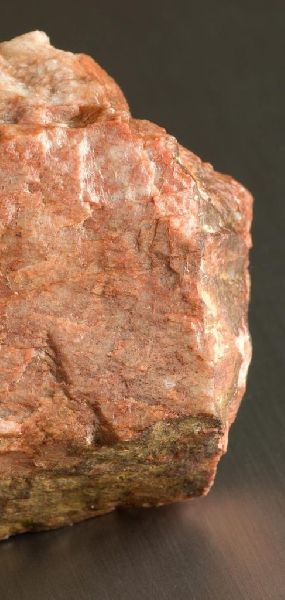
Soda Feldspar is generally a clean white mineral which sources sodium, alumina and silica along with some potassium and calcium. Albite mineral from which soda feldspar is derived is often tends to be white in appearance compared with the pinkish hue of orthoclase mineral from which potash feldspar is ground. It begins melting around 800C.
In many cases soda and potash feldspar are interchangeable in glaze recipes. However, some differences will be apparent. For example, slightly different color responses will be encountered (i.e. cobalt tends toward purple copper toward blue with soda spar). Sometimes colors will be brighter with soda feldspar. In addition, soda spar has a higher coefficient of expansion and melts earlier and has a shorter range before it begins to volatilize.
Soda feldspar is a clean white mineral with a melting range of 1100-1500C. Soda and Potash feldspar are interchangeable in glaze recipes but there are some differences between them. Soda feldspar melts better than the potash feldspar. Soda feldspar has a higher coefficient than the potash. Soda feldspar is a volatile substance and has excellent moisture absorbent capacity due to which this compound melts when it comes in contact with the atmosphere.
Glass Industry
In glass-making, it provides aluminium that enhances the strength and transparency of hollow glass, flat glass, decorative glass and insulating glass. In the glass industry also, Potassium feldspar is used in varying proportions. It may contain 10 to 15% of the batch. The alkali content in feldspar acts as flux, provides resistance in glass to impact bandings, lowering the glass batch melting temperature and helps control the viscosity in the melting tank thus reducing production costs
Feldspar plays a vital role in glass making industries as it is used to ensure durability of the glass with extended hardness and chemical corrosion resistance.
In the manufacturing of high-class and colourless glass, feldspar should have a maximum of 0.1% Fe2O3though upto 0.3% is permissible.
Other Applications
Note:- Specifications and chemical analysis can be furnished only when we get to know the grades/applications desired by you.


Company Information
 Member Since 15 Years
 Nature of Business Exporter
 GST No. 08BTNPA8709B1ZS
  Address No. 11, Near Suthla Chungi Chowki, Chopasni Road, Jodhpur, Rajasthan, 342008, IN
Ask for more detail from the seller
Contact Supplier

Connect with us





 For Buyer
  For Seller
  Help
Help 
 Twitter
 WhatsApp
 Facebook
 Linkedin