
Company Information
 Member Since 14 Years
 Nature of Business Supplier
Ask for more detail from the seller
Contact Supplier
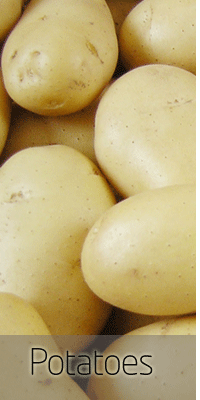
We are offering potato
the potato contains vitamins and minerals, as well as an assortment of phytochemicals, such as carotenoids and natural phenols. Chlorogenic acid constitutes up to 90% of the potato tuber natural phenols. Others found in potatoes are 4-o-caffeoylquinic (-chlorogenic acid), 5-o-caffeoylquinic (neo-chlorogenic acid), 3,4-dicaffeoylquinic and 3,5-dicaffeoylquinic acids.a medium-size 150 g (5.3 oz) potato with the skin provides 27 mg of vitamin c (45% of the daily value (dv)), 620 mg of potassium (18% of dv), 0.2 mg vitamin b6 (10% of dv) and trace amounts of thiamin, riboflavin, folate, niacin, magnesium, phosphorus, iron, and zinc. The fiber content of a potato with skin (2 g) is equivalent to that of many whole grain breads, pastas, and cereals.
in terms of nutrition, the potato is best known for its carbohydrate content (approximately 26 grams in a medium potato). The predominant form of this carbohydrate is starch. A small but significant portion of this starch is resistant to digestion by enzymes in the stomach and small intestine, and so reaches the large intestine essentially intact. This resistant starch is considered to have similar physiological effects and health benefits as fiber: it provides bulk, offers protection against colon cancer, improves glucose tolerance and insulin sensitivity, lowers plasma cholesterol and triglyceride concentrations, increases satiety, and possibly even reduces fat storage. The amount of resistant starch in potatoes depends much on preparation methods. Cooking and then cooling potatoes significantly increases resistant starch. For example, cooked potato starch contains about 7% resistant starch, which increases to about 13% upon cooling.



Connect with us





 For Buyer
  For Seller
  Help
Help 
 Bibia, S.W.R
  Send Enquiry