
Company Information
 Member Since 23 Years
 Nature of Business Retailer
Ask for more detail from the seller
Contact Supplier
| Parts Used | |
| Most parts – The tamarind is very useful. The seeds, fruit, leaves, flowers and bark are all used medicinally as well as for other uses. | |
| Origin: | |
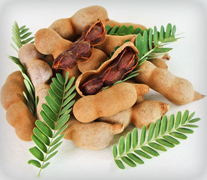
| The Tamarind, scientific name Tamarin-dus indica is the only species of the genus Tamarindus in the family Fabaceae. It is a tropical tree, native to eastern Africa, including parts of the Madagascar dry deciduous forests. It grows wild throughout the Sudan but has now been introduced into most of tropical Asia as well as Latin America and the Caribbean. The tree can grow up to 20m in height, and stays evergreen in regions without a dry season. Tamarind timber consists of hard, dark red heartwood and softer, yellowish sapwood. The leaves consist of 10-40 leaflets. The flowers are produced in racemes. The fruit is a brown pod-like legume, which contains a soft pulp and many hard-coated seeds. The seeds can be scarified to enhance germination. The fruit pulp is edible and popular. It is used as a spice in both Asian and Latin American cuisines, and is also an important ingredient in Worcestershire sauce. | |
| Description: | |
| Tamarind (Imli) fruit is used for its tart sour taste. It especially used in South Indian cuisine in dishes such as Sambhar, Rasam, etc. Nowadays, it is common to find Tamarind (Imli) fruit pulp in the Indian grocery stores. You may substitute Tamarind (Imli) with lime if unavailable, but expect minor change in taste. | |
| Plant Description | |
| Tamarind is the sour fruit pod of a tall, semi-evergreen tree which grows widely in the tropics and particularly in India. Tamarind trees reach a height of 30 m and are topped with a crown of feathery foliage. Their grey bark clad trunks can grow up to 2 m in diameter. Leaves - long and feathery. Each leaf is equally divided into many smaller, finely-cut leaflets. Flowers - yellow and streaked with pink. They are shaped like small sweet peas and smell sweet. They dangle in small clusters from the ends of leafy twigs during March to May in India. Fruits - brown, fleshy pods that are fibrous, thick and sticky. They are sausage shaped and covered in faint fuzz, like a kiwi fruit. Inside they contain a sharp-tasting pulp and several flat shiny brown seeds. They are an important food used to provide a sour flavouring for drinks, sauces, curries, preserves and chutney. In India the pods are ripe for harvesting from April to June. |



Connect with us





 For Buyer
  For Seller
  Help
Help 
 New Link Road, Mumbai, Maharashtra
  Send Enquiry