

Company Information
 Member Since 5 Years
 Nature of Business Supplier Year of Establishment 2017
Ask for more detail from the seller
Contact Supplier
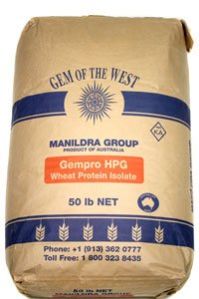
Hydrolyzed Wheat protein 80-85% %(hydrolysed wheat protein) with kosher iso
| name | hydrolyszed wheat protein |
Hydrolyzed Wheat protein 80%
HYDROLYSED WHEAT GLUTEN(HWG)is a product prepared by an enzymatic hydrolysis of vital wheat gluten. It can be used in bakery products, dairy products, nondairy creams, nutrition rice flour, chewy candies, and protein source for fermentation, meat products, milk powder replacement, non-egg yolk dressing, emulsified sauces, and beverages. It can also be used as feed for ablactating.
AMINO ACID PROFILE HWG
Amino acid [g amino acid/100 g protein
Lys - 1.46
Met - 1.29
Cys - 1.69
Thr - 1.94
Ile - 3.0
Leu - 5.69
Phe - 4.14
Tyr - 2.52
Val - 3.20
His - 1.58
Pro - 9.46
Glu - 29.11
Arg - 2.82
Ala - 2.32
Gly - 2.73
Asp - 2.51
Ser - 4.94 ;
Total 80.4
HYDROLYSED WHEAT GLUTEN(HWG)is a product prepared by an enzymatic hydrolysis of vital wheat gluten. It can be used in bakery products, dairy products, nondairy creams, nutrition rice flour, chewy candies, and protein source for fermentation, meat products, milk powder replacement, non-egg yolk dressing, emulsified sauces, and beverages. It can also be used as feed for ablactating.
Bakery
HWG softens dough and increases their machinability. It reduces the elasticity but increases the extendibility of dough. The effects of HWG the parameters of the Chopin alveograph are as follows:
l P/L (parameter linked to elasticity): 10~30% decrease
l G (parameter linked to volume): 3~10% increase
HWG is particularly designed for laminated products like croissants. The average dosage is about 0.4% of the flour weight. HWG reduces waste time during the dough preparation and increases machinability and dough cohesion.
Recommendation
The addition level of HWG is in a range of 0.3 to 0.8% of the weight of flour, depending on its strength.
Application
HWG can be used in the following bakery products: bread, croissants, Danish pastries, pie, plum pudding, butter cake, sponge cake, cream cake, pound cake ...
Feed
HWG can be used as protein source to fortify feed nutrition. Because of its vegetable origin, it is free of concerns of bird flu, BSE, and other concerns related to animal proteins.
Like wheat gluten, HWG should rate rather low on the Protein Efficiency Ratio (P.E.R.) scale (0.7~1.0) when compared to the standard reference casein value (2.5). These values reflect a deficiency in the essential amino acid, lysine, a characteristic shared by most cereal grains. Indeed, vegetable proteins in general rate low on the P.E.R. scale due to low contents of one or more essential amino acids. Blends of different vegetable proteins often result in higher P.E.R. values than the arithmetic average of the components.
Such is the case with wheat gluten, low in lysine but high in methionine and cystine, when blended with soy flour. High in lysine but low in methionine, soy flour has a P.E.R. value of about 2.0. Blending soy flour and wheat gluten has a synergistic result: at a wheat gluten/soy flour protein ratio of 30:70, a P.E.R. value of 2.4 is achieved. Similar effects are predictable for other food systems where excess lysine is available from meat, milk solids or other sources. HWG in combination with other proteins can have solid nutritional impact.
HWG is strongly recommended for ablactating for piglets and other animals.




Connect with us





 For Buyer
  For Seller
  Help
Help 

 Tiffin Ohio
 Send Enquiry