My ExportersIndia

For Buyer

For Seller

For Help

Our Product / Services

  1. Pipe Bending Machine 3 Products available
  2. CNC Turning Center 2 Products available
  3. Metal Ingot 2 Products available
  4. Hydraulic Bending Machine 2 Products available
  5. Bending Machine 2 Products available
  6. Cnc And Lathe Machinery 2 Products available
  7. Machine And Precision Tools 2 Products available
  8. Lathe Chucks 1 Products available
  9. CNC Machine Repair 1 Services available
  10. Repair & Maintenance Services 1 Services available
  11. SPM Machine 1 Products available
  12. Lathe Machines 1 Products available
  13. Fuel Injection System & Assemblies 1 Products available
  14. Hydraulic Machines 1 Products available
  15. Automotive Spare Parts 1 Products available
  16. Steering Parts And Components 1 Products available
  17. Milling Machines 1 Products available
  18. Automotive Components 1 Products available
  19. Cnc Machined Components 1 Products available
  20. Industrial & Engineering Products 1 Products available

Bending Machine

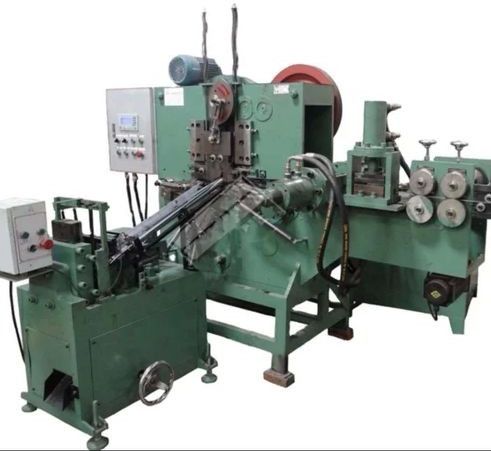
We offer a complete product range of J Bolts Bending Machine and U Bolt Bending Machine

J Bolts Bending Machine

  • Min. Order (MOQ) 1 Piece
  • Usage Use in Construction and Industrial Applications
  • Frequency 50 Hz or 60 Hz
  • Material High-quality Steel
  • Brand Name Ujwal Engineering
  • Max. Bending Capacity 10 mm to 40 mm Diameter of Rebar
  • Power Supply 220v Single-phase or 380v Three-phase

A J bolt bending machine is a specialized piece of equipment designed to bend metal rods, bars, or rebar into J-shaped bolts, commonly used in construction and industrial applications. J bolts are often embedded in concrete to provide anchoring for structures, equipment, and machinery, making the accurate and consistent formation of these bolts critical for structural integrity.


Key Components:

  • Bending Die: A die shaped to form the characteristic J-shaped curve of the bolt.
  • Feeding System: Automatically feeds the straight rod or bar into the machine for bending. This system can be manual or automated depending on the machine model.
  • Clamping Mechanism: Holds the rod or bar securely in place while it is being bent.
  • Bending Arm: The part of the machine that rotates or pushes the rod around the die to form the desired J shape.
  • Control System: A panel or computer interface that allows the operator to set parameters such as bending angle, speed, and length of the J bolt.


Working Principle:

  • Loading the Rod: The rod or rebar is fed into the machine and clamped securely.
  • Positioning for Bend: The rod is positioned over the bending die, and the machine adjusts based on the desired length and diameter of the J bolt.
  • Bending Process: The bending arm rotates or moves, wrapping the rod around the die to form the J shape.
  • Release: Once the bend is complete, the machine releases the newly bent J bolt, and the process can start again for the next piece.


Types of J Bolt Bending Machines:

  • Manual J Bolt Bending Machine: Operated manually by an operator. These are used for smaller projects or where fewer bolts need to be produced.
  • Semi-Automatic J Bolt Bending Machine: Involves some manual input, but the bending process is mechanized. These machines are common in medium-sized production environments.
  • Fully Automatic J Bolt Bending Machine: Features automated feeding, clamping, and bending processes, designed for large-scale production where consistent, high-speed output is required. 
  • CNC J Bolt Bending Machine: A computerized version that allows for precise control over every aspect of the bending process, ensuring high accuracy and repeatability, especially useful for large volumes.


Applications:

  • Construction: J bolts are widely used as anchor bolts in concrete foundations for buildings, bridges, and towers.
  • Industrial Machinery: Used to secure heavy equipment and machinery to concrete floors or foundations.
  • Telecommunications: J bolts are commonly used to anchor cell towers and other communication infrastructure.
  • Energy Sector: Used for securing wind turbines, solar panel arrays, and other energy-related installations.


Advantages:

  • Precision: A J bolt bending machine ensures uniform and consistent bends, reducing the risk of weak points in the bolt, which is crucial for safety and structural integrity.
  • Efficiency: Machines, especially fully automatic or CNC models, can bend large quantities of J bolts quickly, improving productivity.
  • Versatility: Machines can often accommodate various rod diameters and lengths, enabling the production of a wide range of J bolt sizes.
  • Reduced Labor: Automation reduces the need for manual labor and minimizes errors caused by manual bending processes.
  • Customizability: CNC machines can be programmed to bend bolts of different shapes and angles, allowing for custom designs beyond the standard J bolt.
View Complete Details

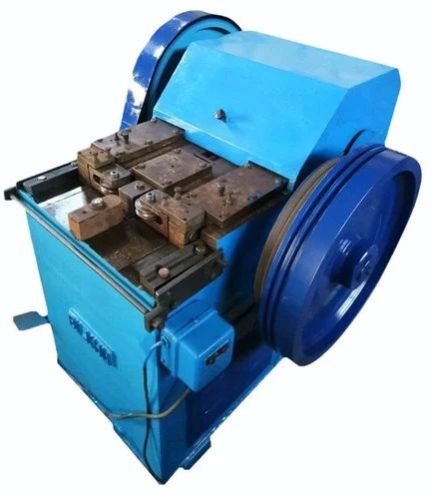
U Bolt Bending Machine

  • Min. Order (MOQ) 1 Piece
  • Brand Name Ujwal Engineering
  • Driven Type Electric
  • Condition New
  • Country of Origin 220-380V
  • Specialities High Performance, Easy To Operate
  • Frequency 50/60 Hz
  • Country of Origin India
  • Usage Used in Industries like Construction, Automotive, Marine, and Transportation

A U bolt bending machine is a specialized piece of equipment designed for forming U-shaped bolts from metal rods, commonly used in a variety of applications such as fastening pipes, securing objects to walls, or mounting machinery. U bolts are widely used in industries like construction, automotive, marine, and transportation, making the precision and consistency of these machines essential for high-quality production.


Key Components:

  • Bending Dies: These are designed to form the “U” shape by bending the metal rod around a specific radius. The dies are often interchangeable to allow for different bolt sizes. 
  • Clamping Mechanism: Holds the rod securely in place while the bending process is carried out.  Bending Arm or Rollers: These components push or roll the metal rod into the shape of a “U.” Some machines use a rotary arm to bend the rod, while others use rollers.
  • Control System: An interface that allows the operator to set bending angles, radius, rod length, and other parameters to ensure consistent production.
  • Cutting Mechanism: Many machines come with a cutting system that trims the rods to the desired length either before or after the bending process.
  • Feeding System: Automatically feeds the metal rod into the machine. In automated systems, the rods can be fed continuously for mass production.


Working Principle:

  • The straight metal rod is fed into the machine, where it is clamped securely.
  • The bending dies or arms are positioned according to the desired U bolt dimensions.
  • The machine bends the rod around the dies to form the U shape, either by pushing, pulling, or rolling the rod.
  • Once the U shape is formed, the machine may cut the rod to the required length, depending on the machine’s configuration.


Types of U Bolt Bending Machines:

  • Manual U Bolt Bending Machine: A basic version where the operator manually bends the rod, typically for small production volumes or custom-sized U bolts. 
  • Semi-Automatic U Bolt Bending Machine: Involves some manual input but mechanizes the bending process, making it faster and more consistent than fully manual machines.
  • Fully Automatic U Bolt Bending Machine: Designed for high-volume production, these machines automatically feed, bend, and cut the rods with minimal operator intervention.
  • CNC U Bolt Bending Machine: A computer-controlled machine that offers high precision and can be programmed to produce U bolts of different sizes and shapes in large quantities. Ideal for industrial-scale production.


Applications:

  • Construction: U bolts are used to anchor pipelines, secure structures, and fasten heavy equipment to concrete or other materials.
  • Automotive: Used for attaching parts like exhaust systems, leaf springs, and chassis components.
  • Marine: Securing boat engines, equipment, and rigging.
  • Electrical: Fastening conduit or cable management systems.
  • Transportation: Securing loads on trailers or mounting components on heavy-duty vehicles.
View Complete Details
Tell Us What are you looking for? Will call you back

Contact Us