Write a Review
Our Products
Our offered Product range includes Vanilla, Garlic and Soya Bean.
Description
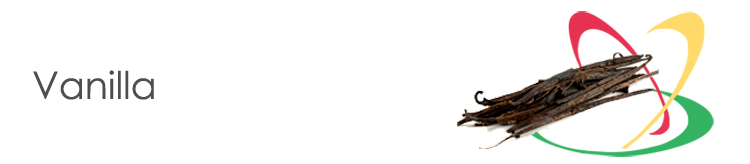
Vanilla, a member of the orchid family is a climbing monocot possessing a stout, succulent stem; short petioled, oblong leaves; about 20 cm long. The inflorescence is a raceme with 20 or more flowers. Flowers are 6 cm long, 2.5 cm wide, either yellowish green or white. Fruit popularly known as beans or pod is a capsule, nearly cylindrical and about 20 cm long.
Origin and Distribution
It is a native of Atlantic Coast from Mexico to Brazil. The important vanilla producing countries are Madagascar, Mexico, Tahiti, Malagasy Republic, Comoro, Reunion, Indonesia, Seychelles and India.Vanilla thrives well from the sea level up to 1000 meter MSL., under hot, moist, tropical climate with adequate well-distributed rainfall. Natural growth is obtained at latitudes, 15 degree North and 20 degree South of the equator. The optimum temperature ranges from 21-32 degree C and rainfall 2000-2500 mm annually. Dry period of about 2 months is needed to restrict vegetative growth and induce flowering. It grows best in light, porous and friable soils with pH. 6-7. Partial shade is essential for successful cultivation.
Uses
Vanilla is used mainly as a flavouring material; a critical intermediary in a host of pharmaceutical products and as a subtle component of perfumes. As a flavouring agent, it is used in the preparation of ice creams, milk, beverages, candies, confectionaries and various bakery items.
Botanical name Family nameVanilla planifolia Andrews Orchidaceae
Name in international language
Area and Production
The area of vanilla cultivation in the world recorded during 1999 was 37, 525 ha. with production 4403 tonnes. The major vanilla producing countries are Madagascar, Indonesia, Mexico. Comoros and Reunion.
In India, vanilla cultivation is gaining in Kerala, Karnataka and Tamilnadu since early 1990s. The area under cultivation at present is about 1000 ha, of which about 30% has started giving yield. The present production of processed vanilla is estimated to be around 6-8 tonnes annually in India.
Market
The aggregate global demand for vanilla is estimated at about 4500 mts a year. The countries, USA, France, UK and Germany account for 60% of world imports, the USA absorbing more than 30%, France, UK and Germany around 10%. These 3 countries are also major re-exporters of both vanilla beans and processed vanilla products.
Quality Product
Four major types of vanilla beans are distinguished in the world market.The Bourbon Vanilla (grown in Madagascar, Camoros and Reunion).The Java Vanilla (grown in the island Java in Indonesia).The Bourbon-like Vanilla (grown in the island Bali in Indonesia).Mexican Vanilla (grown mainly in Mexico).They differ in flavour and organoleptic properties as a result of growing conditions, harvesting and curing process. The Bourbon vanilla ranks tops in quality terms with following specifications :Colour : Dark Brown to Black shining Red/Brownish to dark Brawn.Quality: Whole, SplitAspect : Oily, SappleLength : 10cm upto 12 cms: low grade13 cms upto 22 cms: StandardAbove 22 cms : Top grade
Cuts Chopped according to buyer demand.Vanillin Content : 1.8% to 2.4%Moisture Content : 16% to 28%
In India Vanilla is predominantly grown by small and marginal growers in their fields interplanting with other crops. It is grown largely in organic situations though not certified.
Description
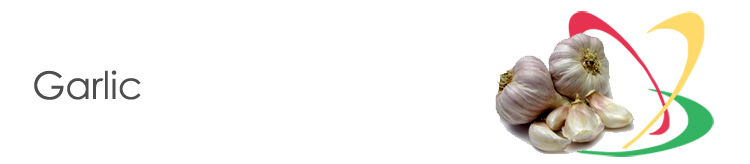
Garlic is a hardy, bulbous, rooted, perennial plant with narrow flat leaves and bears small white flowers and bulbils. The compound bulb consists of 6 to 34 bulblets called cloves which are surrounded by a common, thin, white or pinkish papery sheet. Garlic has a strong flavour and taste.
Origin and Distribution
Garlic is a native of West Asia and Mediterranean area. China, Korea, India, USA, Spain, Argentina and Egypt are the major garlic growing countries.Garlic prefers cool weather and grow in a well-drained, moderately clay loam at higher elevation (900 to 1200 mtrs).
Uses
Garlic is used for flavouring various dishes practically all over the world. In United States almost half of the produce is dehydrated for use in mayonnaise products, salad dressings and in several meat preparations. Raw garlic is used in the preparation of garlic powder, garlic salt, garlic vinegar, garlic cheese croutins, garlicked potato chips, garlic bread, garlicked bacon etc. Spray dried garlic products, liquid garlic preparations are other products. In India and other Asian and Middle East Countries, garlic is used in pickles, curry powders, curried vegetables, meat preparations etc. Oil of garlic is used as a flavouring agent in soups, canned foods, sauces etc.The other properties are anti-bacterial, fungicidal and insecticidal. In the area of medicine, it is used for various ailments of stomach, skin diseases. It has wider applications in indigenous medicines and is also considered as highly nutritive.
Botanical name Family name Commercial partAllium sativum Liliaceae Bulb
Indian Name
Name in international languages
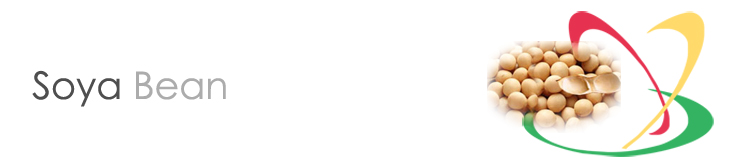
Soya bean Meal is a protein rich product, which remains after soyabeans have been processed for the extraction of oil. Soyabean Meal is mainly used as cattle feed around the world. It is also found in some canned dog food as well in protein supplements. Top Soyabean Meal is producing nations include, United States, China, Argentina, Brazil and India. India exports soyabean Meal to other Asian nations as well some African ones.
INTRODUCTION TO SOYABEAN MEAL
The soya meal is extracted from the soya bean, regarded as an important crop throughout the world. Soya meal is regarded as the best vegetable protein food source and accounts for over 65% of the worlds protein requirements. Much of the soya feed is used as animal feed and rest is used for varied human consumption purposes like in banking and meat substitutes. A solvent extraction method is used in the production of the soya meal where the beans are first crushed and subsequently, the soya oil and soya meal are extracted. It is a highly preferred food source as it is easily digestible, protein rich and also due to its energy giving nature. Soya bean is the preferred oilseed after groundnuts of which india is the largest producer. It is produced by solvent extraction method where the oil is extracted and then defatted. Soya meals can be used to prepare sweet or savory baby food. Soya bean meals are high in B-complex vitamins, have a proven ability to lower. Cholesterol and are anti-carcinogenic. Soy contains essential amino acids, proteins and other nutrients and is classified as a food and drug. The Soya plan or Glycine maz was cultivated as early as 3000 BC in China and was regarded as one of the five sacred crops in China. It was brought to Europe but the Climate and the soils were found to be unsuitable for production of the soya crop. Later, it was brought to the USA, where it became popular and was cultivated on a vast scale.
PREFERED OILSEED
Soya bean is the preferred oilseed after groundnuts of which india is the largest producer. Around 3-5 million tons of soya meal is produced in india annually. Soya Bean production requires right weather and temperatures. The animal feed sector accounts for the highest demand of a whopping 98% pests, diseases and epidemics affecting the cattle and poultry have an unfavorable effect on the price of soya. The prices of maize, jowar and bajra are the other determinats of the price of the soya meal products.
INTERNATIONAL TRADE SCENARIO
The most popular vegetarian protein source in the world, the annual worldwide soya meal production is around 132 million tons. The major producers of the soya meals in the world are United States, China, Brazil and India. 45-48 million tons is the per year annual trade in India and most of the soya beans are used for production of soya meal in India. It is exported on a large scale. Crop is harvested in the months of August and September, whereas in South America it may be harvested in the month of January and February. India is one of the major exporters of soya beans. Over two thirds of the soya meal is exported to various parts of the world. Soya meal accounts for a sizeable chunk of over 84% of total oilseed meal exports from the country in Asia, South Korea, Thailand, Philippines and japan a major importer of soya. India, does not import any soya meals as domestic requirements are easily met. The major trading centers for soya in India include Indore and Ujjain in Madhya Pradesh, Nagpur in Maharashtra and Kota in Rajasthan. Soya is a heavily traded commodity and the Chicago (CBOT) is known as the largest soya futures market in the world.
 Vidhata Impex (Vidhata Impex)
 D-7/8 Indraprastha (chs)
J.N Road,
Sarvodaya Nagar,
Mulund(w),
:-, Mumbai, Maharashtra - 400080
D-7/8 Indraprastha (chs)
J.N Road,
Sarvodaya Nagar,
Mulund(w),
:-, Mumbai, Maharashtra - 400080 Share us via