Products / Services
  • Products / Services
  • Companies
  • Buy Leads
Post Buy Requirement

Industrial Machinery & Plant Equipment

The purchase of industrial equipment cannot be compared to purchasing common goods. It involves larger decisions, more money at stake and a misstep can stall your whole operation. It does not matter whether you are the operator of a small factory or organizer of a large manufacturing plant; it is important to find the appropriate equipment along with the appropriate supplier.

A very wide array of products is encompassed by industrial machinery. From machines that cut and shape metal to systems that pack goods, move materials, or generate power — it all falls under this category. These products keep factories and plants running every day. In their absence, there will be no production.

The positive part is that it is now much easier to locate suppliers. Online B2B services at ExportersIndia help buyers to receive thousands of manufacturers and dealers throughout India and abroad. It is possible to search for products, check supplier details, compare prices and send inquiries in one place. It saves time and assists you in smarter purchasing decisions.
Shaping Machine Vice (12 Inch)

Shaping Machine Vice (12 Inch)

Price: rupee 9,500 / Piece
QUALITY Shaping Machine

QUALITY Shaping Machine

Price: rupee 1.10 Lakh - rupee 7 Lakh/ PIECE
Automatic Rebar Shaping Machine

Automatic Rebar Shaping Machine

Price: rupee 28.32 Lakh / Piece

Recommended Posts in Cutting Machines & Equipment

Surface Grinding Machine, Voltage : 220V

Surface Grinding Machine, Voltage : 220V

Price: rupee 90,000 - rupee 5 Lakh/ piece
Grinder Machine

Grinder Machine

Price: rupee 3.50 Lakh / Piece
Semi Automatic Gold Granules Making Machine

Semi Automatic Gold Granules Making Machine

Price: rupee 1.58 Lakh - rupee 4.25 Lakh/ piece

Leading Companies in Industrial Machinery & Plant Equipment Category

Recommended Posts in Hydraulic & Pneumatic Machines

FAQs Related to Industrial Machinery & Plant Equipment

What kinds of machines are listed on industrial B2B platforms?

You will find a wide range — CNC machines, boilers, compressors, packaging machines, conveyors, generators, pumps, valves, material handling equipment, and more. Both light and heavy industrial equipment is covered.

How can I check if a supplier is trustworthy?

Look for certifications like ISO 9001 on their profile. Read buyer reviews if available. Ask the supplier for references from past customers. Many platforms also verify suppliers before listing them, which adds a basic level of trust.

What is the difference between industrial machinery and plant equipment?

Industrial machinery refers to individual machines — like lathes, presses, or drills. Plant equipment refers to the bigger systems that support a facility — boilers, electrical panels, cooling towers, piping, and HVAC systems. Most buyers need both.

Can a small business also use these platforms to buy equipment?

Yes. These platforms work for buyers of all sizes. Many suppliers are open to smaller orders, and some even list used or refurbished equipment, which is easier on the budget.

What should I check before buying plant equipment?

Check the technical specs, power needs, warranty, spare parts availability, delivery time, and whether the supplier offers installation help. If you are importing, also check what export documents the supplier provides.

Explore Industrial Machinery & Plant Equipment Categories

How to Sell on Exportersindia

Popular Industrial Machinery & Plant Equipment Products

How Industrial Machinery & Plant Equipment Powers Modern Manufacturing

One of the largest categories of products in international trade is industrial machinery and plant equipment. It encompasses nearly all machines and systems required to operate a factory or a processing unit, including a tiny grinding machine in a living room workshop, or a complete automated production line in a large pharmaceutical facility.

Getting this right matters. The right machine improves output and cuts waste. The wrong one — or a machine bought from an unreliable supplier — leads to breakdowns, costly delays, and repair bills that add up fast.
Machine Tools and Metalworking Equipment

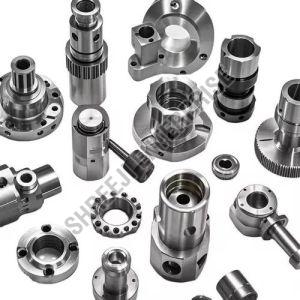
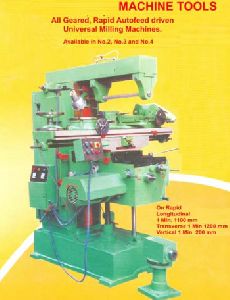
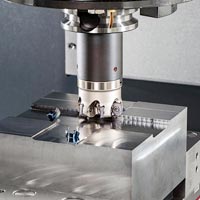
Machine tools are used to shape and cut metal. These are lathes, drilling machines, milling machines, grinding machines, and CNC (Computer Numerical Control) machining centres. They find applications in the automotive, aerospace, and defence industries, among others.

Right now, CNC machines are highly popular due to the way they can make things and repeat the same several thousand times without faults. When purchasing, you should look at the spindle speed, number of axes, level of accuracy and compatibility of the software with your current systems.

Material Handling Equipment

All the equipment used to move, lift or store materials within a factory or warehouse falls under this classification. They include conveyors, forklifts, cranes, hoists, pallet stackers and automated carts.

Effective material handling devices accelerate the production process and minimise the workforce. When purchasing, consider the weight-capacity, safety, and energy-consumption of the equipment, as well as its compatibility with your current system.

Boilers and Heat Exchange Equipment

Boilers are sources of steam or hot water, which are used during heating, power and industrial operations. They can be found in paper mills, textile factories, chemical plants, food processing units, and power plants.

Considerations when purchasing a boiler include the type of fuel it can run (gas, coal, oil or biomass), its efficiency, pressure capacity, and its certification. Using Indian Boilers IBR ( Indian Boiler Regulations ) approval is mandatory on most boilers in India.

Packaging Machinery

Products are automatically filled, sealed, labeled and wrapped by packaging machines. They are extensively applied to food and beverage, pharma, cosmetics, and FMCG enterprises.

The contemporary packaging lines are capable of various pack sizes and can operate at high rates. When purchasing, consider the number of units per minute the machine can serve, the materials it will handle, its ease of cleaning, and the time required to change product type.

Pumps, Valves, and Fluid Control Equipment

Liquids and gases flowing within a plant are governed by pumps and valves. They are used in water treatment, oil and gas, chemicals, pharma and food processing. Typical varieties are centrifugal pumps, positive displacement pumps, gate valves, ball valves and control valves.

Here, compatibility is the crucial point - the pump or valve should be capable of handling the head of the particular liquid or gas in your plant, particularly corrosive or very viscous liquids. Check pressure ratings, flow capacity and seal quality; these are also to be checked.

Key Facts About Industrial Machinery Categories

  • Industries that consume this equipment: Manufacturing, construction, food processing, pharma, oil and gas, textiles, automotive, chemicals, agriculture.
  • Applications of this equipment: Production automation, material movement, shaping metal, heat production, fluid flow control, product quality inspection.
  • B2B platforms are more popular among buyers: It offers large variety of products, allow comparing suppliers, have certified manufacturers and offer improved prices.
  • What buyers seek: Prolonged life, energy efficiency, safety, ease of maintenance, good warranty and service.
  • Ordinary certification: ISO 9001, CE marking, BIS certification, ASME, IBR, ATEX (explosive or hazardous)
  • Buyers: Procurement teams, plant managers, engineers, contractors, industrial distributors, EPC companies.
  • Role of exports in India: India exports industrial machines to Africa, Southeast Asia and the Middle East at a reduced price.

Product Comparison: Industrial Equipment at a Glance

Equipment Type Main Industries Who Buys It Common Uses
CNC Machine Tools Automotive, Aerospace, Defence Precision part manufacturers Metal cutting, turning, milling
Boilers & Pressure Vessels Paper, Textiles, Chemicals, Power Plant engineers, EPC contractors Steam generation, industrial heating
Packaging Machinery Food, Pharma, FMCG, Cosmetics Production and operations managers Filling, sealing, labelling, wrapping
Material Handling Equipment Warehousing, Manufacturing, Ports Logistics and operations teams Lifting, conveying, storing
Pumps and Valves Water Treatment, Oil & Gas, Pharma Maintenance engineers, plant managers Moving fluids, pressure control
Generators and Power Equipment All industries Facility and plant managers Backup power, continuous power supply
Industrial Compressors Automotive, Electronics, HVAC Plant operators, service companies Powering tools, refrigeration, gas compression

Generators and Power Equipment

In case of failure of the main power supply, industrial generators keep your plant running. This type includes diesel generators, gas generators, UPS systems and voltage regulators.

During purchases, consider power output in kVA, fuel efficiency, volume and potential to be automatically switched on during a power cut, and compliance with local emission regulations.

Industrial Compressors and HVAC Systems

Compressors supply compressed air for pneumatic tools, painting, and many process tasks. HVAC systems regulate temperature and air quality in places where the atmosphere should be closely controlled - such as in electronics assembly, pharmaceutical manufacturing or cold storage of food.

Important considerations: compressor type (screw, reciprocating or centrifugal), pressure and the volume of airflow, and energy efficiency rating.

Electrical and Automation Equipment

This encompasses control panels, PLCs (Programmable Logic Controllers), sensors, drives, switchgear and SCADA systems. Robotic devices are taking center stage as factories increasingly become smarter and more interconnected in the modern manufacturing industry.

In purchase, consider reputable brands, compatibility with existing software, responsiveness and quality of technical service offered by the vendor.

Industrial Furnaces and Ovens

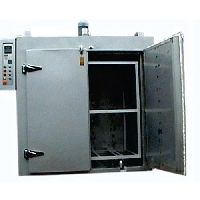
Heat treatment, ceramics, glass and metal casting take place in industrial furnaces. They are known as muffle furnaces, box furnaces, rotary kilns, and induction heaters.

Temperature range, uniformity of heating, source of energy, size of the chamber and the capability of the temperature to be controlled accurately. The quality of the refractory lining and door seals also affects energy bills and output quality.

Water Treatment and Environmental Equipment

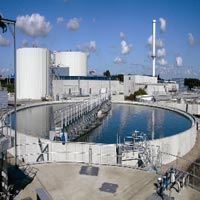
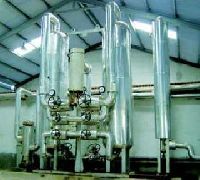
Water treatment systems are now a must for most industrial plants. These are effluent treatment plants (ETP), sewage treatment plants (STP), reverse osmosis (RO) systems, and zero liquid discharge (ZLD) plants.

Environment regulations do not allow most industries chemicals, textiles, food, pharma to discharge wastewater without first treating it. During purchase, ensure the system is up to CPCB standards, test the treatment capacity and inquire about running cost per litre.

Weighing and Measuring Equipment

Platform scales, weigh bridges, belt weighers, batch weighing systems and load cells are all industrial weighing devices. They are applied as long as materials require strictly controlled measurements, e.g., chemicals, food, cement, mining, and shipping.

Major considerations: Max load capacity, accuracy (class) level, IP (dust and moisture) level, and compatibility with your plant management software.

Things to Check Before Choosing a Machinery Supplier

  • Does the supplier possess the right certifications for your market: ISO, CE, BIS, or any other?
  • What is covered by the warranty and how long?
  • Are spare parts readily available locally and at what price?
  • Does the supplier assist with installation and setup?
  • What is the maximum time between order and delivery?
  • Does the supplier provide you with references of related businesses?
  • What are the payment terms, and is phased delivery possible?

Top Categories Every Buyer Should Consider

Some product categories are more important than others — either because they affect your entire operation, or because they are harder to get right without proper guidance.

CNC Machine Tools are in high demand across India. CNC machining has become one of the necessities as factories are shifting with regard to tighter tolerances and increased volumes. During purchase, ensure the supplier possesses a good network of local service support, since downtime on a CNC machine is expensive.

Boilers are critical infrastructure. A poorly made boiler is not just a financial risk — it is a safety risk. Check fabrication quality, welding standards, safety valve ratings, and IBR compliance before you buy.

Packaging Machinery has seen a big jump in demand, driven by growth in online retail, exports, and organised FMCG. Don't just look at line speed. Determine the speed that the machine can change between various product forms, since flexibility is economical in the long-run.

Material Handling Equipment is something that can be neglected when trying out a new production facility, but its impact on the output is significant. With large volumes of work, a well-designed conveyor and storage system can reduce labour costs by 20% to 30%.

Industrial Pumps need extra attention. A pump failure can stop an entire plant. Never make up your mind without seeking information on the availability of spare parts and after-sales services for your products. It is clever to keep such critical components as mechanical seals and impellers on site.

Water Treatment Equipment is no longer just about staying compliant. Companies that invest in good treatment systems also reduce water procurement costs and lower their environmental risk — both of which matter more now than they did five years ago.

Weighing Equipment is generally considered a secondary aspect, yet incorrect weighing during batch production can result in rejected product, wasted materials, and in some cases, hazard issues. Purchase verified equipment with proven quality manufacturers.

We list all these categories in detail, and this way the procurement teams can directly jump to the appropriate category and get suppliers matching their product and location requirements.

Current Industry Trends

Bigger Picture

The worldwide industrial equipment market is increasing at a steady rate. The industry forecasts it to exceed USD 700 billion in the late 2020s. This is primarily due to investment in infrastructure in developing nations, increasing automation in factories and a shift to more energy-efficient production systems.

A large piece of this story is India. Government schemes like the Production Linked Incentive (PLI) programme are encouraging new investment in factories across textiles, electronics, food processing, and pharma. This is pushing demand for new plant and machinery — both for domestic use and for export.

What Is Moving the Market

A few key shifts are changing how industrial equipment is bought and sold

Smart Machines and Automation — More factories are currently making use of PLCs, robots and sensors that are linked with the internet. The concept is to observe the machines directly, to identify issues before they occur and minimize unexpected downtime.

Energy Costs Are Driving Choices — Power costs have gone up across the world. Buyers now look closely at how much electricity a machine uses — not just how well it performs. Equipment with variable frequency drives, energy recovery systems, and efficient motors is selling well.

Buying Local — Governments across Asia are pushing companies to buy domestically made machinery where possible. This is reducing imports of standard equipment from Europe and Japan, and giving Indian manufacturers more business at home and abroad.

Total Cost Matters More Than Price — Buyers have learned that a cheap machine that breaks down often costs more in the long run than a higher-priced machine from a reliable supplier. Suppliers with good service networks and fast spare parts availability are gaining a stronger reputation.

Green Manufacturing — More buyers now ask about the environmental impact of the machines they purchase. Equipment that uses less coolant, produces lower emissions, or is made with recyclable materials is getting more interest — especially from large buyers who have ESG (Environmental, Social, Governance) reporting requirements.

Modular Equipment — Machines and systems built in a modular way can be expanded or changed without replacing the whole unit. A modular conveyor can be extended by adding sections. A modular packaging line can be upgraded with new modules. This kind of flexibility reduces long-term costs.

Online Sourcing Is Now Standard — Most procurement teams now start their search online. They use B2B directories to filter suppliers by product, location, and certification, send inquiries, and compare quotes — all before ever making a phone call. This has made the buying process faster and opened up access to more suppliers.

Market Highlights

  • The demand for automation equipment is increasing rapidly in manufacturing, logistics, and pharma.
  • Older, less efficient models are being replaced by energy-efficient motors, compressors, and boilers.
  • Indian machinery being exported to Africa, Southeast Asia and the Middle East is on the rise.
  • Smaller businesses and MSMEs are increasingly taking interest in refurbished or used equipment.
  • Manufacturers in India are collaborating with European and Japanese firms to enhance the quality of products.
  • The demand for construction and material handling equipment is driven by government spending on roads, ports and infrastructure.
  • B2B sourcing via the online platform has reduced the amount of time used to source and compare suppliers.

Conclusion

The purchase of an industrial machine or plant equipment is a large decision. The machine you select will operate in your plant for years. It impacts your output, your expenses and your team's day-to-day activities. It is always better to do things right the first time than to rectify issues later.

Consumers are now better equipped with everything they need to make good decisions. It is possible to compare the suppliers online, learn about their certifications, and read their reviews, as well as request quotes without wasting days on the phone calling and visiting the suppliers. This renders the process quicker and more valid. Be patient in the evaluation phase, pose the appropriate questions and do not make a hasty decision to buy something just because it is cheap. The machine that fits your process, has good support, and is reliable enough to run for several years is the best machine.

When sourcing industrial machinery, you could begin with a site that has a large pool of verified suppliers. ExportersIndia has a list of manufacturers, dealers, and exporters in each of the key machinery categories — it is possible to easily find a supplier, compare and relate to one that best fits your needs and budget.

Waiting for permission
To search by voice, go to your browser settings and allow access to microphone

Allow microphone access to search with voice