 GST : 05BFDPD7978H1Z9
 4.4/5
4.4/5
Our Products
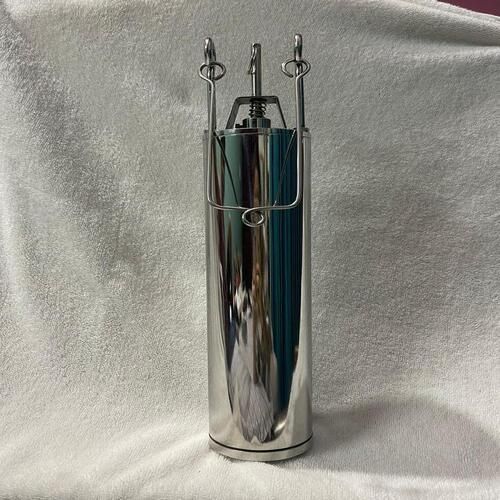
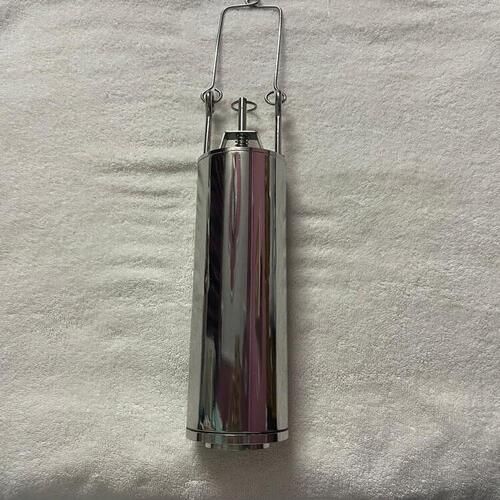
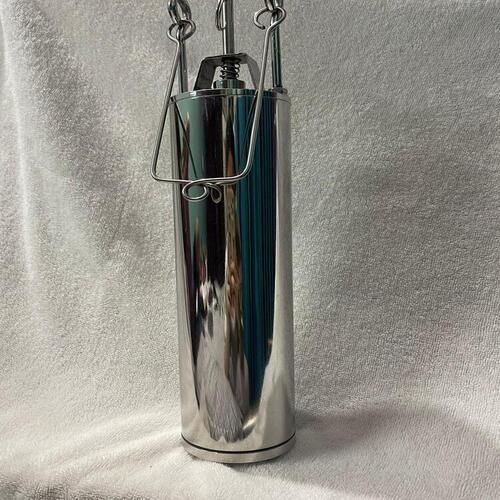
We are leaders in the market for providing best range of Depth Integrating Suspended Sediment, Sunshine Recorder, Sun Shine Recorder Card, Van Veen Grab Sampler and Digital Water Level Recorder
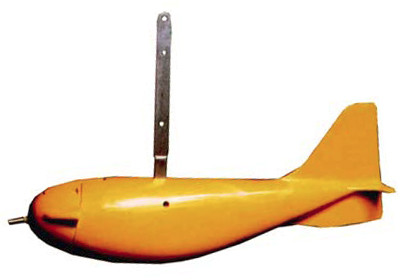
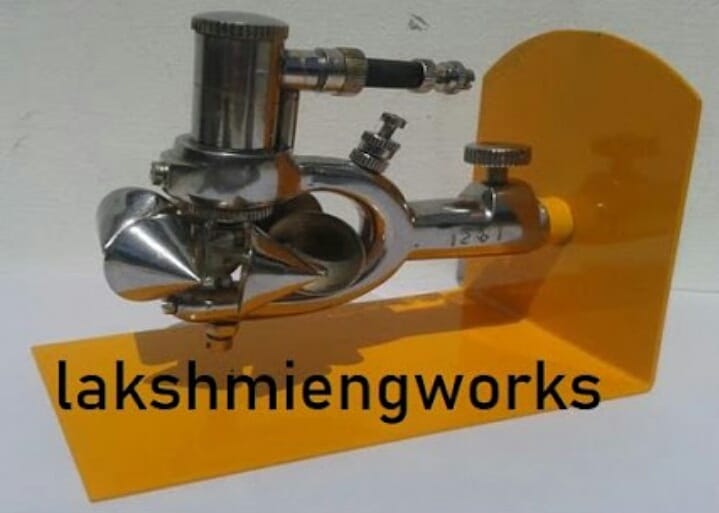
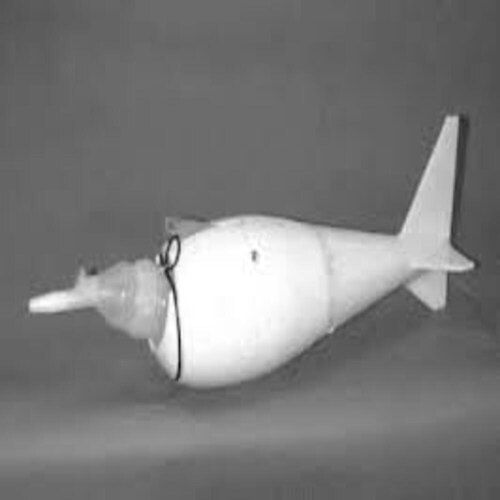
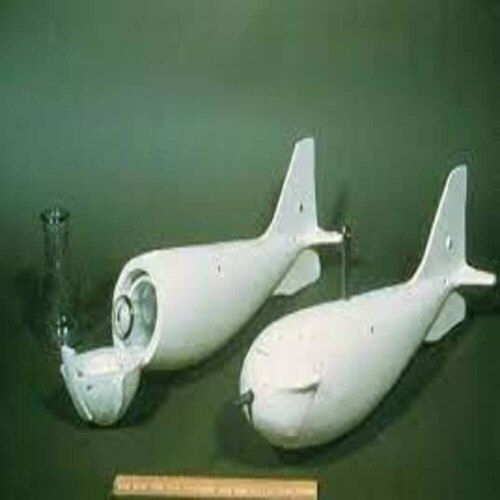
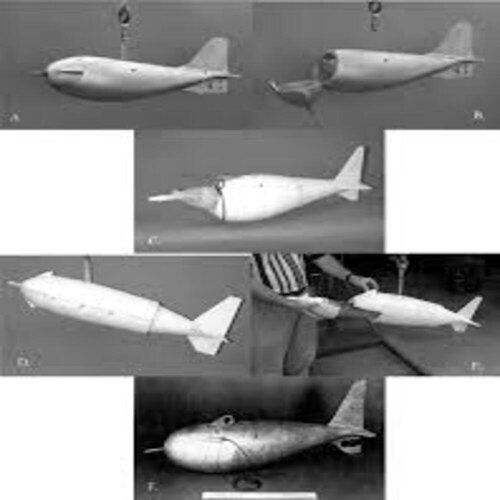
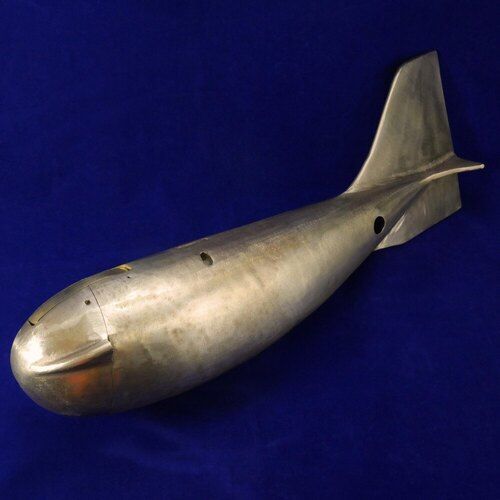
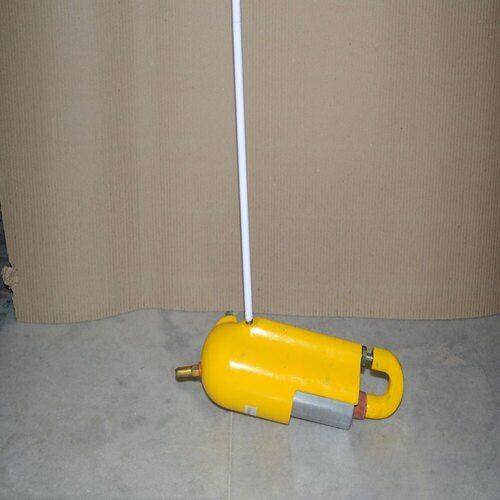
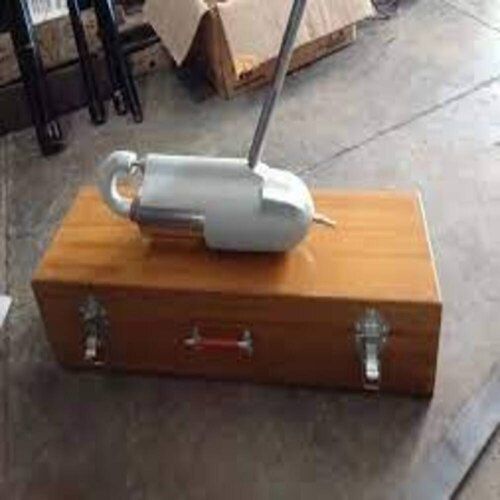
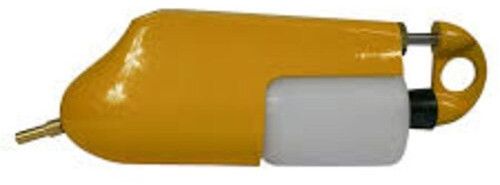
The easy-to-use sampler consists of an epoxy coated, streamlined aluminium casting (weighing approx. 2 kg), which partially encloses the sample container. An intake nozzle extends horizontally from the nose of the sampler body. The axis of the sample container is inclined at an angle to the vertical which permits sampling to within 90 mm of the stream bed. A continuous stream filament is discharged into the sample bottle during the period of submergence.
A streamline projection, pointing toward the rear on the side of the sampler head, accom-modates the air exhaust port from which air escapes from the bottle as the sample is being collected. A fixed static head differential between the intake and air exhaust, facilitates sampling in low stream velocities and slack waters.
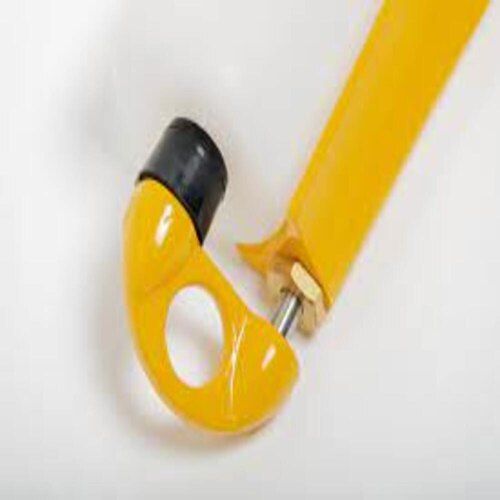
The sample container is held in place and sealed against a rubber gasket in the sampler head by a hand-operated spring tensioned clamp at the rear of the sampler. The capacity of the sample container is about 470 ml.
A standard 13 mm diameter wading rod is threaded into the top of the sampler.
Additional Information:
Payment Terms : T/T
Packaging Details : Corrugated box
Delivery Time : 5 days
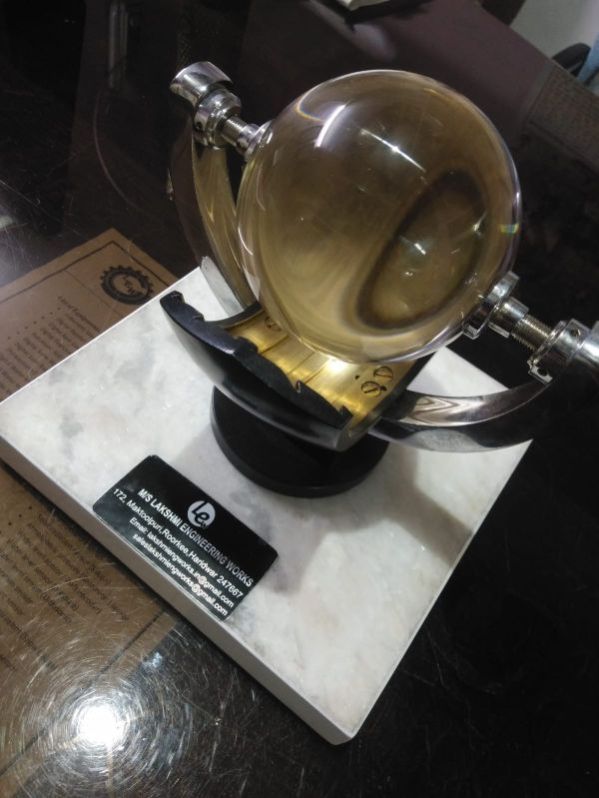
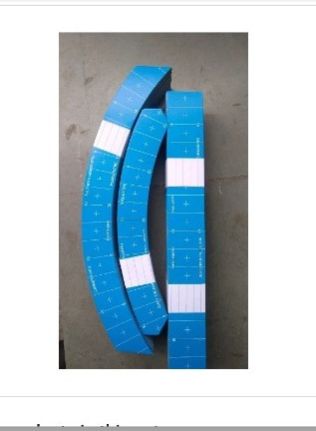
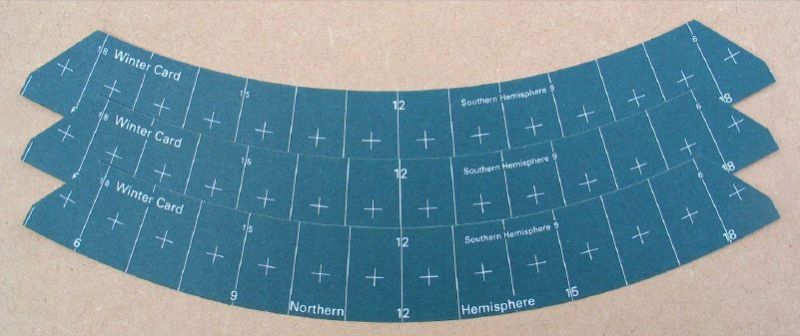
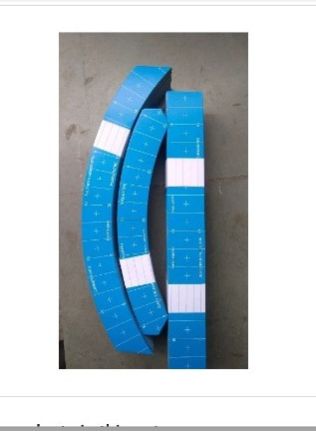
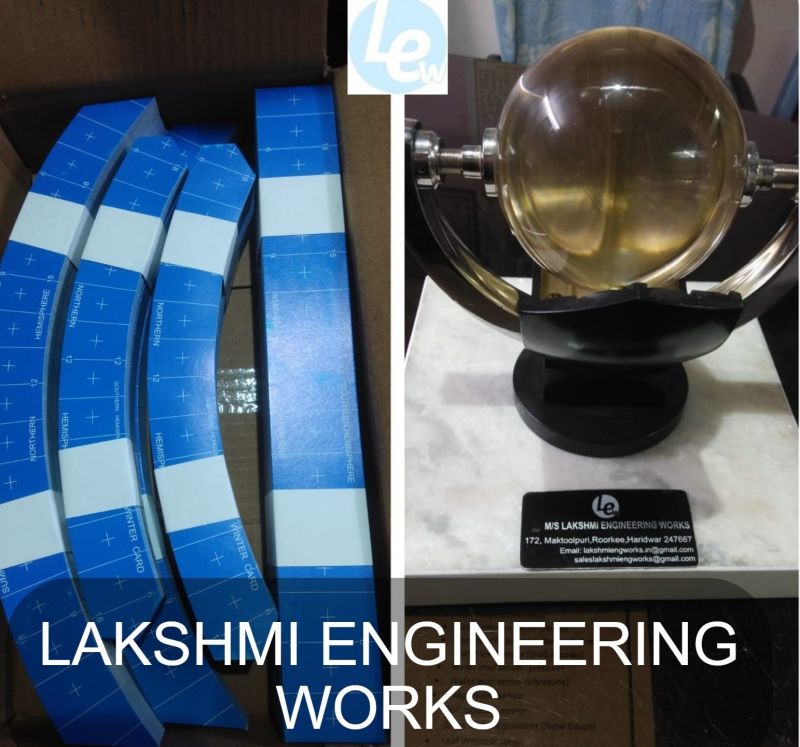
Sunshine recorders automatically registering time and duration of insulation are used at meteorological and climatologically research centers, observatories, spas and health resorts, in agriculture, horticulture, viticulture and vegetable gardening. The instruments are set up on flat roofs or on clear ground in such manner as to be well exposed to solar radiation, during the whole day. The type of instrument to be chosen depends on the latitude of the place installation. This recorder consists essentially of a glass sphere mounted concentrically in a section of a spherical metal bowl, the diameter of which is such that the sun stays are focused sharply on a card held in the grooves, in the bowl. Three overlapping pairs of grooves are provided in the bowl to taken up cards suitable for the different seasons of the year. A sunshine recorder is a device that records the amount of sunshine at a given location or region at any time. The results provide information about the weather and climate as well as the temperature of a geographical area. This information is useful in meteorology, science, agriculture, tourism, and other fields. It has also been called a heliograph. There are two basic types of sunshine recorders. One type uses the Sun itself as a time-scale for the sunshine readings. The other type uses some form of clock for the time scale. Older recorders required a human observer to interpret the results; recorded results might differ among observers. Modern sunshine recorders use electronics and computers for precise data that do not depend on a human interpreter. Newer recorders can also measure the global and diffuse radiation. This recorder consists essentially of a glass sphere of 96 mm diameter mounted concentrially in a section of a spherical metal bowl, the diameter of which is such that the sun`s tays are focussed sharply on a card held in the grooves, in the bowl. Three overlapping pairs of grooves are provided in the bowl to taken up cards suitable for the different seasons of the year. The sphere is made of uniform and well annealed colourless glass and is carefully ground and polished with great precision. Installation Following manipulations are necessary when installing the recorder: a) The base should be levelled. b) The bowl should be so adjusted that the centre line of the equinoctial card lies in the celestial equator (the scale line of latitude marked on the bowl facilitates this). c) The vertical plane through the centre of the sphere and the noon mark on the bowl must be in the place of the meridian. If the instrument is correctly adjusted the image will fall on the bowl or card and the traces of the image will be parallel to the central lines of the cards, during the whole year. Local apparent time is obtained by subtracing the equation for time from local mean time. Accurate installation is greatly facilitated by means of the levelling plate (cover picture), which is provided with three oblong holes for the purposes of fastening it. Adjustment with in the meridian is effected by turning the levelling plate and simultaneously watching the trace of the image on the card. The base plate of the sunshine recorder rests on three points in three corresponding slots of the levelling plate. The three points are formed by a fixed pin and two forcing screws. With the aid of these screws and of an air level fixed on the base plate, this latter is adjusted as to the horizontal plane. The base plate by tightening knurled screw. For an occasional cleaning of the instrument or for thawing-off coating of ice, it can very easily be taken off after having loosened the knurled one screw. When being replaced, the instrument will always occupy exactly the same position as before. There is no need for readjustment. The sunshine recorders are equipped with an electric heating device, which eliminates the formation of ice, snow, and hoar-frost, on the glass sphere. To this end the cylindric socle arranged on the gradu
Additional Information:
Payment Terms : D/P, T/T
Packaging Details : Corrugated box
Delivery Time : 5 days
This recorder consists essentially of a glass sphere of 96 mm diameter mounted concentrially in a section of a spherical metal bowl, the diameter of which is such that the sun`s tays are focussed sharply on a card held in the grooves, in the bowl. Three overlapping pairs of grooves are provided in the bowl to taken up cards suitable for the different seasons of the year.
The sphere is made of uniform and well annealed colourless glass and is carefully ground and polished with great precision.
Installation Following manipulations are necessary when installing the recorder: a) The base should be levelled. b) The bowl should be so adjusted that the centre line of the equinoctial card lies in the celestial equator (the scale line of latitude marked on the bowl facilitates this). c) The vertical plane through the centre of the sphere and the noon mark on the bowl must be in the place of the meridian. If the instrument is correctly adjusted the image will fall on the bowl or card and the traces of the image will be parallel to the central lines of the cards, during the whole year. Local apparent time is obtained by subtracing the equation for time from local mean time. Accurate installation is greatly facilitated by means of the levelling plate (cover picture), which is provided with three oblong holes for the purposes of fastening it. Adjustment with in the meridian is effected by turning the levelling plate and simultaneously watching the trace of the image on the card. The base plate of the sunshine recorder rests on three points in three corresponding slots of the levelling plate. The three points are formed by a fixed pin and two forcing screws. With the aid of these screws and of an air level fixed on the base plate, this latter is adjusted as to the horizontal plane. The base plate by tightening knurled screw. For an occasional cleaning of the instrument or for thawing-off coating of ice, it can very easily be taken off after having loosened the knurled one screw. When being replaced, the instrument will always occupy exactly the same position as before. There is no need for readjustment.
The sunshine recorders are equipped with an electric heating device, which eliminates the formation of ice, snow, and hoar-frost, on the glass sphere. To this end the cylindric socle arranged on the graduated arc, on which the glass sphere is resting, is provided with a hollow by turning, into which the heating element is fitted. This is fed via the connected cable of 20 metres length with d.c. or a.c. of 24 volts and has a heating capacity off appr. 30 watts. Transmission of the heat from the metal socle to the glass sphere suffices to keep this latter free from coatings of ice, snow, hoarfrost, etc., also under severe climatic conditions. If required, the heating device is to be ordered together with the sunshine recorder, as subsequent mounting of the device is impossible without having the instrument sent back to the factory.
Additional Information:
Payment Terms : T/T
Packaging Details : Corrugated box
Delivery Time : 7 days
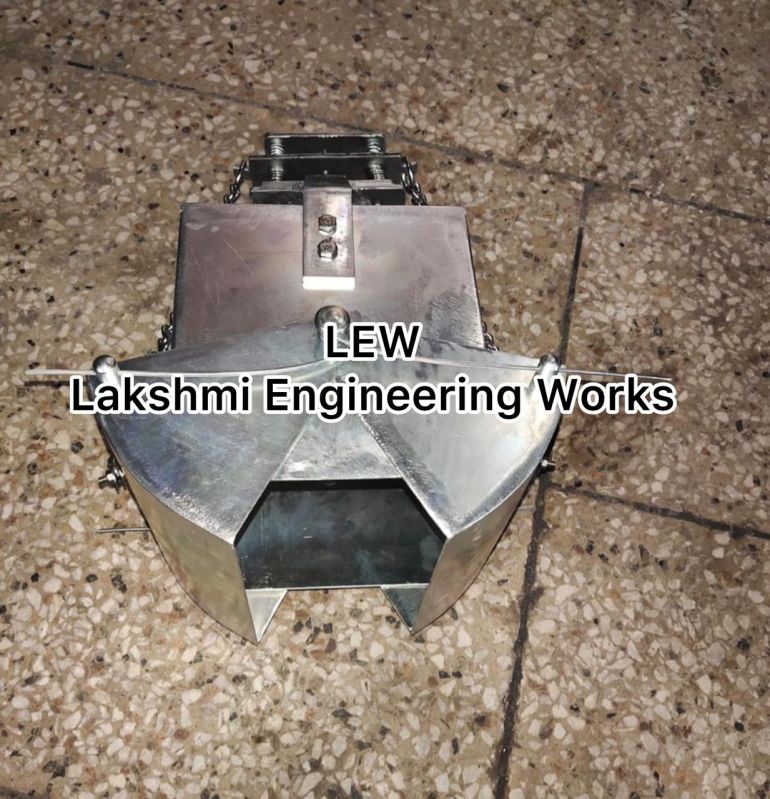
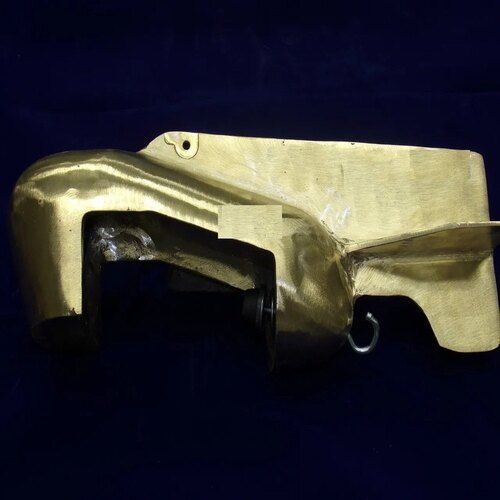
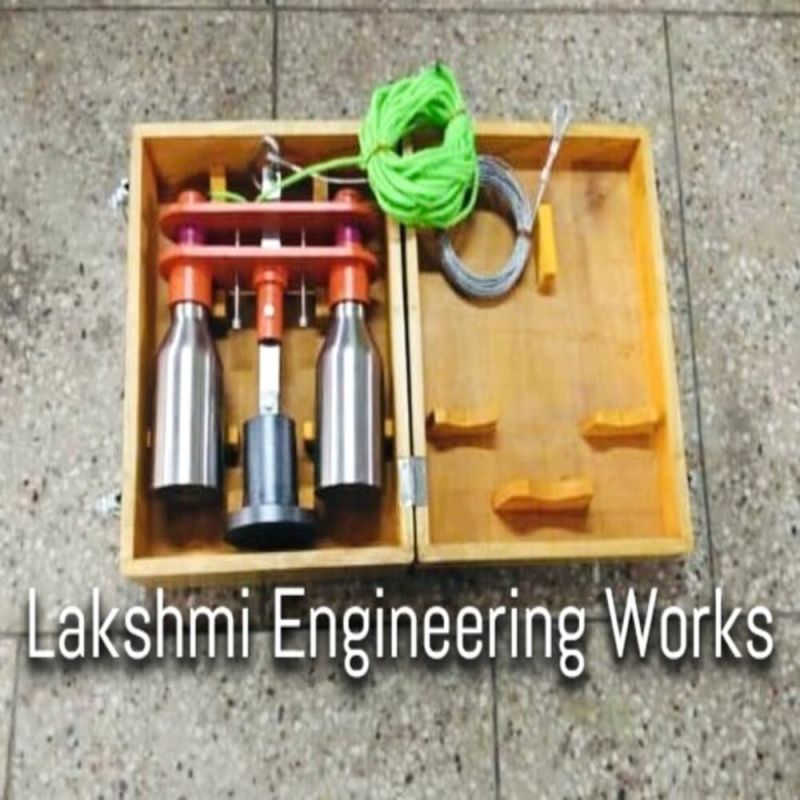
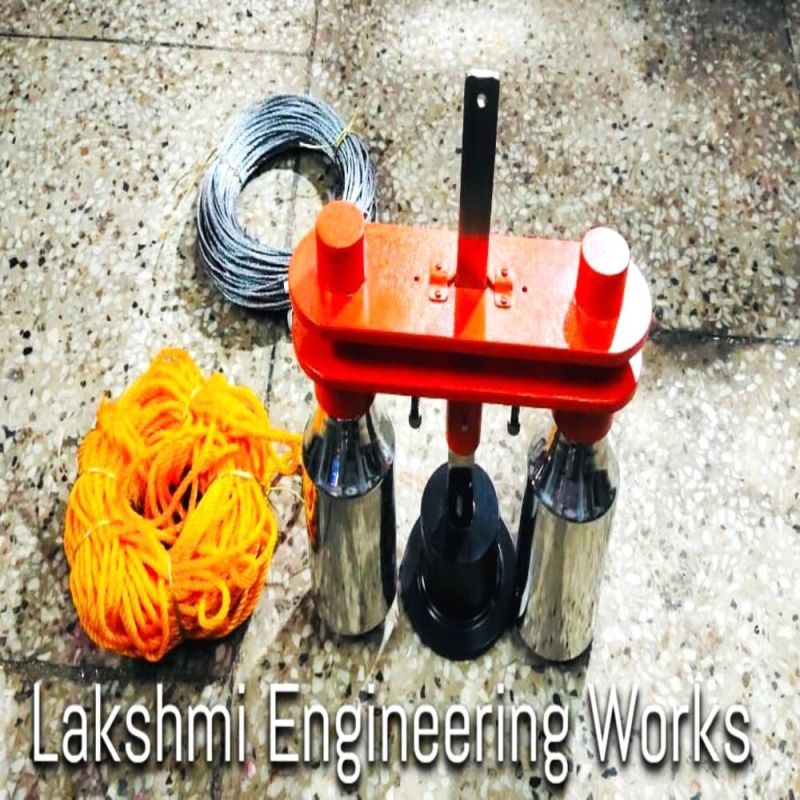
The Van Veen grab is used for sampling disturbed sediment. This device is used with a rope/cable and is manually controlled. The Van Veen grab is available in four different capacities.
Easily collect samples at the bottom of lakes, rivers with the Van Veen grab. Simply open the jaws and take a ‘grab’ when reaching the bottom. When hoisting the rope up again the jaws will shut tight and the sample is taken. The Van Veen gab will give you a fast indication of the sediment type and is available in four different sizes. The stainless steel construction ensures that the Van Veen grab is strong and of high quality.
The mode of operation of all Van Veen grabs is the same. At the surface the jaws are pushed open and kept in that position by a hook. To keep the hook in the right position the Van Veen grab should be sunk at a steady, not too high, pace. Both jaws are fitted with holes to allow air to escape during the sinking. If these holes were not there, the air would escape when taking the sample, which would result in interference with the sample. As soon as the jaws touch the bottom, the hook loosens its grip, so that, when hoisting the rope again the jaws will shut tight because of the leverage by the rods.
It is recommended to take at least 6 samples from every location and to base your conclusion on the total of the samples. This is especially important when the bottom is less regularly shaped and the bottom material consists of a mixture of materials.
Additional Information:
Payment Terms : T/T
Packaging Details : Corrugated box
Delivery Time : 5 days
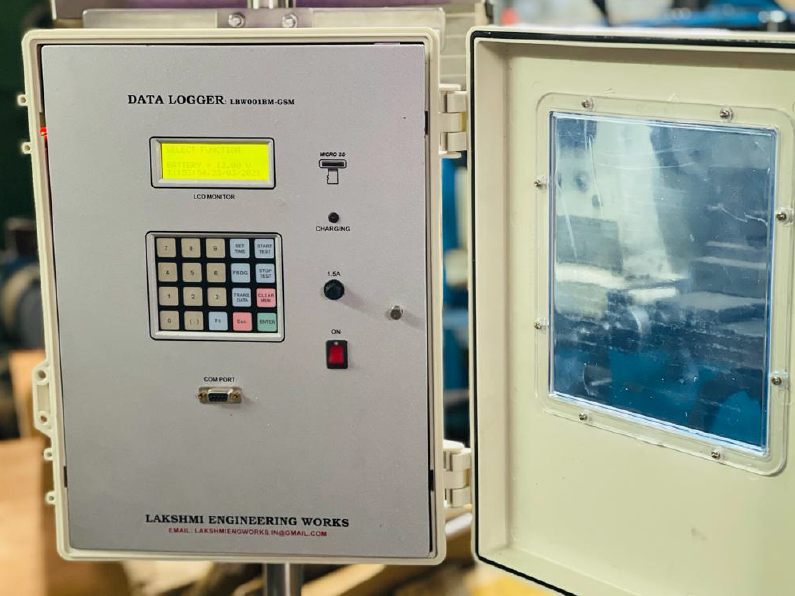
Digital Water Level Recorder for Dams provides accurate data on water level from any river pond, lake, reservoir, borehole, ranging from natural to man-made structures. This is automatic system for unmanned recording of water level avoiding travel to field and take measurements. Another important feature is ceramic transmitter for longer life and strong graphical software for daily or monthly data presentation in graphical format.
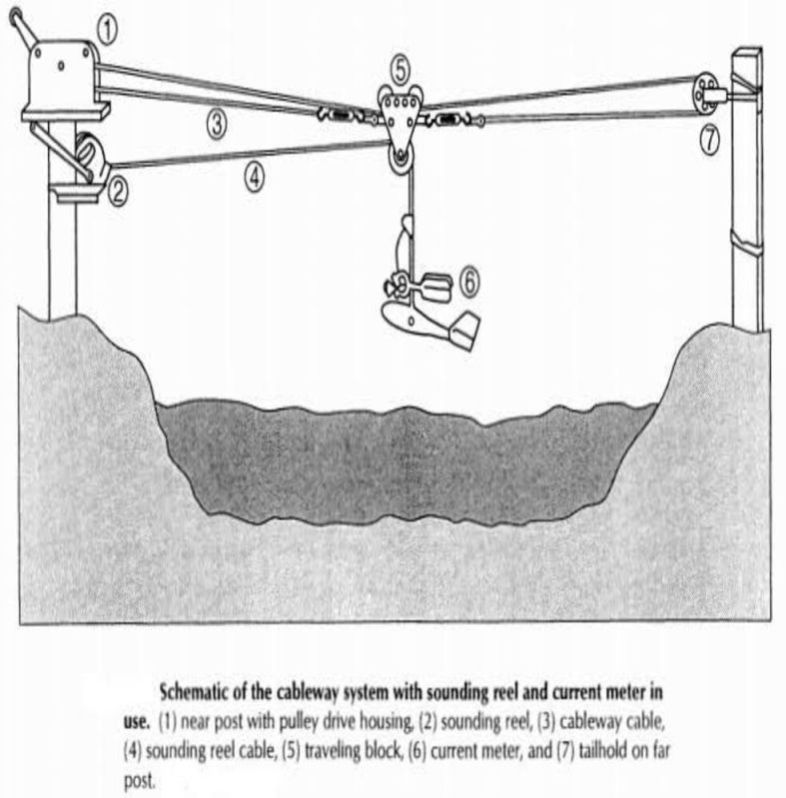
The cable way installation is provided for determination of current velocities in water courses, canal and rivers. Depending on the kind of water and maximum possible current velocities suspended current meter equipment with snikers of 25, 50and 100kg and more can be used .By means of double drum winch, the meter body can be moved horizontally and vertically. The corresponding position of meter body can be determined with the help of the two counters. So a determination of current velocities from river bank is possible. Due to the solid execution of stationary cable way installation is a safe operation is possible in extreme conditions ( Flood , extensive span etc).
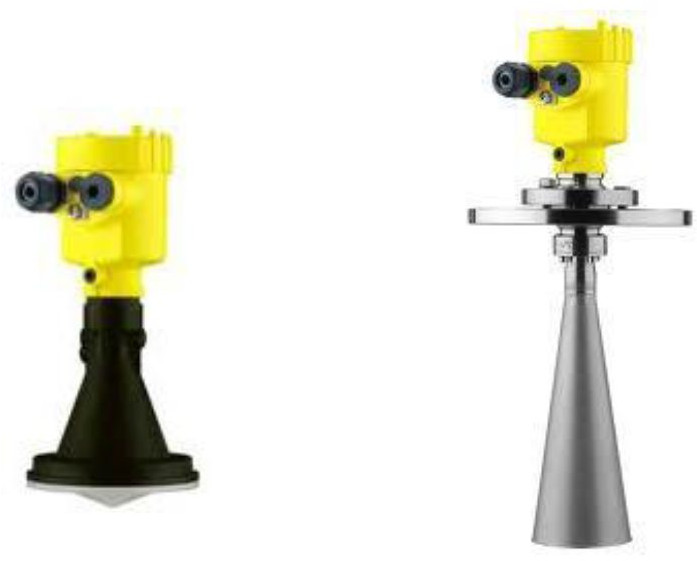
LEW make Digital Water Level Recorder (Radar Type) is a fully computerized, digital and self contained power source system, fitted with Data Logger and battery charging solar panel with rechargeable, maintenance free batteries complete with sealed waterproof enclosure for Data Logger, Solar charger and battery. It comes with facility to transport Data from Data Logger to a P.C. through a pocket able data shuttle / Ethernet LAN / Wireless GSM Network (As per Customer requirement). 16x2 OLED alphanumeric display and 4x2 membrane keypad is provided at front panel of data logger for programming data logger and monitoring sensor reading at site without the help of computer.
Features & Specifications :
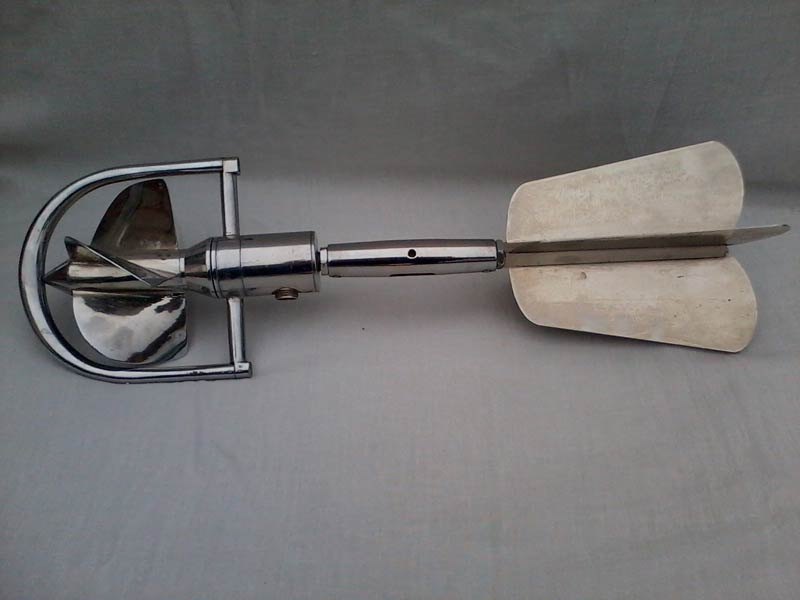
The water current meter used for determining velocities of flowing water in open channel and streams has been manufactured to meet the requirement of IS:3910.
The water current meter consist of a cup type bucked wheel assembly having six cups mounted on a vertical shaft. This shaft is held vertical in a yoke frame on two pivot points. This yoke frame while holding the moving the moving assembly protect its cups from damage from the floating bodies in flowing water also. The vertical shaft rest on a pivot point at the lower end which is adjustable. the upper end is held in position at a pivot point inside the magnetic contact chamber, which is made water right by a cap. The magnetic contact chamber is equipped with two contact switches the terminal of which are located outside on the body of the contact chamber. Only one switch is used at a time, the other is a spare and stand by and can be used immediately if one goes out of order. The other end of the contact terminals (earth) is the yoke frame itself and so a common earth terminal has been provided on the yoke frame. The bucked wheel rotates in between two pivots in the yoke frame. Each one revolution of the buckets wheel makes a contacts of the magnatic switch in the magnetic chamber which can be recorder on a counter. The yoke frame consist of a tail fin with a balancing weight, which moves in a slot and be adjusted at any place within the slot. The balancing weight is so adjusted so as to keep the current meter horizontal when suspended in water. The tail fin keeps the yoke frame with the bucket wheel to the upstream direction as the tail fin goes to downstream direction with the flow of water. The meter is suspended in water with the help of a suspension flat in deep water and by a suspension rod (wadding rod) in shallow water.
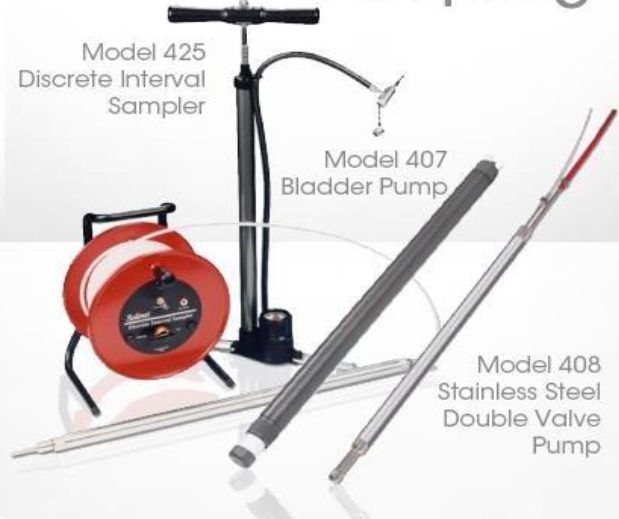
Inserting a screened sampler to the desired depth in the formation and then exposing the screen collects groundwater. In order to yield groundwater, the screen must be left in place for an undetermined amount of time to allow for groundwater recharge. Groundwater is collected after bailing or purging using 1/4 inch tubing and a check valve.
Groundwater sampling is performed using a Geoprobe Screen Point 15 Groundwater Sampler. The sampler is used to "grab" representative groundwater samples at specific depths.
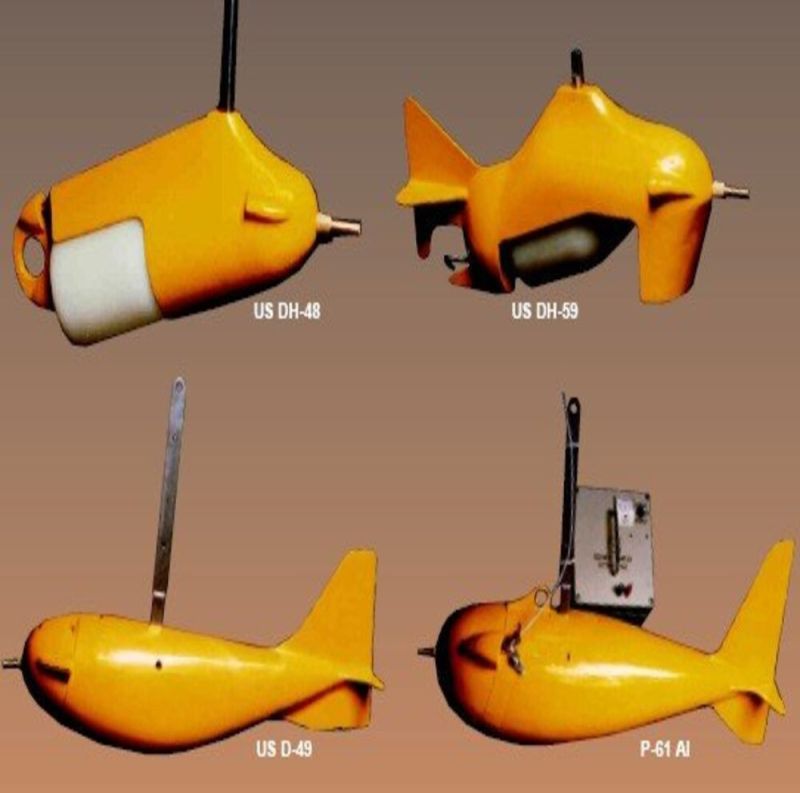
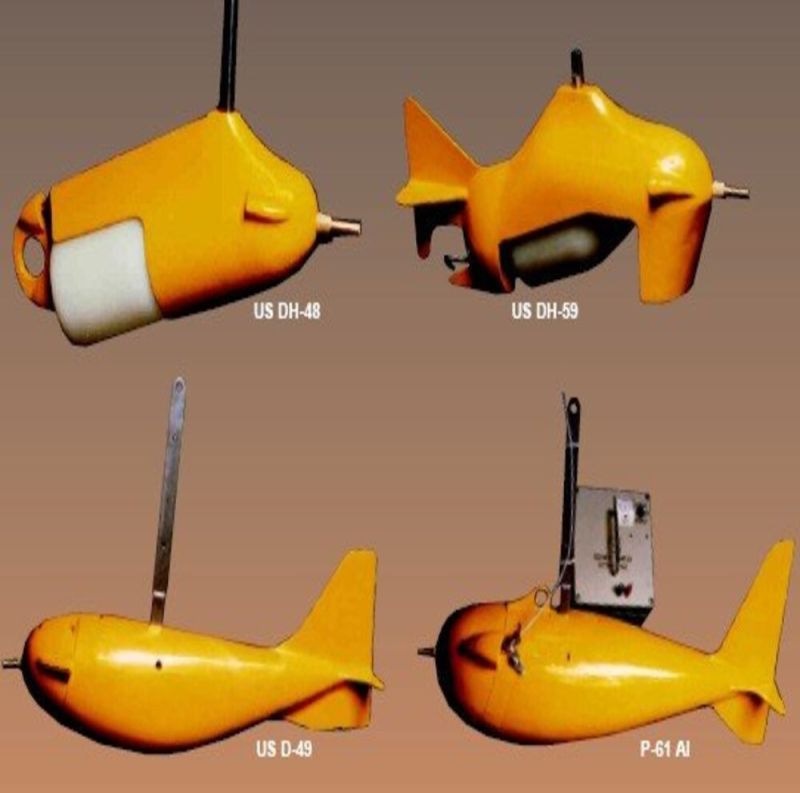
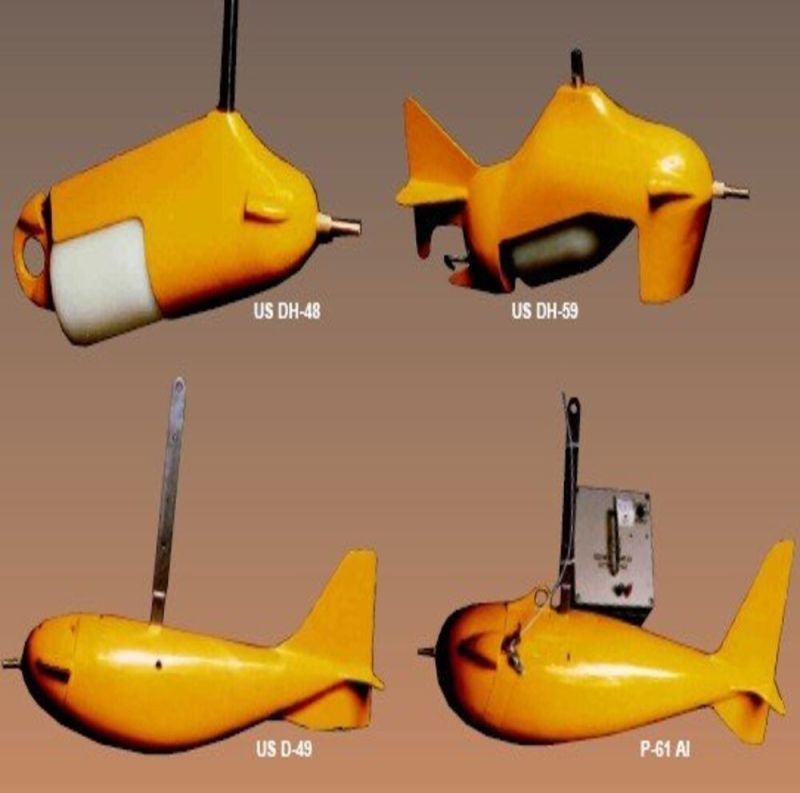
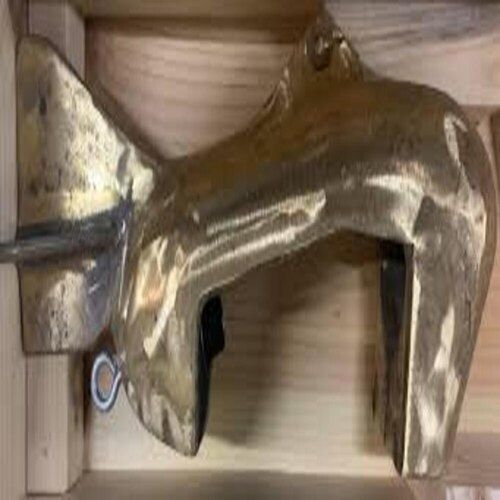
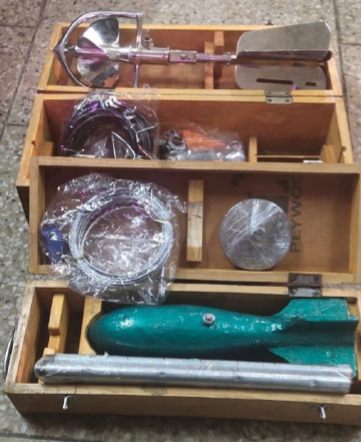
These are medium-weight suspended-sediment samplers for handline or sounding reel suspension. The DH-59 sampler comprises a streamlined bronze casting, 15 inches (38cm) long, which partially encloses a pint-size (0.47 liter) sample container (sold separately). This sampler weighs approximately 22 pounds (10kg) and is equipped with a tail vane assembly to orient the intake nozzle of the sampler into the approaching flow as the sampler enters the water.
A light weight sampler for collection of suspended-sediment samples where a wading rod sampler suspension is used. An intake nozzle extends horizontally from the nose of the sampler body. A streamline projection, pointing toward the rear on the side of the sampler head, accommodates the air exhaust port from which air escapes from the bottle as the sample is being collected. A standard 13mm wading rod is threaded into the top of the sampler. The sample container is held in place and sealed against a rubber gasket in the sampler head, by a hand-operated spring-tensioned clamp at the rear of the sampler. The sampler is supplied with a set of three nozzles; 3.2, 4.8 and 6.3 mm, 2 x 0.5 m wading rods and instruction manual, in a canvas carry bag. Specifications Type: Wading Materials: Cast Aluminium Net Weight: 2 kg (4lb) Dimensions: 330 mm long Max. Depth: 1 m, 90 mm from bed Wading Rods: 13 mm x 500 mm 13 mm x 1000 mm Packing Details: 6kg (13lb), 0.01m3
Additional Information:
Payment Terms : T/T
Packaging Details : Corrugated Box
Delivery Time : 7 days
The US DH-48 is a medium-weight hand-line suspended-sediment sampler. The sampler can be lowered and raised, hand over hand, with a flexible suspension line. It can be used in stream depths up to 15 ft and in steam velocities ranging from 1.5 to 5.0 ft/sec.
The sampler is a streamlined bronze casting that is 15 in long and weighs 22 lbs. The sampler uses a pint glass milk bottle. The bottle container is sealed against a gasket in the head cavity of the casting by pressure applied to the base of the bottle by a hand operated, spring tensioned, pull rod assembly at the rear of the sampler. The sampler uses a 3/16- or 1/4-in internal diameter intake nozzle that projects horizontally upstream from the head of the casting. As a sample is collected, the displaced air in the bottle is ejected downstream through the air exhaust tube integrally cast into the body and protected by a streamlined projection on the side of the head of the sampler. The unsampled zone using the US DH-59 is 4.5 in.
The sampler is calibrated and supplied with nozzles having 1/4” and 3/16” bores. Sample container bottles and the suspension are not furnished with the hand line suspended sediment sampler. The sampler can be used in stream depths up to 15 ft. and in stream velocities ranging from 1.5 to 5.0 ft./sec. The unsampled zone using the US DH-59 is 4.5”. Includes case, hanger bar, 2 gaskets, and 2 ea. of 3/16” and 1/4” red plastic nozzles.
Additional Information:
Payment Terms : T/T
Packaging Details : Corrugated box
Delivery Time : 7 days
Bottom sampler, normally has a projecting stem that opens the inlet valve as the stem strikes the bottom of the tank. The sample enters the sampler through the bottom valve and the air is released simultaneously through the top valve. The inlet valve automatically closes when the sampler is withdrawn. The sampler can also be equipped with extension rods to obtain samples from different points in a tank.
This can obtain samples from storage tanks, tank cars, and drums. When the sampler strikes the bottom of the tank, a plunger assembly opens to admit the sample. The plunger closes again when the implement is withdrawn, forming a tight seal. Samples can be taken at any depth with the use of a secondary trip line.
Additional Information:
Payment Terms : T/T
Packaging Details : Corrugated Box
Delivery Time : 7 days
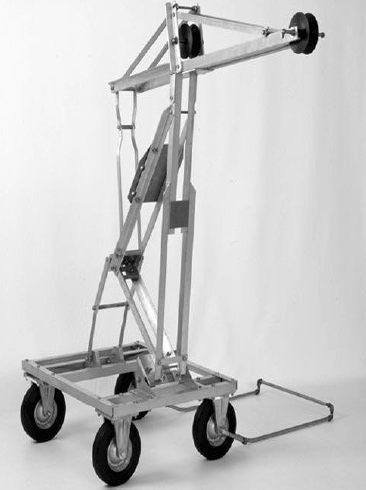
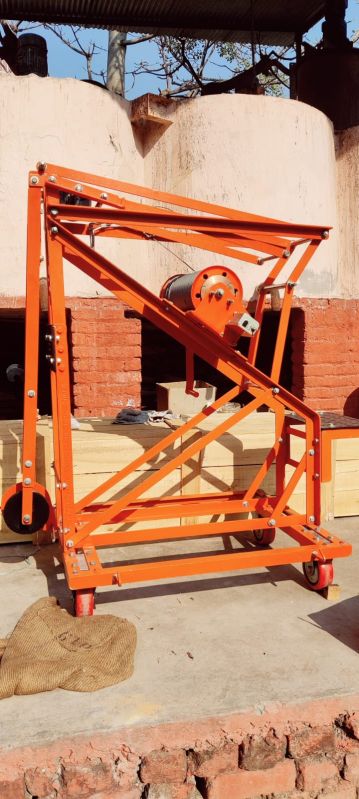
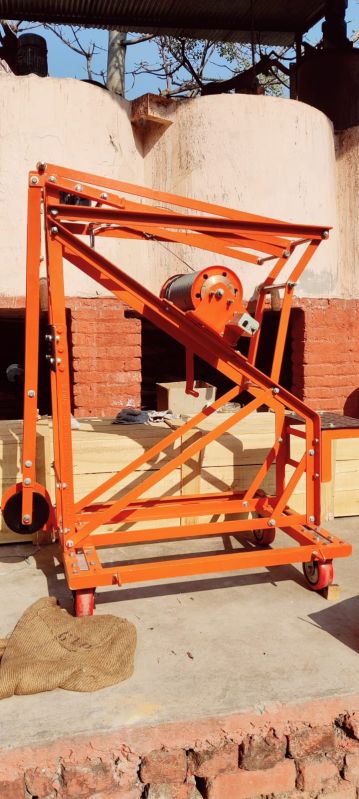
We are the prominent manufacturer and supplier of excellent quality Crane Bridge Outfit. Offered system is designed and manufactured by adroit professionals using world class aluminium and is equipped with 4 wheels with solid rubber tyres for easy movement. Checked on various quality parameters, this system is available in various technical specifications as per the clients’ requirements at very nominal price.
Features :
The Bridge Outfit - Crane is manufactured as per IS 6064-1971. The bridge outfit is to suspend current meters and samplers from a bridge into a river or canal.
The crane is made of Aluminium structure. Winch arrangement (gauging Reel) is fitted on the Crane. The current meter is lowered or lifted by Gauging Reel easily. The Gauging Reel contains crank, brake, ratchet/catch, re-settable counter (for measuring depth of current meter in water).
The crane trolley has 4 wheels with solid rubber tyres for easy movement. The cable from which the current meter is suspended has incorporated insulated electrical conductor. The conductor connects the flow sensor revolution sensor switch to the pulse counter or Datalogger.
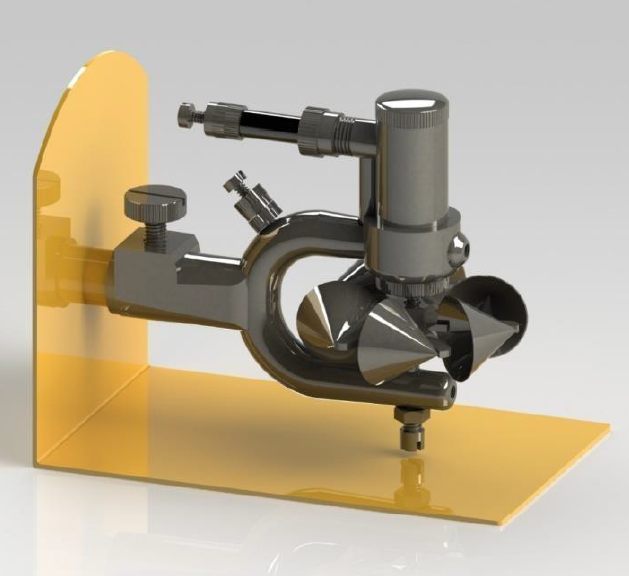
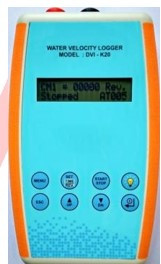
The Propeller Type Water Current Meter is used to measure Velocity of water flow directly in m/s. The stainless-steel spindle carrying the cup wheel freely rotates in the bearing assembly. The magnet and reed switch assembly produces one pulse per rotation. The rotation of the Water Current Meter is sensed by sensor & gives pulsed output signal. As per IS: 3910-1966, the Water Current Meter employs a bucket wheel assembly that is mounted upon a shaft and rotates in response to fluid flow, generating a signal that is proportional to the fluid flow velocity. The current bucket wheel assembly is made of plated brass. It employs six hollow conical cups that are hand formed from sheet metal and individually soldered to a brass, star-shaped frame. The finished unit is then plated. The frame is shaped so that a strut connects the apex of each cup to the outer diameter of the following cup around the frame. The Propeller Type Water Current Meter can be suspended by means of a Fish weight while wading a stream, or by a cable and wading rod from an overhead structure. A tailpiece assembly assures proper alignment of the meter to water flow when suspended by a cable. Velocity is determined by counting the number of revolutions of the bucket wheel over a given period of time. Revolutions can be monitored by several means. The Digital Water Velocity Indicator / Logger (sold extra) by configuring the indicator with calibration equation (provided with each meter), it will result the direct current velocity of the stream in Meter per second. The meter is made from brass and stainless steel and all exposed surfaces are chrome plated for corrosion- free service. Each Current Meter is provided with a standard rating table to convert bucket revolutions to stream velocity in Metric units (meters per second), spare parts, instrument oil, cleaning cloth, screwdriver and a rugged carrying case.
The Propeller Type Water Current Meter is used to measure Velocity of water flow directly in m/s. The
stainless-steel spindle carrying the cup wheel freely rotates in the bearing assembly. The magnet and reed
switch assembly produces one pulse per rotation. The rotation of the Water Current Meter is sensed by
sensor & gives pulsed output signal. As per IS: 3910-1966, the Water Current Meter employs a bucket wheel
assembly that is mounted upon a shaft and rotates in response to fluid flow, generating a signal that is
proportional to the fluid flow velocity. The current bucket wheel assembly is made of plated brass. It employs
six hollow conical cups that are hand formed from sheet metal and individually soldered to a brass, star-
shaped frame. The finished unit is then plated. The frame is shaped so that a strut connects the apex of each
cup to the outer diameter of the following cup around the frame. The Propeller Type Water Current Meter
can be suspended by means of a Fish weight while wading a stream, or by a cable and wading rod from an
overhead structure. A tailpiece assembly assures proper alignment of the meter to water flow when
suspended by a cable. Velocity is determined by counting the number of revolutions of the bucket wheel over
a given period of time. Revolutions can be monitored by several means. The Digital Water Velocity Indicator /
Logger (sold extra) by configuring the indicator with calibration equation (provided with each meter), it will
result the direct current velocity of the stream in Meter per second. The meter is made from brass and
stainless steel and all exposed surfaces are chrome plated for corrosion- free service. Each Current Meter is
provided with a standard rating table to convert bucket revolutions to stream velocity in Metric units (meters
per second), spare parts, instrument oil, cleaning cloth, screwdriver and a rugged carrying case.
Additional Information:
Payment Terms : T/T
Packaging Details : Corrugated box
Delivery Time : 1 day
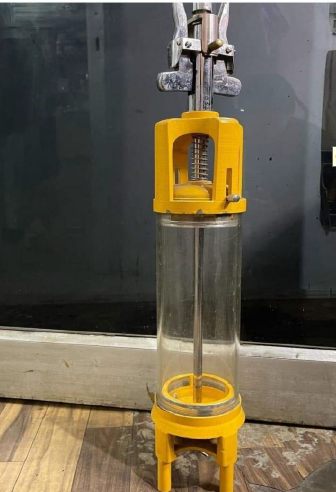
The water sampler is a modified version based on the Standard water sampler and provides a fully open interior (free flow) during water sampling. The sampler is suitable for taking samples in lakes, water borings, wells, etc.
The Ruttner Sampler is designed for collecting water samples at various depths. Its robust build enhances vertical stability during sampling. With a metal-free interior to preserve sample integrity, the collected sample can be easily retrieved through the bottom tap for accurate analysis.
Ruttner Sampler – Precision Water Sampling with Integrated Thermometer, the Ruttner Bottle is a robust and efficient solution for collecting water samples at various depths.
Accurate Depth Sampling: Designed for precise sampling at targeted depths with a messenger-triggered closing mechanism.Built-in Thermometer: Integrated
Additional Information:
Payment Terms : T/T
Packaging Details : Corrugated box
Delivery Time : 7 days
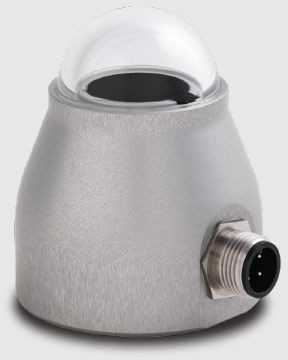
Every pyranometer composing the albedometer is calibrated separately as per the WRR (World Radiometric Reference) standard and is supplied with the relevant Report of Calibration.
These are strong and reliable ground-based instruments, especially designed to be used under all weather conditions. They are suitable for installation of the field.
Recommended use: climatological research, weather stations, road weather stations, agriculture stations, etc.
WIRING DIAGRAM LPPYRA11, LPPYRA05 - LPPYRA06
Delta OHM manufactures three different models of albedometers: - LPPYRA11 is constructed starting from two Secondary Standard Pyranometers - LPPYRA05 is constructed starting from two First Class Pyranometers - LPPYRA06 is costructing starting from two Second Class Pyranometers All pyranometers are according to ISO 9060 standards and to specifications published by the World Meteorological Organization). An albedometer basically consists of two pyranometers, mounted backto-back, one looking upward (sky) and one downward (earth). The upward pyranometer measures the incident global radiation (direct radiation + diffuse radiation) striking the ground, while the downward one, measures the global radiation reflected from the ground. The outputs of the two pyranometers electric signals can be directly sent to a data logger or to an automatic data processor. The two pyranometers which made up the LPPYRA05 and LPPYRA11 are coupled in order to have the same sensitivity. Albedo is the fraction of solar radiation that is reflected from the ground, with respect to incident radiation:
Additional Information:
Payment Terms : T/T
Packaging Details : Corrugated box.
Delivery Time : 2 days
This is the most common type of suspended sediment Sampler it consists of a metallic one litre capacity bottle held vertically in the metallic frame at one of a adequate length of pipe with lever attached to the lower end and a flexible wire running with the help of one spring and lever for opening and closing the mouth of bottle fitted with rubber cock during sampling. The sampler has advantages, of low cost, simplicity in design and operation.
1. Total Length 18 ft ;
2. Pipe (G.I) (Joint Pipe) ;
3. Hand Lever Attach ;
4. Brass Bottle Sample Collection 1 Ltr ;
5. Frame GI body.
Additional Information:
Payment Terms : T/T
Packaging Details : Corrugated Box
Delivery Time : 5 days
 Mr. Praveen Dhiman (Lakshmi Engineering Work)
 172, Maktoolpuri Ramnagar, Nehru Nagar, Roorkee, Uttarakhand - 247667, India
 https://www.lakshmiengineeringwork.in
 Share us via