Write a Review
Our Products
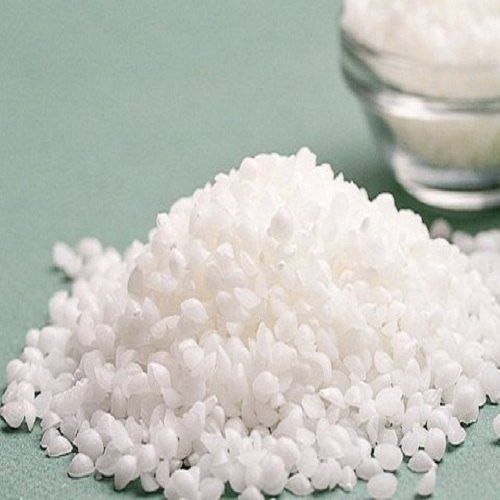
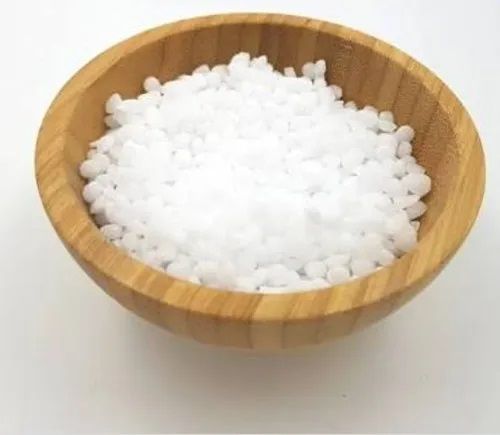
We offer the best product range of Ethanol, Liquid Ethanol Absolute 99.9% Ar, Stearyl Alcohol, Cetyl Alcohol and Diethylene Glycol (DEG).

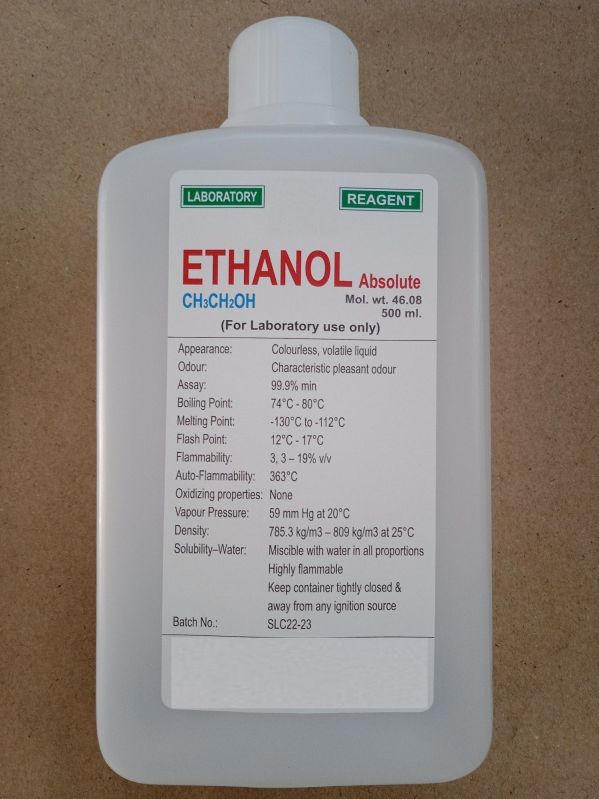
Ethanol
hemical name Ethanol, Ethyl alcohol chemical formula C2H6O molecular mass 46.07 g/mol CAS number 64-17-5 EINECS number 200-578-6
boiling point 78C Relative density 0.805 - 0.812% v/v melting range -114.3C
At ambient temperature it is a colourless liquid, clear, with a characteristic odour, volatile (boiling point 78C), hygroscopic, highly flammable. It is completely soluble in many organic solvents (e.g. chloroform) and in water, with which it forms, in a proportion of approximately 96:4, a minimum azeotrope, which makes it impossible to obtain an ethanol distillation purer than 96. For this reason, pure alcohol is defined as 96% ethanol and 4% water approximately. Ethanol (96%) is a mixture comprised of between 95.1 - 96.9% v/v of ethanol and water at 20C (92.6 - 95.2% m/m). Produced naturally by the fermentation of sugar, it is the most widespread type of alcohol and is the only alcohol suitable for consumption. It is used to make liqueurs and alcoholic beverages. The use of ethanol of agricultural origin for consumption is governed by EC Regulations, as set out in European Regulation 110/2008 Annex I points 1 and 2. Due to its effectiveness as an antiseptic, it is used in the Pharmaceutical Industry as
Ethanol Assay Reg. (EC) 110/2208 / Inside specification Acidity or alcalinity 96% vol Ethers 1.5 g of acetic acid / hL of ethanol 100% vol Aldehydes 1.3 g of ethyl acetate / hL of ethanol 100% vol 0.5 g of acetaldehyde / hL of ethanol 100% vol Superior alcohols 0.5 g of 2-methyl-1-propanl / hL of ethanol 100% vol Methanol Residue on evaporation 30 g / hL of ethanol 100% vol Nitrogenous bases 1.5 g / hL of ethanol 100% vol Furfurol 0.1 g of nitrogen / hL of ethanol 100% vol n.r.
Additional Information:
Payment Terms : L/C, D/A, D/P, T/T, Western Union,
Packaging Details : clients request
Delivery Time : prompt
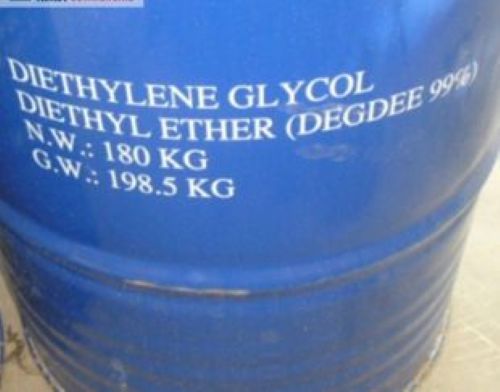
Diethylene Glycol (DEG)
Diethylene glycol (DEG) is an organic compound with the formula (HOCH2CH2)2O. It is a colorless, practically odorless, poisonous, and hygroscopic liquid with a sweetish taste. It is miscible in water, alcohol, and ethylene glycol. DEG is a widely used solvent. polyurethanes, and is a solvent for nitrocellulose, resins, dyes, oils, and other organic compounds. It is a humectant for cork, printing ink,
PRODUCT DETAILS
Diethylene glycol (DEG) is an organic compound with the formula (HOCH2CH2)2O. It is a colorless, practically odorless, poisonous, and hygroscopic liquid with a sweetish taste. It is miscible in water, alcohol, and ethylene glycol. DEG is a widely used solvent. polyurethanes, and is a solvent for nitrocellulose, resins, dyes, oils, and other organic compounds. It is a humectant for cork, printing ink, and glue. It is also a component in brake fluid, lubricants, wallpaper strippers, artificial fog and haze solutions, and heating/cooking fuel. In personal care products (e.g. skin cream and lotions, deodorants), DEG is often replaced by selected diethylene glycol ethers. A dilute solution of diethylene glycol can also be used as a cryoprotectant.
Iterm
Result
Appearance
Colorless transparent liquid
DEG/Diethylene glycol%(mass fraction)
99.70
TEG/Triethylene glycol% (mass fraction)
0.05
MEG/Monoethylene glycol%(mass fraction)
0.05
Colour Pt-Co units (APHA)
10
Acid(acetic acid), (mg/kg)
100
Ash content, wt ppm
50
Water %
0.1
Iron , mg/kg
1
Application area
1. It is the intermediate of some chemical products.
2. Used in aqueous solution analysis to analyze oxygen-containing compounds (especially alcohol).
3. Used as antifreeze, brake oil, diluting agent, gas dehydrating agent, extractant, desiccant, insulator, softener, etc.
4. As solvent of printing ink, textile, dyes, rubber, resin, fiber glass, lubricants and other industries.
Additional Information:
Payment Terms : L/C, D/A, D/P, T/T, Western Union,
Packaging Details : clients request
Delivery Time : prompt
 ARJUN JI (Neet Preservatives)
 91 Zone Phulbani town Kandhamal District, Odisha - 762001, India
 Share us via