Write a Review
Our Products
Our Complete range of products are Banyan, Gulmohar, Peltophorum, Krishna Tulasi Tree and Saraswati Plant.
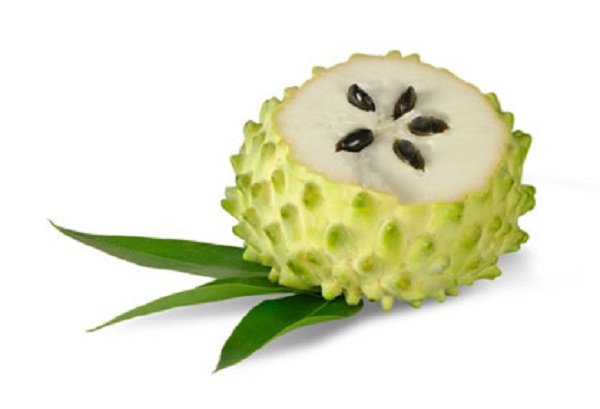
Soursop is the fruit of Annona muricata, a broadleaf, flowering, evergreen tree. The exact origin is unknown; it is native to the tropical regions of the Americas and is widely propagated.[4] It is in the same genus, Annona, as cherimoya and is in the Annonaceae family. The soursop is adapted to areas of high humidity and relatively warm winters; temperatures below 5 C (41 F) will cause damage to leaves and small branches, and temperatures below 3 C (37 F) can be fatal. The fruit becomes dry and is no longer good for concentrate. The flavour of the fruit has been described as a combination of strawberry and pineapple, with sour citrus flavour notes contrasting with an underlying creamy flavour reminiscent of coconut or banana.
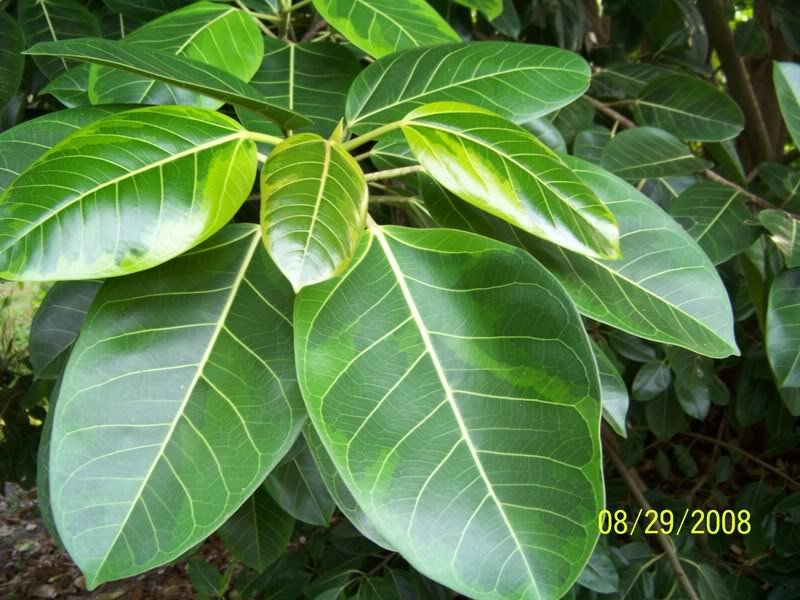
Once the roots get to the ground, they suck up nutrients and grow faster and thicker. They cover the trunk of the host tree, and their leaves and branches in the canopy block the light from the host. Lacking enough nutrition and light, the host tree eventually dies. Its wood is destroyed by beetles, termites and fungi. Only the hollow space inside the banyan remains. The banyan roots make a huge cylinder, and it stands up perfectly well.
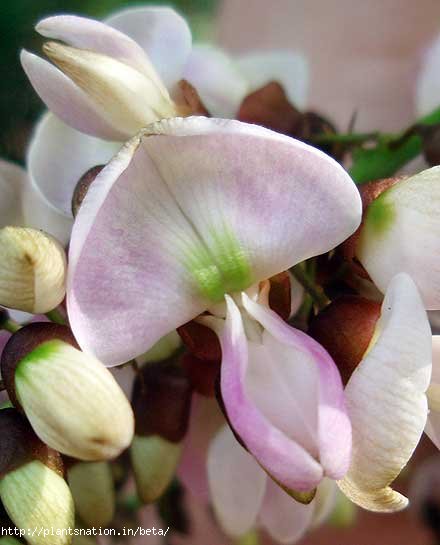
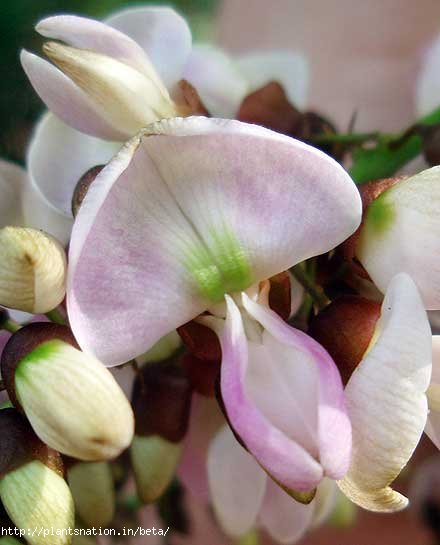
Pongamia is a genus of legume in the Fabaceae family. Recently it has been proposed that the genus Pongamia be rejected in favor of the genus Millettia, and many species have been reclassified.[1] Due to recent interest in biofuels, Pongamia is often the generic name given for Millettia pinnata, a tree being explored for producing biodiesel.
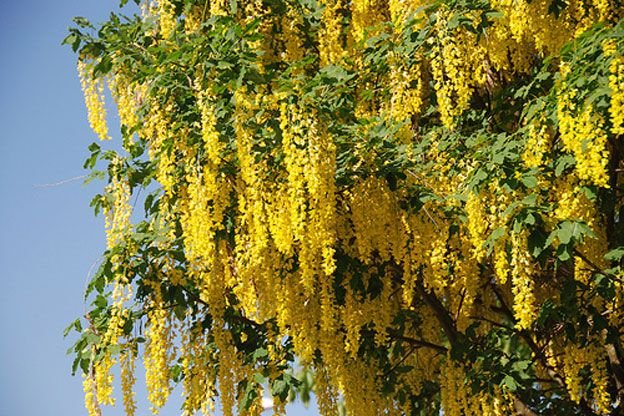
Cassia Fistula commonly known as Golden Shower, Indian-Laburnum, Pudding Pipe Tree, is one of the most beautiful ornamental tropical tree, when it sheds its leaves and bursts into a mass of long, grape-bunches like yellow gold flowers. These flowers are attractive to bees and butterflies.
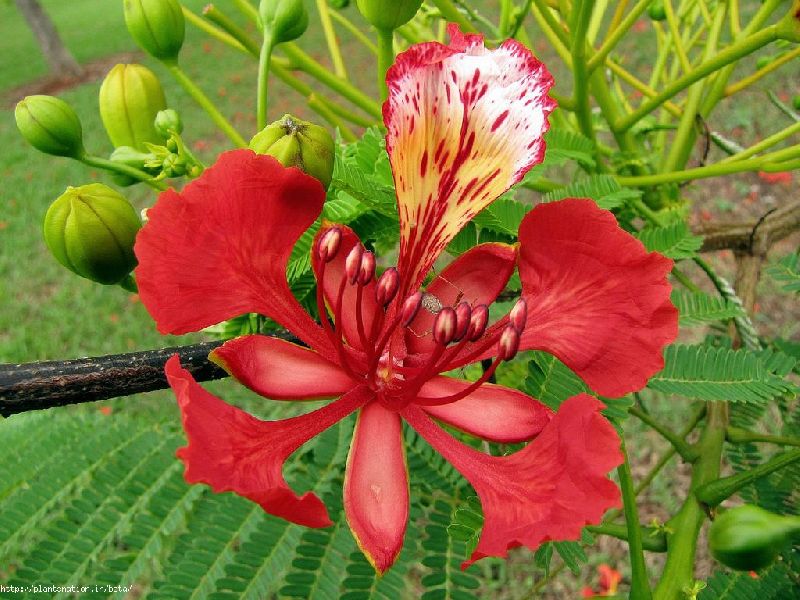
Indian Subcontinent: Flowering season AprilJune Delonix regia is a species of flowering plant in the bean family Fabaceae, subfamily Caesalpinioideae. It is noted for its fern-like leaves and flamboyant display of flowers. In many tropical parts of the world it is grown as an ornamental tree and in English it is given the name royal poinciana or flamboyant. It is also one of several trees known as flame tree.
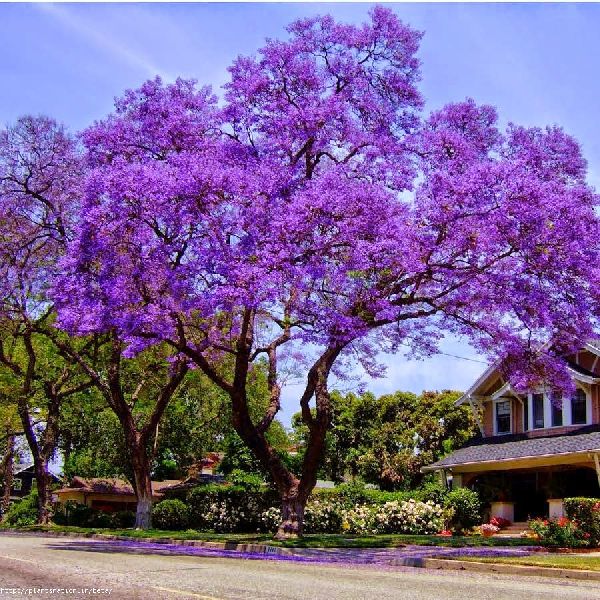
Jacaranda is a genus of 49 species of flowering plants in the family Bignoniaceae, native to tropical and subtropical regions of Central America, South America, Cuba, Hispaniola, Jamaica and the Bahamas.[1] It has been planted widely in Asia, especially in Nepal. Jacaranda mimosifolia is quite common in Zambia, South Africa, Zimbabwe and Australia, and has been introduced to most tropical and subtropical regions to the extent that it has entered the popular culture.
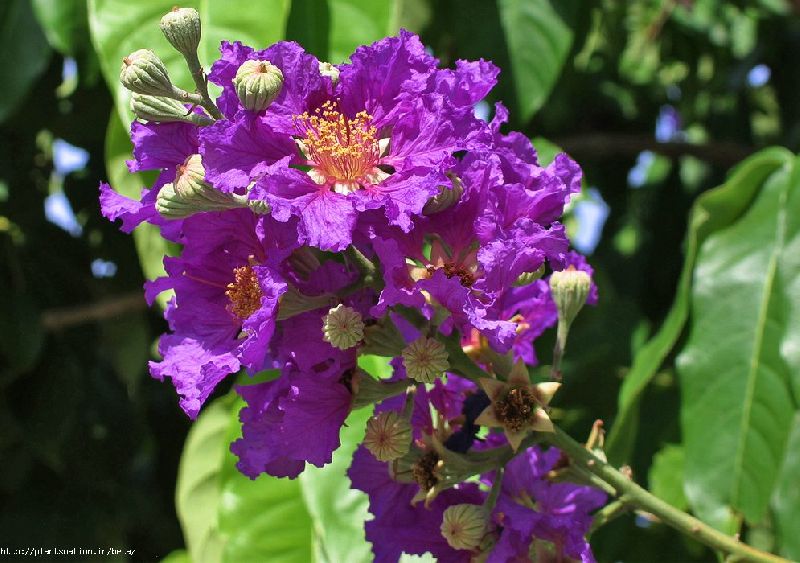
Crepe myrtles are chiefly known for their colorful and long-lasting flowers which occur in summer. Most species of Lagerstroemia have sinewy, fluted stems and branches with a mottled appearance that arises from having bark that sheds throughout the year. The leaves are opposite and simple, with entire margins, and vary from 520 cm (28 in). While all species are woody in nature, they can range in height from over 30 m (100 ft) to under 30 cm (1 ft); most, however, are small to medium multiple-trunked trees and shrubs. The leaves of temperate species provide autumn color.
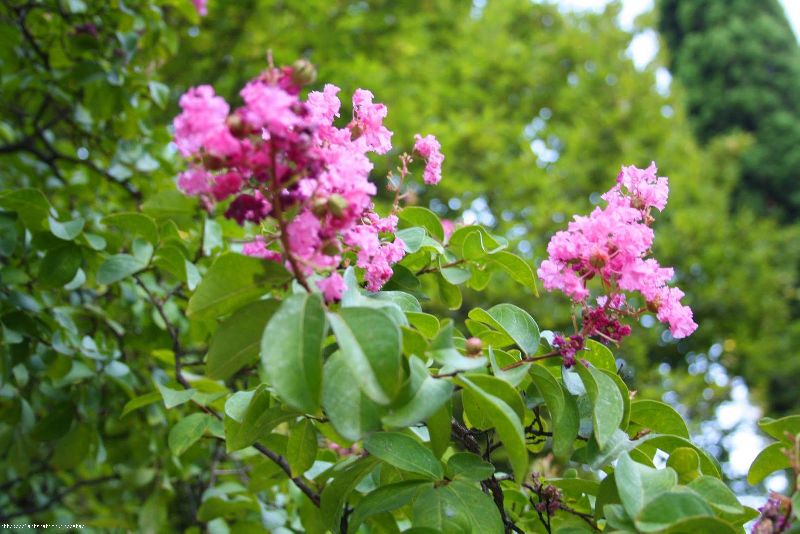
Crepe myrtles are chiefly known for their colorful and long-lasting flowers which occur in summer. Most species of Lagerstroemia have sinewy, fluted stems and branches with a mottled appearance that arises from having bark that sheds throughout the year. The leaves are opposite and simple, with entire margins, and vary from 520 cm (28 in). While all species are woody in nature, they can range in height from over 30 m (100 ft) to under 30 cm (1 ft); most, however, are small to medium multiple-trunked trees and shrubs. The leaves of temperate species provide autumn color.
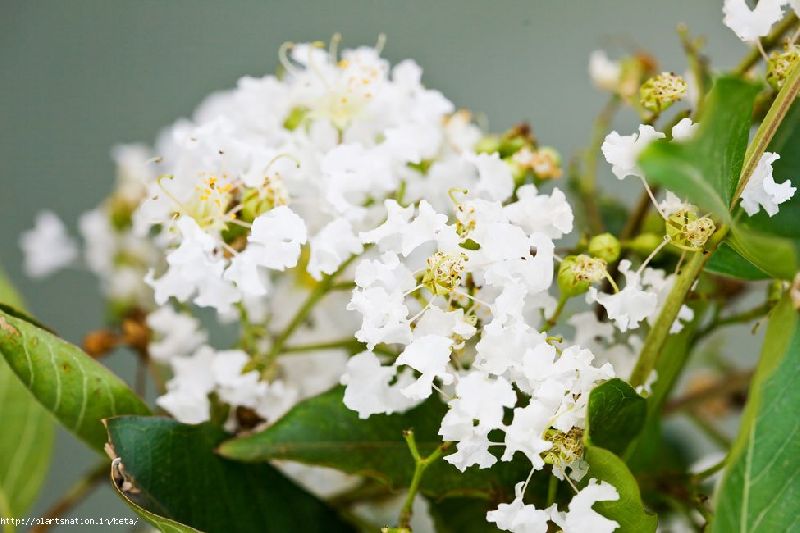
Crepe myrtles are chiefly known for their colorful and long-lasting flowers which occur in summer. Most species of Lagerstroemia have sinewy, fluted stems and branches with a mottled appearance that arises from having bark that sheds throughout the year. The leaves are opposite and simple, with entire margins, and vary from 520 cm (28 in). While all species are woody in nature, they can range in height from over 30 m (100 ft) to under 30 cm (1 ft); most, however, are small to medium multiple-trunked trees and shrubs. The leaves of temperate species provide autumn color.
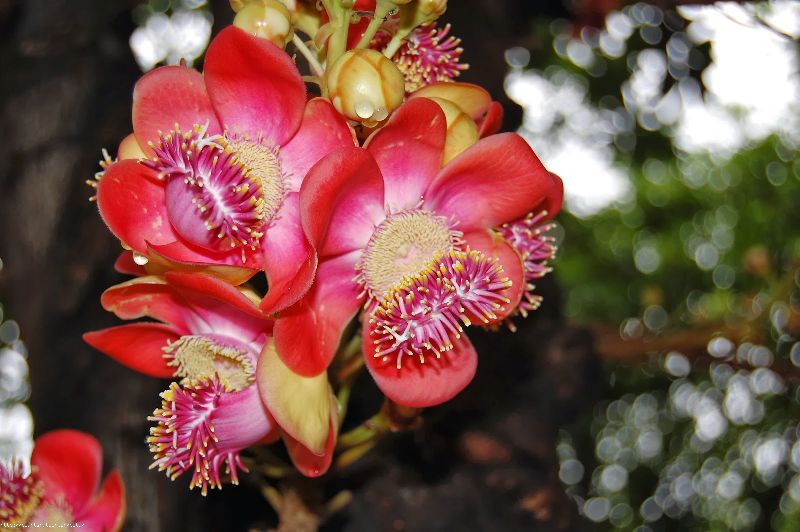
This tree is planted as an ornamental for its showy, scented flowers, and as a botanical specimen for its interesting fruit.[5] The fruit is fed to livestock such as pigs and domestic fowl.[5] The fruit is edible, but not usually eaten by people because it can have an unpleasant smell.[7] In India the tree is sacred to Hindus, who believe its hooded flowers look like the nga, and it is grown at Shiva temples. There are many medicinal uses for the plant. Native Amazonians use extracts of several parts of the tree to treat hypertension, tumors, pain, and inflammation. It has been used to treat the common cold, stomachache, skin conditions and wounds, malaria, and toothache. Laboratory tests show that extracts of the plant have some antimicrobial activity and inhibit the formation of biofilms. The fruit pulp is rubbed on sick dogs to cure them of mange.
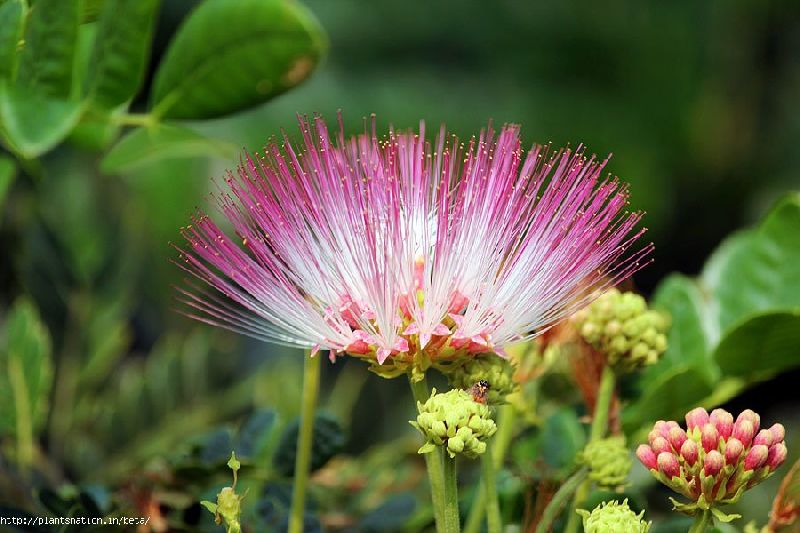
Albizia saman (sometimes treated under the obsolete name Samanea saman) is a species of flowering tree in the pea family, Fabaceae, that is native to the Neotropics. Its range extends from Mexico south to Peru and Brazil, but it has been widely introduced to South and Southeast Asia, as well as the Pacific Islands, including Hawaii. Common names include saman, rain tree and monkeypod (see also below). It is often placed in the genus Samanea, [2] which by yet other authors is subsumed in Albizia entirely.
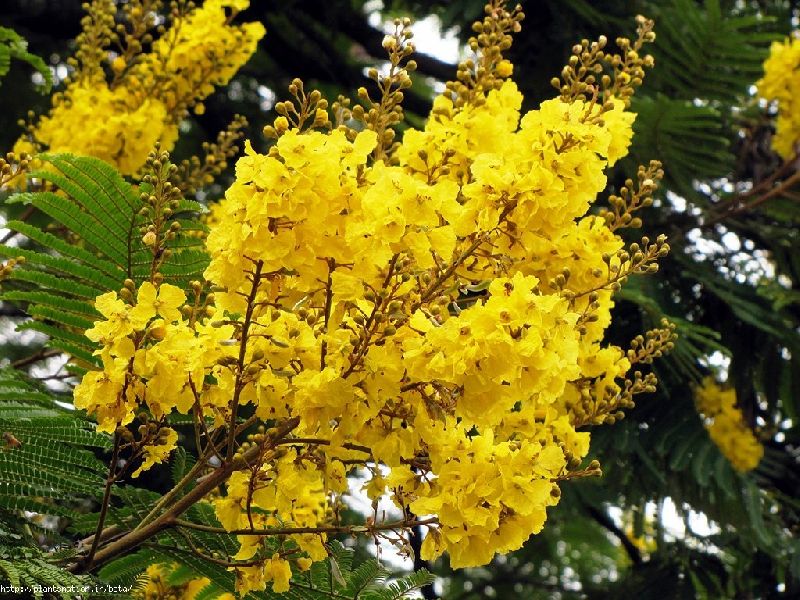
Peltophorum is a genus of 515 species of flowering plants in the family Fabaceae, subfamily Caesalpinioideae. The genus is native to certain tropical regions across the world. The species are medium-sized to large trees growing up to 1525 m (rarely 50 m) tall.[1][2] Blatter and Millard (1937) state
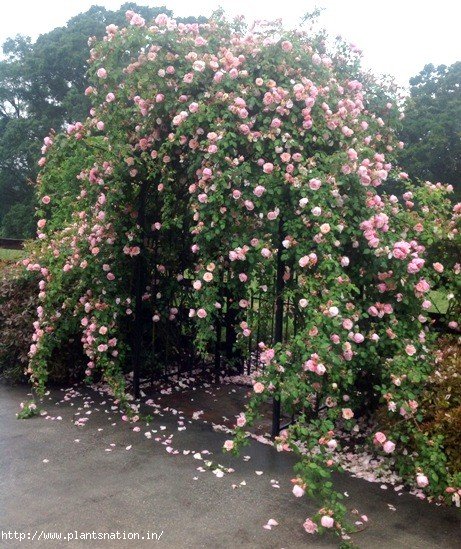
The jade plant is an evergreen with thick branches. It has thick, shiny, smooth, leaves that grow in opposing pairs along the branches. Leaves are a rich jade green, although some may appear to be more of a yellow-green. Some varieties may develop a red tinge on the edges of leaves when exposed to high levels of sunlight. New stem growth is the same color and texture as the leaves. Although becoming brown and appearing woody with age, stems never become true lignified tissue, remaining succulent and fleshy throughout the plants life. Under the right conditions, they may produce small white or pink star-like flowers in early spring.
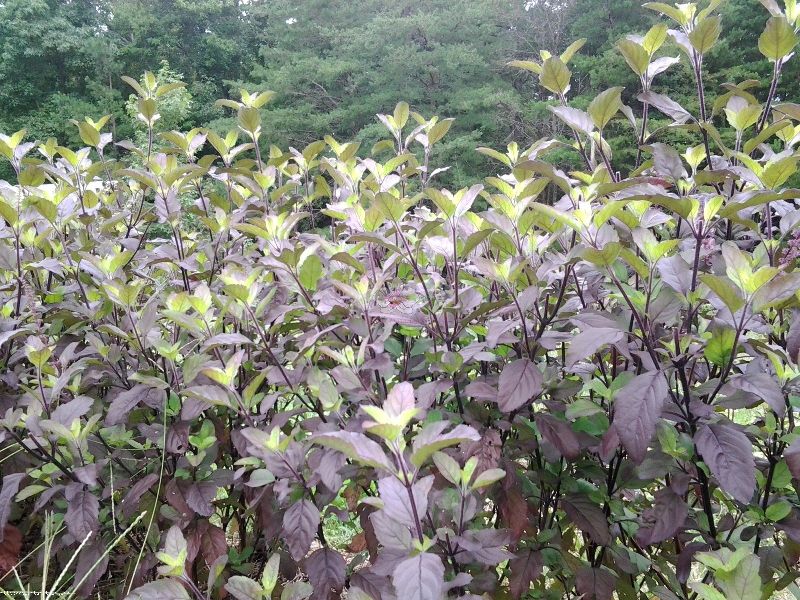
DNA barcodes of various biogeographical isolates of Tulsi from the Indian subcontinent are now available. In a large-scale phylogeographical study of this species conducted using chloroplast genome sequences, a group of researchers from Central University of Punjab, Bathinda, have found that this plant originates from North Central India. The discovery might suggest the evolution of Tulsi is related with the cultural migratory patterns in the Indian subcontinent.
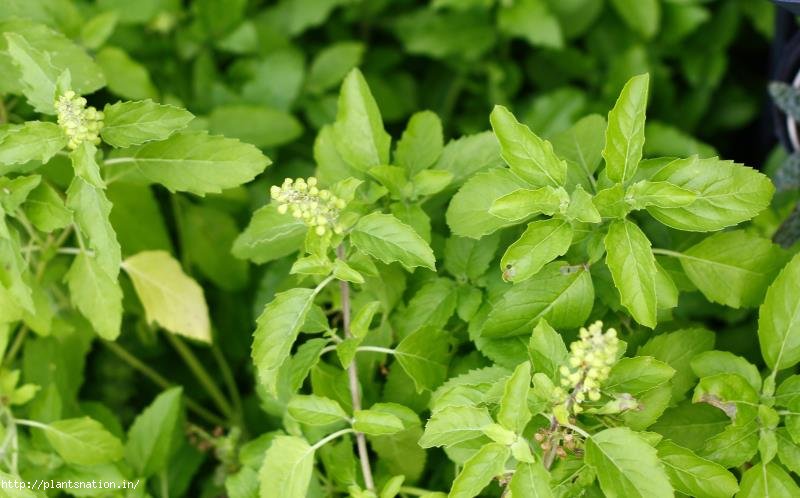
DNA barcodes of various biogeographical isolates of Tulsi from the Indian subcontinent are now available. In a large-scale phylogeographical study of this species conducted using chloroplast genome sequences, a group of researchers from Central University of Punjab, Bathinda, have found that this plant originates from North Central India.The discovery might suggest the evolution of Tulsi is related with the cultural migratory patterns in the Indian subcontinent.
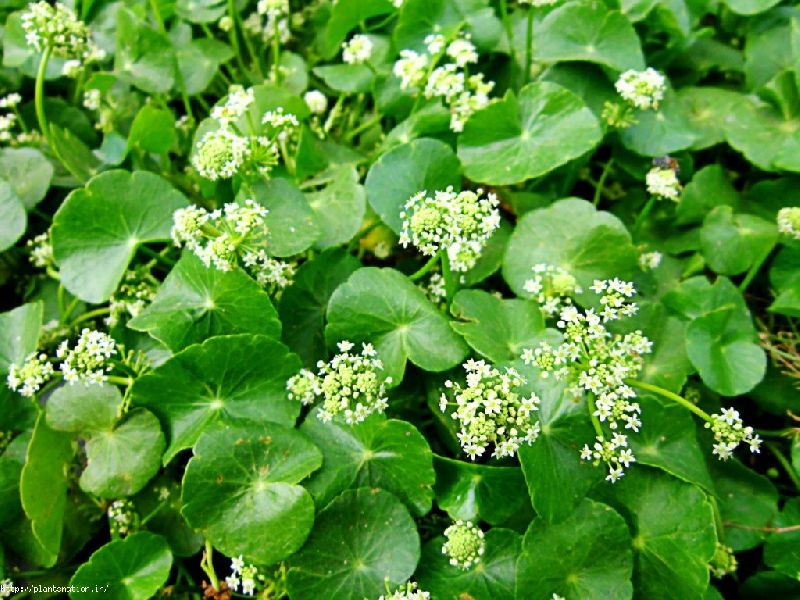
In traditional herbal medicine, C. asiatica has been used in an attempt to treat varicose veins, chronic venous insufficiency, psoriasis, minor wounds, [9] strangury, and to encourage lactation.[10] According to the American Cancer Society, "Although at least one laboratory study of tumor cells showed reduced cell growth with gotu kola, available scientific evidence does not support claims of its effectiveness for treating cancer or any other disease in humans".
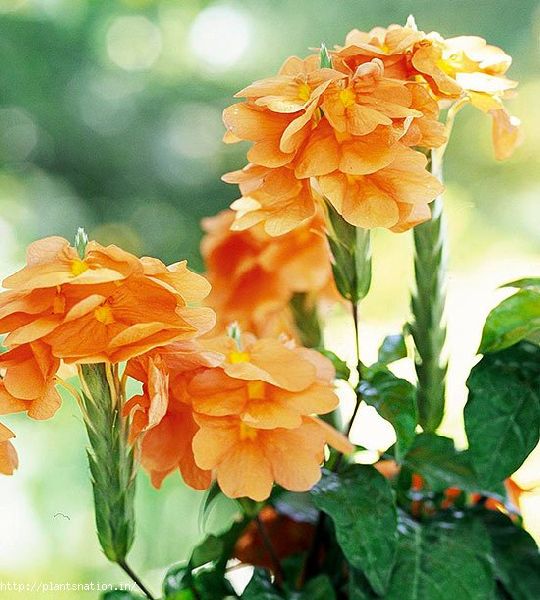
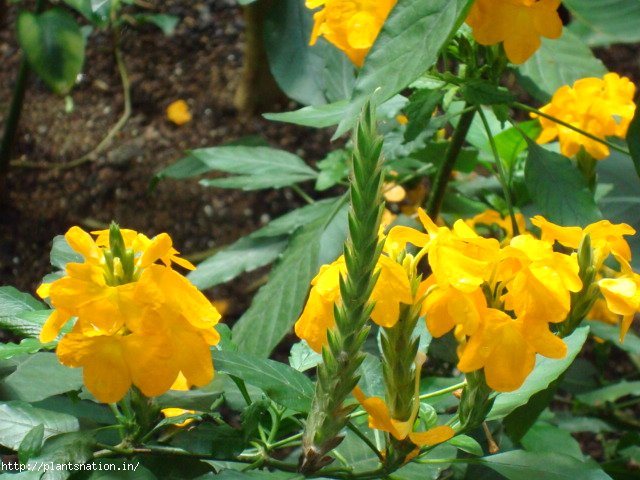
Crossandra Kanakamparam (Tamil: Kannada:) is a genus of plants in the family Acanthaceae, comprising 54[1] species that occur in Africa, Madagascar, Arabia and the Indian subcontinent. Some species, especially Crossandra infundibuliformis, are cultivated for their brightly colored flowers.
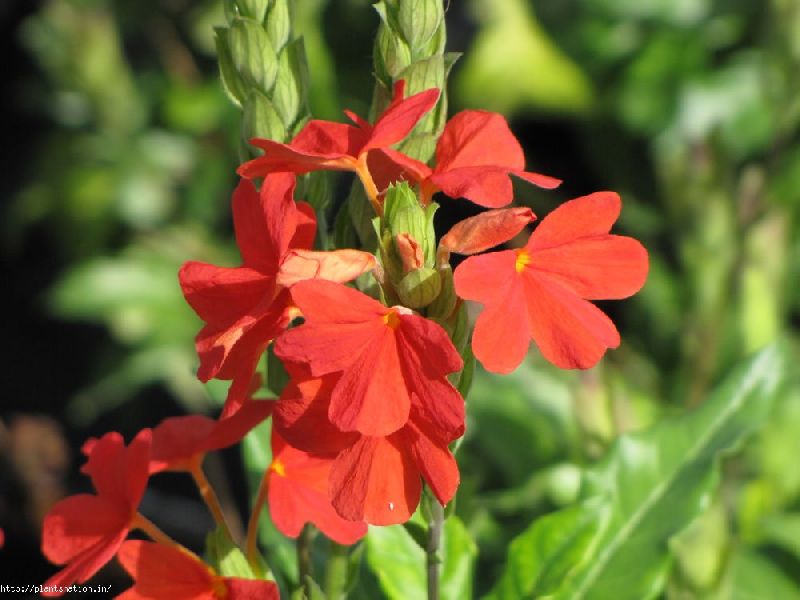
Crossandra Kanakamparam (Tamil: Kannada:) is a genus of plants in the family Acanthaceae, comprising 54[1] species that occur in Africa, Madagascar, Arabia and the Indian subcontinent. Some species, especially Crossandra infundibuliformis, are cultivated for their brightly colored flowers.
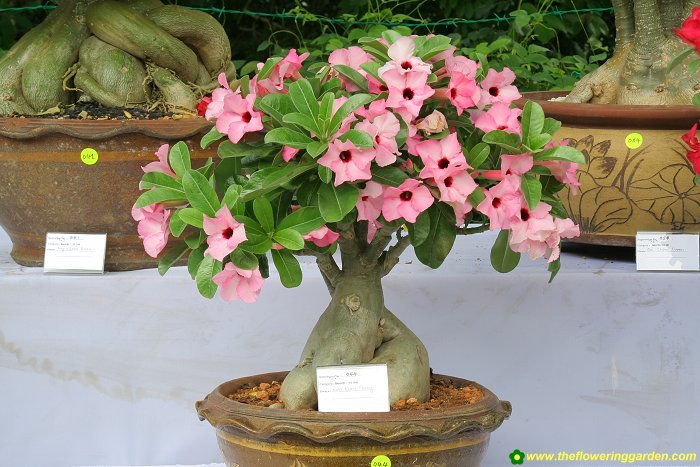
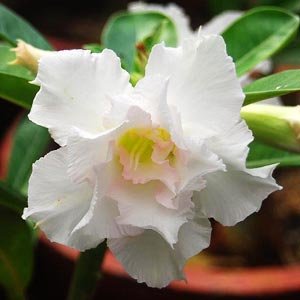
Adenium obesum is grown as a houseplant in temperate regions. Numerous hybrids have been developed. Adeniums are appreciated for their colorful flowers, but also for their unusual, thick caudices. They can be grown for many years in a pot and are commonly used for bonsai.
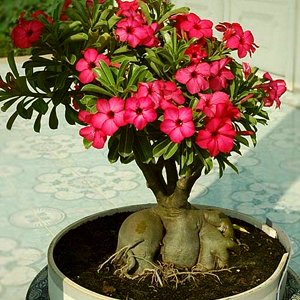
Adenium obesum is grown as a houseplant in temperate regions. Numerous hybrids have been developed. Adeniums are appreciated for their colorful flowers, but also for their unusual, thick caudices. They can be grown for many years in a pot and are commonly used for bonsai.
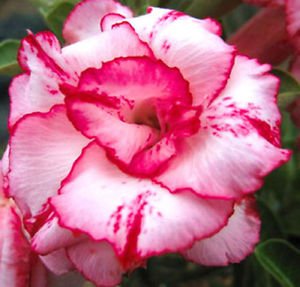
Adenium obesum is grown as a houseplant in temperate regions. Numerous hybrids have been developed. Adeniums are appreciated for their colorful flowers, but also for their unusual, thick caudices. They can be grown for many years in a pot and are commonly used for bonsai.
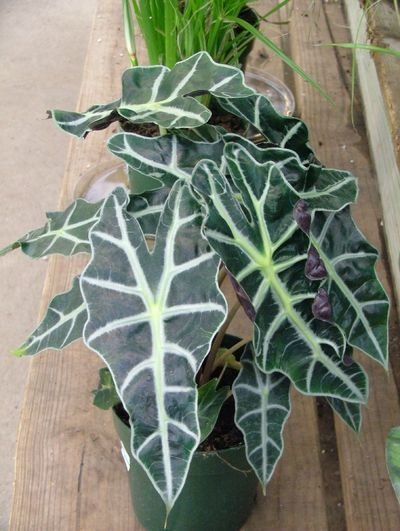
The large cordate or sagittate leaves grow to a length of 20 to 90 cm on long petioles. Their araceous flowers grow at the end of a short stalk, but are not conspicuous; often hidden behind the leaf petioles. The stem (a corm) is edible, but contains raphid or raphide crystals of Calcium oxalate along with other irritants (possibly a protease)[3] that can numb and swell the tongue and pharynx resulting in difficult breathing, and sharp throat pain. The lower parts contain more of the poison. Prolonged boiling before serving or processing may reduce the risks but acidic fruit such as tamarind may dissolve them.
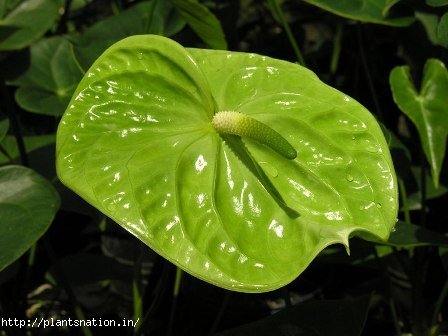
Anthurium is a genus of herbs often growing as epiphytes on other plants. Some are terrestrial. The leaves are often clustered and are variable in shape. The inflorescence bears small flowers which are perfect, containing male and female structures. The flowers are contained in dense spirals on the spadix. The spadix is often elongated into a spike shape, but it can be globe-shaped or club-shaped. Beneath the spadix is the spathe, a type of bract. This is variable in shape, as well, but it is lance-shaped in many species. It may extend out flat or in a curve. Sometimes it covers the spadix like a hood. The fruits develop from the flowers on the spadix. They are juicy berries varying in color, usually containing two seeds.
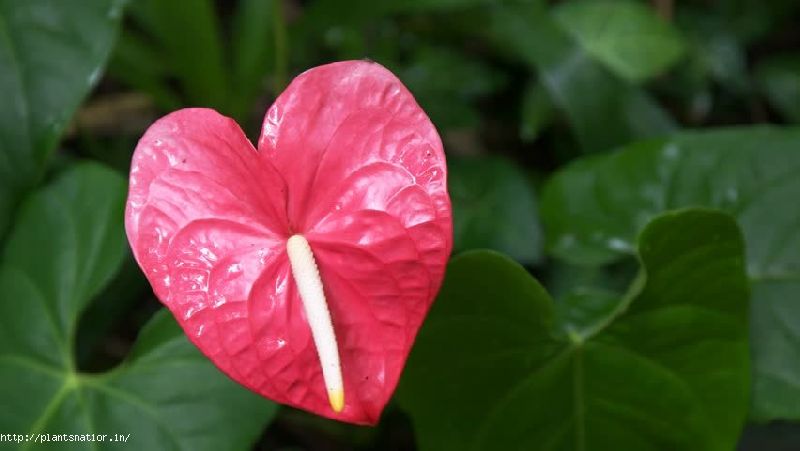
Anthurium is a genus of herbs often growing as epiphytes on other plants. Some are terrestrial. The leaves are often clustered and are variable in shape. The inflorescence bears small flowers which are perfect, containing male and female structures. The flowers are contained in dense spirals on the spadix. The spadix is often elongated into a spike shape, but it can be globe-shaped or club-shaped. Beneath the spadix is the spathe, a type of bract. This is variable in shape, as well, but it is lance-shaped in many species. It may extend out flat or in a curve. Sometimes it covers the spadix like a hood. The fruits develop from the flowers on the spadix. They are juicy berries varying in color, usually containing two seeds.
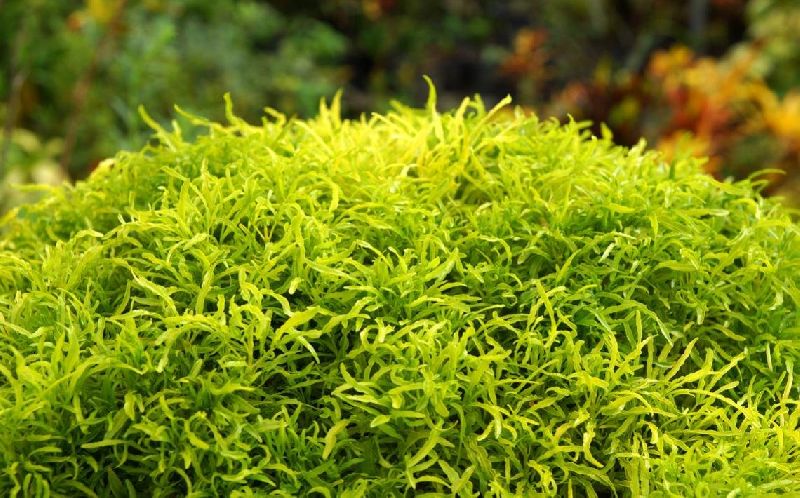
Aralia or spikenard, is a genus of the family Araliaceae, consisting of 68 accepted species of deciduous or evergreen trees, shrubs, and rhizomatous herbaceous perennials. The genus is native to Asia and the Americas, with most species occurring in mountain woodlands. Aralia plants vary in size, with some herbaceous species only reaching 50 centimetre
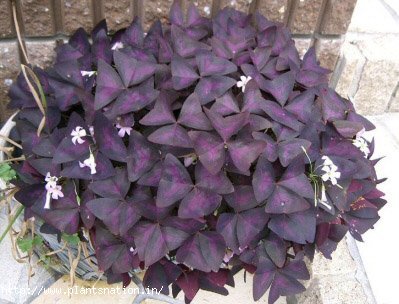
The flowers have five petals, which are usually fused at the base, and ten stamens. The petal color varies from white to pink, red or yellow; anthocyanins and xanthophylls may be present or absent but are generally not both present together in significant quantities, meaning that few wood-sorrels have bright orange flowers. The fruit is a small capsule containing several seeds. The roots are often tuberous and succulent, and several species also reproduce vegetatively by production of bulbils, which detach to produce new plants.
 Plant's Online Nursery (Plant's Online Nursery)
 41-2-52/2,
Tadithota
-533101
East Godavari
, Rajahmundry, Andhra Pradesh, India
41-2-52/2,
Tadithota
-533101
East Godavari
, Rajahmundry, Andhra Pradesh, India Share us via