
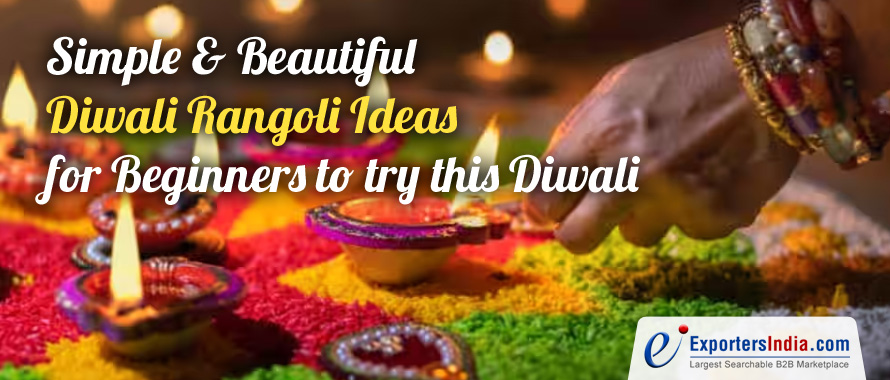
Diwali is a festival that is celebrated to showcase the victory of good over evil in color, light and felicitousness. The decorations of Rangoli or colourful patterns drawn on the floors using coloured powders or rice or flower petals are one of the Diwali traditions. Rangoli is also a symbol of good luck, happiness, and prosperity, not to mention the fact that Rangoli beautifies your home. This guide will give you easy and attractive Rangoli designs that you can apply, and the new designs that you can utilize to make your season brighter.
Hinduism believes that a prosperous home with clean and hygienic homes is blessed with well-adorned homes and prosperity by Goddess Lakshmi, the goddess of wealth. One of the traditional methods of welcoming her blessings and bringing good luck and positive energy to your house on Diwali is to make a Rangoli at your doorstep.
Rangoli is a prehistoric Indian art form that was originally made using natural products such as turmeric, rice flour and flower petals. It was applied to decorate the temples, sacred sites, and the doorways of the houses to bring good fortune. Though materials and designs have changed to incorporate the use of synthetic colors and stencils, the intention is similar: to introduce beauty, prosperity, and spiritual energy.
It is an ornament that is famous due to its simplicity and symmetry. It typically begins at a center and grows around it in concentric circles with similar patterns such as dots, curves or flowery patterns. It is a clean and balanced design that fits well in entrances or small spaces. The novices can create and customize it very easily by adding colors or small decorative features.
The peacock Rangoli has been regarded by virtue of its bright colors and beautiful shape, which symbolize beauty and festivity. It has the unique feathers of the bird that are designed in attractive designs using bright blue, green and other vibrant colors. The design is more appropriate in bigger spaces as well as being the central attraction of Diwali decoration, which symbolizes happiness and hope.
Rangoli is done with fresh flower petals, e.g., marigolds, roses and chrysanthemums, which contribute to some natural smell and texture. It is also a great substitute of synthetic powders or for individuals who wish to source eco-friendly substitutes. The petals are very lightweight and hence they can be cleaned up easily and the design lasts a long time.
This is also one of the most common and fastest designs and is ideal in case of limited time. The Rangoli is made by putting small dots in designs and enclosing them with diyas or oil lamps, which represent light defeating darkness. It is simple and significant, and is usually composed of simple geometric figures or lines.
In Rangoli designs and accessories, there comes making rangoli using Stencils: Stencils are used to produce complex and symmetrical patterns with ease and are therefore suitable for beginners or for people who want to be efficient. They can be used to reproduce complex designs such as mandalas, flowers, or geometric figures with regular accuracy. Such patterns may be enriched with multi-colored powders or with flower petals to make them even richer.
Minimalist Rangoli using White Powder: This type of Rangoli is made using white rice flour and is simple yet very classy, one that is commonly found in South India. Basic motifs such as swastikas, footprints or plain floral outlines are composed of simple lines, curves, and shapes. It can be painted in pure white colour; this is also associated with purity and peace, which can make the entrance calm and spiritual.
There is a symbolic meaning to Diwali Rangoli:
Not only is Rangoli a form of art drawn for decorative purposes, it also has a religious and cultural significance in India.
Rangoli is painted to invite goddess Lakshmi, who is the representation of wealth and prosperity. The colorful and welcoming patterns at the entrance are also thought to usher good fortune and blessings of gods, which create a prosperous mood in his/her house during Diwali and other auspicious events.
The colors and natural resources known as rangoli are bright because they are associated with purity, holiness and connectedness. The action of washing the floor with water and then drawing Rangoli on the floor is symbolic as it is a way of putting all the evil out of the way and welcoming the good energy that purifies the area and makes it clean and blessed.
Rangoli-making is a social event that gathers relatives and groups of people. It promotes creativity, whereby artists, experienced and novice, can share cultural narratives, religious icons and personal feelings through elaborate patterns and rich colors, boosting the joy and affiliation of a festival.
Rangoli is traditionally believed to have the power in helping to help keep evil spirits and ill fortune at bay. The symbols and patterns involved are usually protective and they act as spiritual shields where only good things can enter the house.
Rangoli art is a manifestation of a diverse cultural heritage in India and religious practices in India. The styles and motifs of each region are unique, and it is a heritage of generations that is transmitted. The creation of Rangoli helps preserve these ancient traditions and promotes the understanding of the diversity of the Indian artistic tradition.
Filling Rangoli is a communal and usually social process. It promotes interrelation between family members and neighbors and builds a sense of community, celebration and respect that are shared during a time of celebration.
Perhaps one of the most celebrated and fun traditions of the country is making a Rangoli. No matter the traditional or modern Rangoli designs, it is all about sharing positivity and expressing your feelings in the designs and patterns.
Dont be too hard on yourself; you do not have to be a painter to make beautiful Rangoli. You just have to be patient a little, have influence and a lot of festive spirit. Rangoli, polar opposite Rangoli by colorful peacock, Rangoli to flower Rangoli, or just dots and diyas, your Rangoli will shed some light on your house and your heart.







Connect with us





