
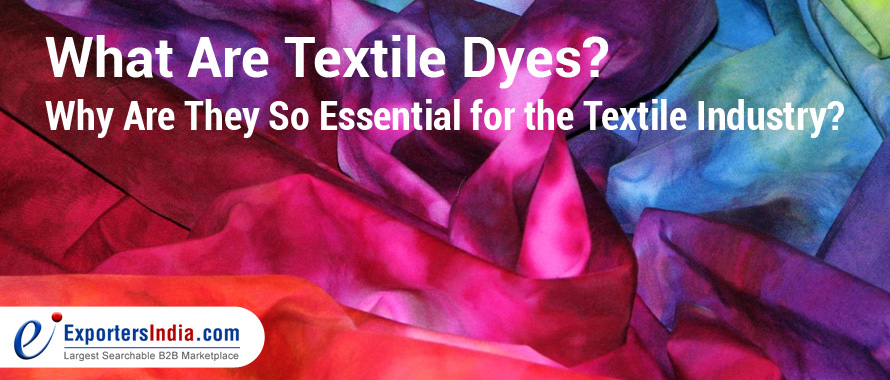
Textile dyes are chemicals that are applied to give color to textile fabrics and they are very crucial in the textile industry. They make the textiles bright and attractive in colors, and this plays a major role in consumer preference and marketability. Aesthetic value of a fabric, as well as the creation of unique identities of a textile product, are determined by the selection and quality of dyes. The dyes employed in textiles allow designers and manufacturers to follow fashion trends, invent their unique patterns of colors, and separate their products in competitive markets. Besides, the dyes on fabrics are also stronger and longer-lasting in their color.
So, that clothes and fabrics will not fade away after washing repeatedly and being exposed to light. The development of the dye technology is also aimed at eco-friendly and sustainable development that does not harm the environment, but gives high performance. This equilibrium between the flashy looks and sustainability is gaining relevance in the current textile industry.
Textile dyes are of various kinds, each having a different use and suitable for a variety of fabrics:
To be effective in coloring textiles, dyes should possess several valuable qualities:
This is the resistance to fading or running in the course of laundry, any light exposure, sweating, and wear, which is vital in the preservation of the cloth's condition.
The dyes should be compatible with the type of fiber that is used, whether it is of natural fibers, synthetic fibers, or a combination of the two, to enable it to bind and brilliantly give color.
The textile producers are in search of dyes that can offer bright and consistent colors and offer a variety of colors so as to meet the design needs of different designs.
The increasing environmental consciousness has led to the existence of the necessity of using sustainable dyes and dye processes that require fewer chemicals and cause less pollution.
The use of textile dyes has a lot of benefits that fuel their necessity in the industry:
Dyes are used to convert plain materials into beautiful products that have bright and permanent colors that are appealing to customers.
They give the ability to design seasonal colors, bespoke designs, and experimental designs, and promote fashion creativity.
High-quality dyes cause the clothes to appear and feel good even after some time, since they do not fade away and will attract customers.
Fabric Dyes can be used in different types of fabrics and the production process is versatile; therefore, manufacturers are able to satisfy a vast range of market demands.
Special colors or dyeing processes can be some of the distinguishing features of a brand and its will to succeed.
Textile dyes have a wide range of applications:
Dyes are the key to the coloration of clothing in various colors and designs to suit the low-end fashion market and the high-end clothing market.
Curtain, upholstery, carpets and linens are stained in order to increase their look and longevity.
Industrial fabrics, medical textiles, and protective clothing use specialty dyes, which give the required functional characteristics along with color.
Textile dyes are used in the coloring of leather, synthetic leather, and fabric parts of footwear and bags to satisfy the fashion demand.
When selecting an appropriate textile dye, one has to take into account several factors:
Dyes that are chosen depending on the fiber type of the fabric will bond well, give rich colours and have durability.
There are different degrees of resistance to washing, light exposure and perspiration requirements that a product may need based on the end-use.
Favored dyes and processes that reduce environmental impact, do not violate rules, and are sustainable in terms of the environment are considered.
The manufacturers weigh between the quality of dyes and their performance and the cost of producing goods to make products competitive in the market.
In conclusion, textile dyes cannot be disregarded in the textile industry as they offer the functionalities that are required, other than color, which can help in supplying better fabrics, the development of design and sustainability. Their selective selection and utilization make fabrics respond to the demand of aesthetics, durability and environmental criterion and this is one of the keys to the success of the garment and textile products throughout the world. Moreover, the current technological developments in the dyeing process are targeting environmentally friendly technologies, which will be able to use less water, fewer chemicals, and less energy. The innovation does not just help to keep the natural resources alive but also meets the rising customer demands against sustainable and ethically produced textiles, something that makes the industry sustainable and competitive in the long run, which is in the whole world.







Connect with us





