 GST : 05AACPY6891P2ZO
 5.0/5
5.0/5
Our Products
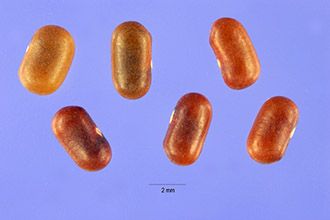
Leading Manufacturer, Supplier & Retailer of Cassia Glauca Seeds, Sesbania Sesban Seeds, Sesbania Cannabina Seeds, Cassia Javanica Seeds and Cassia Occidentalis Seeds.

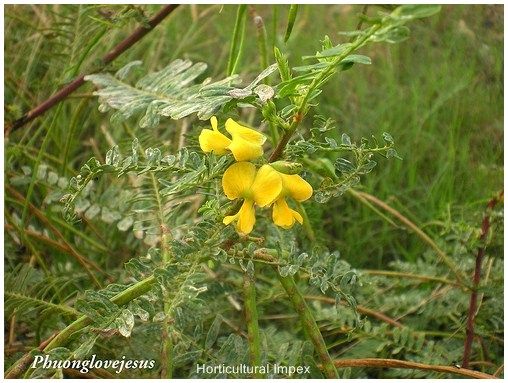
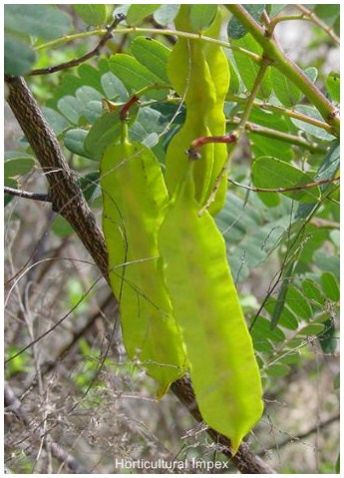
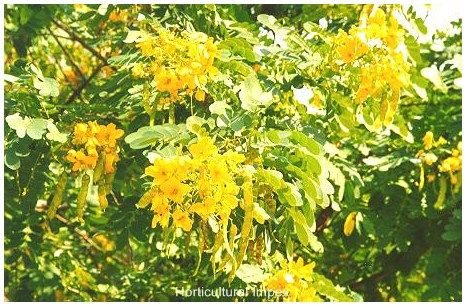
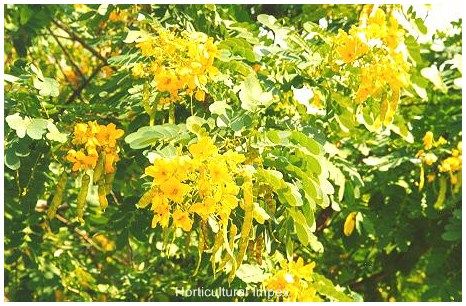
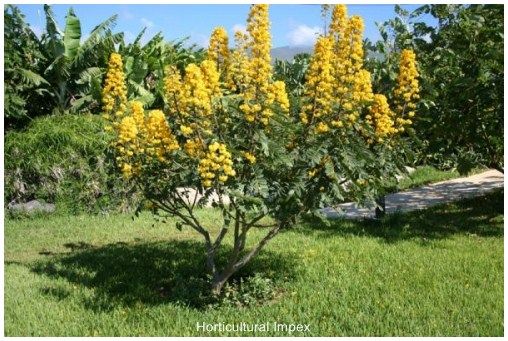
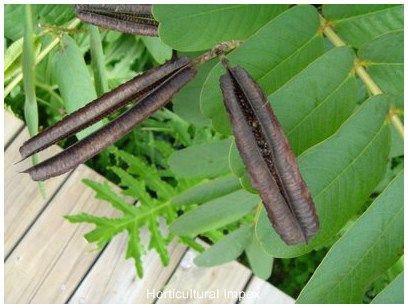
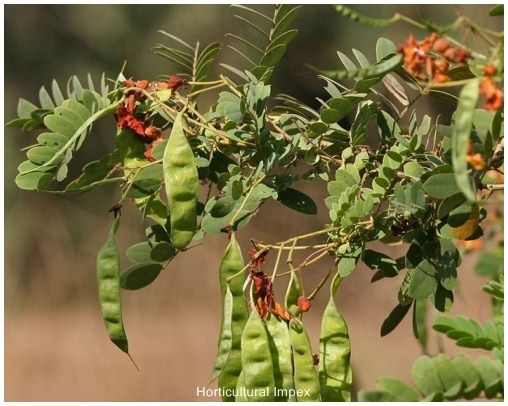
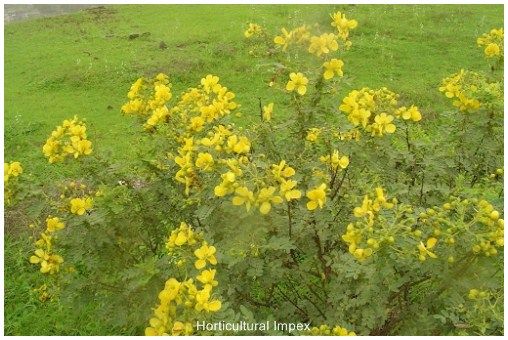
Sesbania sesban a soft wooded, quick-growing short lived shrub, 4-8mt. high, found cultivated throughout the plains of India up to an altitude of 1200m. Leaves 7.5-15cm long paripinnate, leaflets 8-20 pairs, linear-oblong, glabrous, entire, mucronate to acuminate, 6.0-25.0mm x 2.5-6.0mm, flowers yellow or yellow spotted red to purple or with standard petals coloured purple or brown form outside, in 8-10 flowered, lax, axillary racemes, 2.5-14.0cm long; pods 12.5-22.5cm x 0.25-0.37cm; pendulous, weak, distinctly torulose, twisted, sharply beaked, 20-30 seeded and sepate.
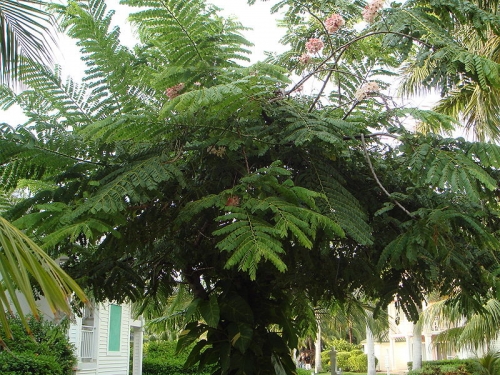
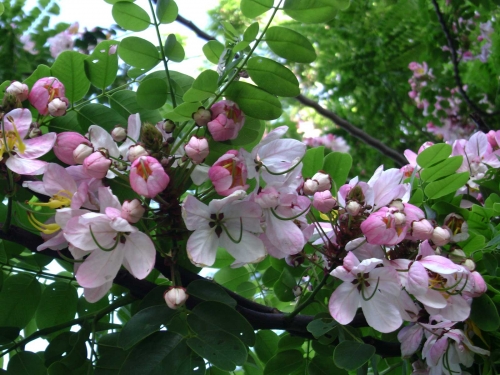
Common Name : Java Cassia, Pink Shower, Apple Blossom Tree and Rainbow Shower Tree, Java Nodding cassia, Pink cassia
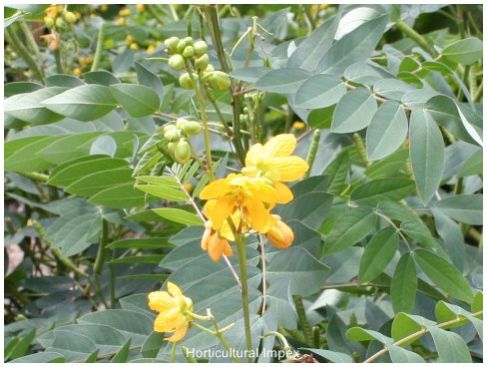
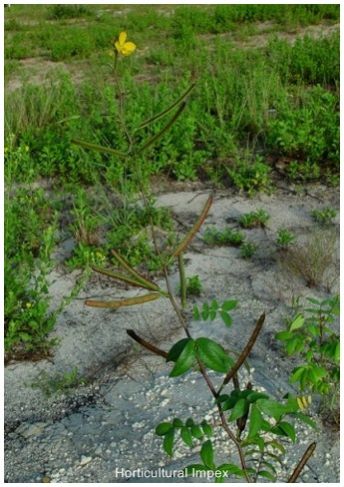
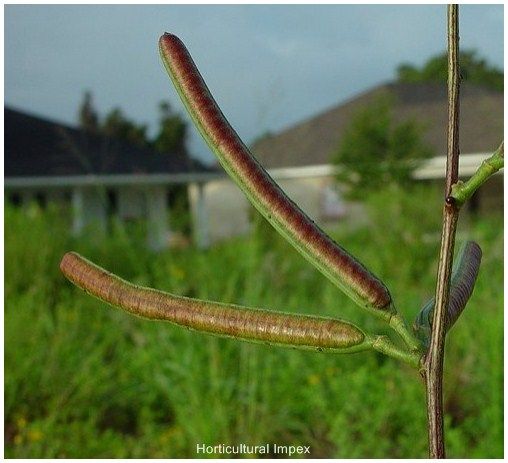
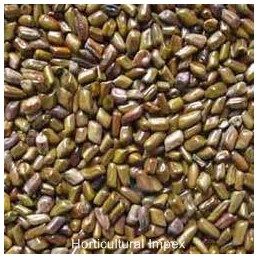
Cassia occidentalis is a diffuse undershrub found throughout India, attain a height of 2mt. leaves are entire, oblong, paripinnate, alternate, distichous. Flowering occurs throughout the year. Pod of the plant is short, flat, compressed, brown at maturity, seeds are many in number, brown in colour. The leaves, roots and seeds are purgative. The seeds and leaves are also antiperiodic. The seeds are used as external application for skin diseases. The seeds are roasted and used as a substitute for coffee in French Africa and in the north sector of Argentina. The medicinal properties, however, are lost by roasting.
The seeds contain: tannic acid, mucilage (36%), fatty oil (2.56), emodin, and a toxalbumin. Chrysarobin (methyl-dihydroxy anthranol, m.p., 203-4º) has been isolated from the benzene extract of the seeds (Chem. Abstr., 1944, 38, 3033). The fatty oil contains; saturated fatty acids, 19.7; linoleic acid, 31.4; oleic acid, 30.7; linolenic acid, 6.3; volatile constituents, 0.7; unsapon. Matter, 7.4% (Wehmer, suppl., 42).
Synonyms : Cassia alata, Cassia bracteata, Cassia herpetica, Cassia rumphiana, Herpetica alata, Cassia alata, Cassia bracteata, Cassia herpetica
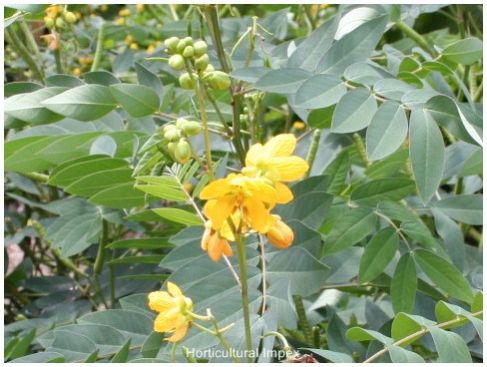
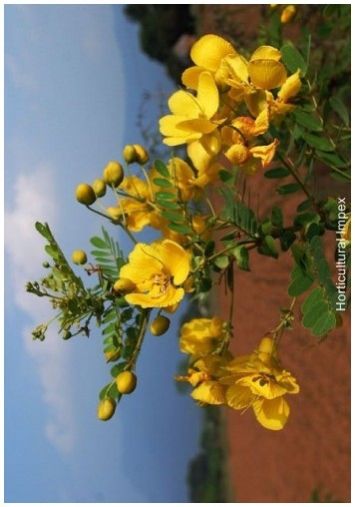
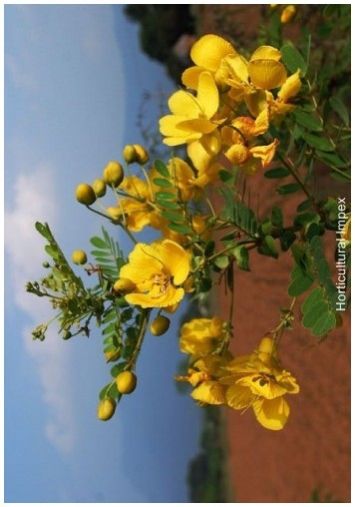
Cassia auriculata a shrub with large bright yellow flowers, growing wild in Central Provinces and western peninsula, and cultivated in other parts of India. The plant attains a height of 7mt. Its flowers are bright yellow in colour and zygomorphic. Bark is thin, brown, lenticellete. Leaves alternate, peripinnately compound, stipules large and leafy. The seed, flower and bark contain pyrrolizidine alkaloids. In India, the flowering season are mainly two, first is in early monsoon and second is late monsoon. It is valuable as a tanning material, as a plant for reclothing barren tracts, and as a green manure crop. The plant can be cultivated in many parts of India. It prefers a light porous soil. It is immune from browsing by cattle and goats, and as the plant is not exacting in its requirements, plantations are easy and cheap to raise. The cheapest method of cultivation is by sowing in furrows 2 -5in. apart and 4 - 6in. deep. It is native of India, Myanmar, Shri-Lanka and also grown successfully in African countries.
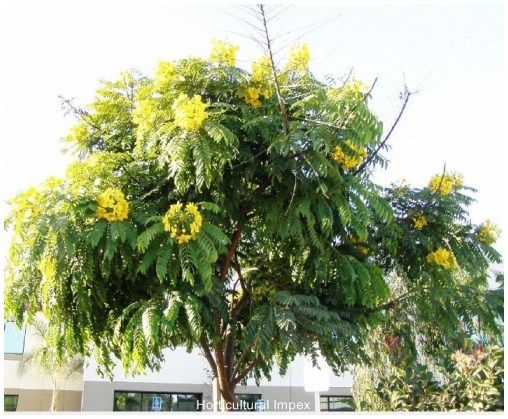
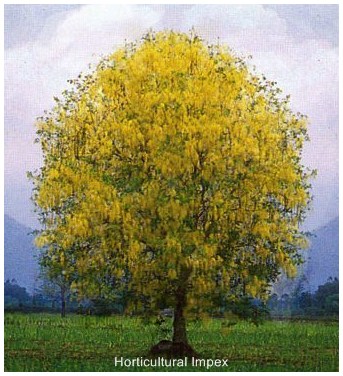
Cassia fistula is a moderate-sized deciduous tree with a bole 40feet high and 3 - 4 ft in girth, indigenous to India, and naturalised in tropical Africa, South America and West Indies. It is sometimes cultivated for its beautiful yellow flowers which appear during April - June. The fruits are pendulous, cylindrical, 25 - 50cm, long and 1.5 - 3 cm in diam. And contain 25 - 100 seeds. Although one-celled in the beginning, the fruit latter develops numerous transverse septa between the seeds. In fresh pods, the seeds are completely surrounded by a black pulp, which, on drying adheres to the septa. The bark of Cassia fistula known as Sumari is sued in admixture with avaram bark in the tanning of East India Kips. It is mainly used as ornamental trees, but also used as firewood inMexico. Wood is also used to make farm implements. It is reported to be astringent, purgative, vermifuge. The fruit is used as an anti-inflamatory, antipyretic, refrigerent, good for eye ailments, flu, heart and liver ailments.Leaf poultices are used in facial massage for brain afflictions. This plant is alos used in epilepsy, diarrhea, cancer, constipation, pimples, glandular tumours, paralysis, rheumatism, kidney stones etc.
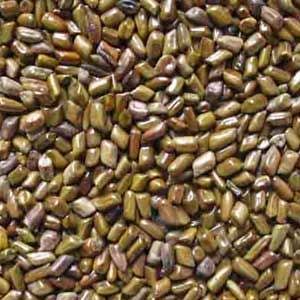
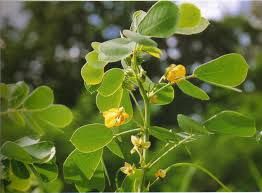
The plant known by many different names in different regions is an annual plant that can grow up to a height of 30-90 cm. The young plants have a distinct smell when in their young stage but it gradually disappears. But the entire plant with all its various parts is extremely beneficial as a herbal medicinal plant. With their immense value in the market, the cassia tora seeds are much in demand.
Horticultural Impex with its unit in Dehradun, Uttarakhand has a very modern in-house laboratory where continuous research is going on to come out with superior quality seeds. This makes us the most in-demand Cassia Seeds Exporters. We recommend buyers from high altitudes as the plants grow well at high elevations. You can trust us to supply you with the best quality seeds.
 Mr. Harsh Kumar (Horticultural Impex)
 05, Panditwari, PO, Prem Nagar, Dehradun, Uttarakhand - 248007, India
 Share us via