
 GST : 24CJWPK9058H1ZI
 5.0/5
5.0/5
Our Products
We are leaders in the market for providing best range of Careprost Bimatoprost Ophthalmic Solution Eye Drop, Moxifloxacin Eye Drops, Ripatec Eye Drop, Brimonidine Tartrate and Latanoprost Eye Drops
Additional Information:
Payment Terms : L/C, D/A, D/P, T/T, Western Union,
Packaging Details : 3 ML IN A PACK.
Delivery Time : 7 DAYS
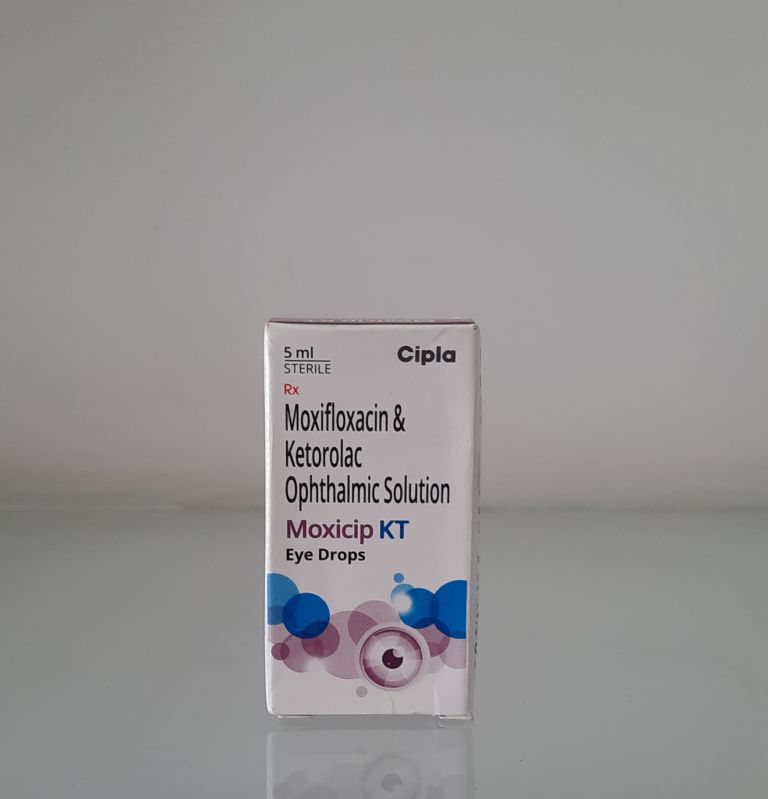

Moxifloxacin Eye Drops Trader
Moxifloxacin Eye Drops are a potent ophthalmic solution that combines Moxifloxacin and Ketorolac, designed to treat a variety of eye conditions. These eye drops are manufactured by CIPLA, a renowned name in the pharmaceutical industry, ensuring you receive a product that meets the highest standards. With a bottle size of 5ml, Moxifloxacin Eye Drops are convenient for daily use and easy to carry, making them an essential addition to your eye care routine.
Why Choose Moxifloxacin Eye Drops?
As a leading Exporter, Supplier, Trader, and Distributor based in India, we are committed to providing top-quality Moxifloxacin Eye Drops to our customers worldwide. Our product comes in a user-friendly plastic bottle, ensuring the solution remains safe and effective when stored in a cool, dry place. The unique formulation of Moxifloxacin & Ketorolac not only helps in fighting bacterial infections but also provides relief from inflammation and pain, making it ideal for various eye ailments.
Benefits of Moxifloxacin Eye Drops
Fast-Acting Relief: Experience quick relief from symptoms associated with bacterial conjunctivitis and other eye infections.
Effective Anti-Inflammatory : The Ketorolac component helps reduce inflammation, providing comfort to irritated eyes.
Reliable Quality: Manufactured by CIPLA, our Moxifloxacin Eye Drops adhere to stringent quality controls and regulations.
How to Order
If you’re looking to enhance your eye care offerings or need Moxifloxacin Eye Drops for personal use, don’t hesitate to **Send Enquiry** or **Request a Call** for more information. With a delivery time of just 7 days, we ensure that your order arrives promptly. Trust our dedicated team to provide you with the best in eye care solutions!
Moxifloxacin eye drops are a prescription-only medication used to treat bacterial infections of the eye, such as bacterial conjunctivitis (pink eye). It belongs to a class of antibiotics called fluoroquinolones. How It Works Moxifloxacin is a broad-spectrum antibiotic that works by killing the bacteria causing the infection. It does this by inhibiting two essential bacterial enzymes, DNA gyrase (topoisomerase II) and topoisomerase IV, which are necessary for DNA replication and repair. By blocking these enzymes, moxifloxacin prevents the bacteria from multiplying and surviving, leading to the elimination of the infection. Uses Moxifloxacin eye drops are primarily used for:
Treating bacterial conjunctivitis in adults and children (4 months and older).Off-label use for other eye conditions like keratitis and as a prophylactic agent in cataract and refractive surgeries. Dosage Dosage and duration of treatment may vary depending on the specific product (e.g., Vigamox®, Moxeza®) and the doctor's instructions. A common dosage for bacterial conjunctivitis is typically one drop in the affected eye(s) 2 or 3 times a day for 7 days. It is crucial to follow the prescribed dosage and complete the full course of treatment, even if symptoms improve, to ensure the infection is fully cleared and to prevent the development of antibiotic resistance. Side Effects As with any medication, moxifloxacin eye drops can cause side effects. Common side effects include:Burning, stinging, or discomfort in the eyesDry or itchy eyesEye painRedness or irritation of the eyesExcessive tearing or eye dischargeMore serious, but less common, side effects may occur. If you experience any severe symptoms, such as an allergic reaction (rash, hives, difficulty breathing), new or worsening eye pain, or swelling of the face, contact your doctor immediately. Precautions and Contraindications
Allergies: Do not use this medication if you are allergic to moxifloxacin, other quinolone antibiotics, or any of the ingredients in the eye drops.
Contact Lenses: It is generally recommended not to wear contact lenses while being treated for a bacterial eye infection.
Contamination: Avoid touching the dropper tip to your eye, face, or any other surface to prevent contamination of the solution.
Serious Conditions: While rare with ophthalmic use, systemic fluoroquinolones have been associated with serious side effects like tendon rupture and nerve damage. Inform your doctor about your complete medical history, especially if you have conditions like myasthenia gravis, heart problems, or a history of seizures.
Additional Information:
Payment Terms : L/C, D/A, D/P, T/T, Western Union,
Packaging Details : 5ml bottle in a box
Delivery Time : 7 DAYS
Ripasudil eye drops are a type of ophthalmic medication used primarily to treat glaucoma and ocular hypertension (high pressure in the eye).
Here is a detailed description:
Drug Class and Mechanism of Action:
Ripasudil belongs to a class of medications called Rho-kinase (ROCK) inhibitors.
Its unique mechanism of action is to lower intraocular pressure (IOP) by increasing the drainage of fluid (aqueous humor) from the eye.
It achieves this by inhibiting the Rho-kinase enzyme, which causes the relaxation of the trabecular meshworkthe tissue in the eye responsible for draining the fluidthereby enhancing the conventional outflow facility through Schlemm's canal.
Primary Uses:
Glaucoma (specifically open-angle glaucoma): To lower the elevated IOP, which can otherwise damage the optic nerve and lead to vision loss.
Ocular Hypertension: To reduce the high fluid pressure in the eye, which is a major risk factor for developing glaucoma.
It is often used when other IOP-lowering medications (like prostaglandin analogs or beta-blockers) are insufficient or cannot be used.
Dosage and Administration:
It is typically administered as an ophthalmic solution (eye drops), often in a 0.4% concentration.
The usual dosage is one drop instilled into the affected eye(s) twice daily (morning and evening).
Note: This is a prescription medication, and the exact dosage and frequency should always be followed as prescribed by a healthcare professional.
Common Side Effects:
The most frequent side effect is conjunctival hyperemia (eye redness), which is usually mild, transient, and subsides spontaneously within a few hours.
Other common side effects include eye irritation, inflammation of the conjunctiva (conjunctivitis), and inflammation of the eyelids (blepharitis).
Additional Potential Use:
While primarily approved for glaucoma, studies have suggested that Ripasudil may also have a protective effect on the corneal endothelium and promote wound healing, which could be beneficial in other corneal diseases or after eye surgeries like cataract removal.
Additional Information:
Payment Terms : L/C, D/A, D/P, T/T, Western Union,
Packaging Details : 5ml in a bottle
Delivery Time : 7 DAYS
The combination eye drops containing brinzolamide and brimonidine are a prescription medication used to manage eye conditions characterized by high intraocular pressure (IOP).
This fixed-combination medicine (commonly sold under the brand name Simbrinza) combines two drugs that work through different mechanisms to achieve a greater IOP reduction.
Description and Uses| Feature | Details |
| Primary Use | To lower elevated intraocular pressure (IOP) in patients with open-angle glaucoma or ocular hypertension. |
| Goal | Reducing IOP is the only proven method to prevent damage to the optic nerve and subsequent vision loss caused by glaucoma. |
| Dosing | Typically, one drop is instilled in the affected eye(s) three times a day. |
| Drug Class | Combination of an 2-adrenergic agonist (Brimonidine) and a Carbonic Anhydrase Inhibitor (Brinzolamide). |
The drops combine two distinct actions to reduce the volume of aqueous humor (the clear fluid inside the eye):
| Component | Drug Class | Mechanism of Action | Effect on IOP |
| Brinzolamide | Carbonic Anhydrase Inhibitor | Blocks the enzyme carbonic anhydrase, which is essential for the production of aqueous humor. | Decreases fluid production. |
| Brimonidine | 2-Adrenergic Agonist | Primarily acts on receptors in the eye to decrease aqueous humor production and secondarily may increase uveoscleral outflow (drainage). | Decreases fluid production and may increase drainage. |
By combining these two mechanisms, the medication is highly effective at significantly lowering IOP.
Common Side EffectsSince this is a combination of two active drugs, it can have various side effects:
Ocular (Eye) Effects:
Blurred vision
Eye redness (Ocular Hyperemia)
Eye irritation or discomfort
Sensation of having something in the eye (foreign body sensation)
Systemic Effects:
Unpleasant or Bitter Taste in the mouth (a common side effect of brinzolamide).
Dry mouth
Drowsiness or Dizziness (more related to brimonidine).
Important Notes:
Contact Lenses: If you wear soft contact lenses, they should be removed before application. Wait at least 15 minutes before reinserting them.
Other Drops: If using multiple eye drops, wait at least 5 minutes between instilling each medication.
Driving: Due to potential for blurred vision, dizziness, or drowsiness, exercise caution when driving or operating machinery after use.
Would you like to know more about the individual components, brinzolamide or brimonidine, in isolation?
Additional Information:
Payment Terms : L/C, D/A, D/P, T/T, Western Union,
Packaging Details : 5ml bottle in a box
Delivery Time : 7 DAYS


Latanoprost is a prescription eye drop medication primarily used to treat open-angle glaucoma and ocular hypertension (high pressure in the eye).
Here is a breakdown of its description, mechanism, and common considerations:
Description and UseDrug Class: It belongs to a class of medications called prostaglandin analogs.
Purpose: Latanoprost is used to lower elevated intraocular pressure (IOP). High IOP is a major risk factor for damaging the optic nerve and causing permanent vision loss in conditions like open-angle glaucoma.
Administration: It is typically administered as one drop in the affected eye(s) once daily in the evening. This once-daily dosing contributes to its convenience as a first-line treatment.
Latanoprost works to lower eye pressure by:
Increasing Outflow: It is a prodrug that is converted to the active latanoprost acid. This active form acts as an agonist on prostaglandin receptors in the eye.
Uveoscleral Pathway: Its main mechanism is increasing the drainage of the clear fluid inside the eye (aqueous humor) through the uveoscleral pathway. This enhanced outflow reduces the fluid buildup, thus lowering the intraocular pressure.
Patients should be aware of several potential side effects, particularly those affecting the eye:
Changes to Eye Color (Iris Pigmentation): Latanoprost can cause a gradual, permanent increase in the brown pigment of the iris, especially in people with mixed-color eyes (e.g., blue-brown, green-brown).
Eyelash Changes: It can lead to the eyelashes becoming longer, thicker, and darker in color. These changes are usually reversible after stopping the medication.
Eye Irritation: Common symptoms include redness of the eye (conjunctival hyperemia), a foreign body sensation, stinging, or itching.
Other: Darkening of the eyelid skin and blurry vision may also occur.
Important Note: If you wear contact lenses, you should remove them before using latanoprost eye drops and wait at least 15 minutes before putting them back in. If you use other topical eye medications, allow at least 5 minutes between each drop.
Would you like to search for the brand names under which Latanoprost is commonly sold?
Additional Information:
Payment Terms : L/C, D/A, D/P, T/T, Western Union,
Packaging Details : 2.5ml bottle in a box.
Delivery Time : 7 DAYS
 Mr. Tarun Kumawat (Marshall Healthcare)
 12 Suvarna Residency Behind Sanidhya Flora TP 76/b, Chandkheda, Ahmedabad, Gujarat - 382424
 https://www.marshallhealthcares.com
 Share us via











