
Company Information
 Member Since 15 Years
 Nature of Business Retailer
Ask for more detail from the seller
Contact Supplier
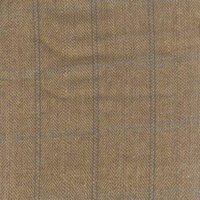
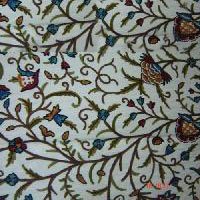
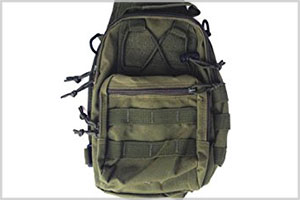
We are India’s leading manufacturer & exporter of backpack fabric in defence category located in mumbai city of maharashtra state India
A backpack — also called bookbag, kitbag, knapsack, rucksack, pack, or sackpack — is, in its simplest form, a cloth sack carried on one’s back and secured with two straps that go over the shoulders, but there can be variations. Lightweight types of backpacks are sometimes worn on only one shoulder strap.
Backpacks are commonly used by hikers and students, and are often preferred to handbags for carrying heavy loads or carrying any sort of equipment, because of the limited capacity to carry heavy weights for long periods of time in the hands.
Large backpacks, used to carry loads over 10 kg (22 lbs), as well as smaller sports backpacks (e.g. running, cycling, hiking and hydration), usually offload the largest part (up to about 90%) of their weight onto padded hip belts, leaving the shoulder straps mainly for stabilising the load. This improves the potential to carry heavy loads, as the hips are stronger than the shoulders, and also increases agility and balance, since the load rides nearer the wearer’s own center of mass.
In ancient times, the backpack was used as a means to carry the hunter’s larger game and other types of prey and as a way of easier transport for other materials. In the cases of larger hunts, the hunters would dismember their prey and distribute the pieces of the animal around, each one packing the meat into many wrappings and then into bags which they placed on to their backs. The bag itself would be made up of animal hide and skin and sewn together by animal intestines, which would be woven together tightly to make a sturdy thread-like material.
Backpack designs
Backpacks in general fall into one of four categories: frameless, external frame, internal frame, and bodypack. A pack frame, when present, serves to support the pack and distribute the weight of its contents across the body more appropriately, by transferring much of the weight to the hips and legs. Most of the weight is therefore taken off the shoulders, reducing the chance of injury from shoulder strap pressure (many backpacks equipped solely with shoulder straps can affect the posture of a person carrying more than 14 kg (30 lbs)), as well as being less restrictive of the upper body range of motion. Most backpacks are capable of being closed with either a buckle mechanism, a zipper, or a dry-bag type closure though a few models use a drawstring fitted with a cord lock for the main compartment.
A bodypack is a backpack fitted with one or more pockets that are suspended on the wearer’s chest and loaded in such a way that the load in the front and the load in the back are close to equal. The majority of the load in a bodypack is carried by the hips. The ideal load carrying system should not disturb the wearer’s natural posture, balance and manoeuvrability. The load must be dispersed onto the skeletal structure in an even manner, and should not produce unbalanced forces on the body.



Connect with us





 For Buyer
  For Seller
  Help
Help 
 Worli, Mumbai, Maharashtra
  Send Enquiry