Write a Review
Our Products
Our Complete range of products are Black Matpe Beans and GREEN MOONGS.
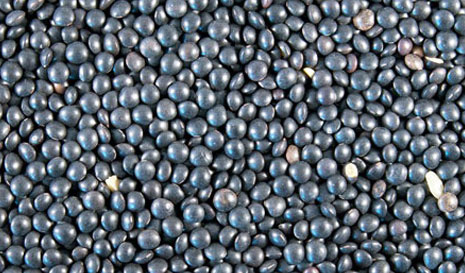
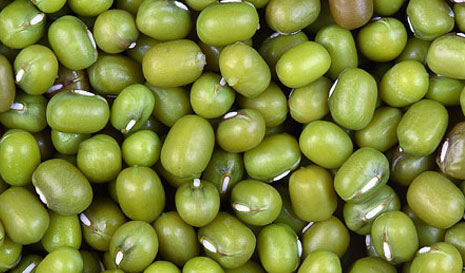
We are committed towards providing quality-assured products and thus we keep a strict check on the production procedure. The raw materials that are used for the production of our finished products are acquired in minimally processed or unprocessed states; these are free from impurities as well. We make available sabut moong dal that is cultivated using various methods and available in customized packaging size with high nutritious value.
Mung bean (Hindi: ), also known as green bean, choroko (in Swahili), mung, mongo, moong, moog (whole) / moog dal (split) (in Bengali , Marathi), mash bean, munggo or monggo, green gram, golden gram, and green soy, is the seed of Vigna radiata which is native to Bangladesh, India, and Pakistan. The split bean is known as moong dal, Pesara [] (Telugu), which is green with the husk, and yellow when dehusked. The beans are small, ovoid in shape, and green in color. The English word mung derives from the Hindi moong.
The mung bean is one of many species recently moved from the genus Phaseolus to Vigna and is still often seen cited as Phaseolus aureus or Phaseolus radiatus. These variations of nomenclature have been used regarding the same plant species.
Mung beans are mainly cultivated in India, China, Thailand, Philippines, Vietnam, Indonesia, Burma, and Bangladesh, but also in hot and dry regions of southern Europe and the southern USA. In India and Bangladesh, they are grown during two seasons. One is the Rabi season (starting November), and the other is the Kharif season (starting June). Mung beans are tropical (or sub-tropical) crops, and require warm temperatures (optimally around 30-35C). Loamy soil is best for pusap cultivation.
 Dharmendra Chaudhary (RNP marketing & cargo pvt ltd)
 207 shri krishna comercial centre ; udyog nagar opp telephone exchange ;s.v. road (w) mumbai-62, Goregaon, Maharashtra, India
 Share us via