Write a Review
Our Products
We offer a complete product range of Orange and Lemon
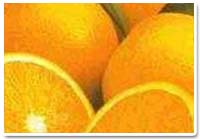
Oranges belong to the category of citrus fruits and are of the Citrus sinensis family. The citrus trees are of the same genus, Citrus, and remain largely interbreedable, that is to say that there is only one super species. Some citrus fruits include oranges, grapefruit, lemons, limes, etc. The fruits belonging to the citrus family are considered berries, as they are fleshy, soft, have seeds, and are derived from a single ovary.
Oranges are believed to be hybrids between the pomelo (Citrus maxima) and tangerine (Citrus reticulata) and are considered to be a hesperidium kind of a berry. The orange tree is a small flowering tree, which grows to a height of about 10 m. It has evergreen leaves, which grow to a length of about 4-10cm long. The seed inside an orange is referred to as the pip, whereas the thread like structures attached to the peel and the flesh are termed as the pith.
OriginThe Orange fruit traces its origin to South-east Asia. The word orange, is an adaptation of the Sanskrit word narangah. The oranges, which were brought to Europe from India or China were of Citrus aurantium variety, the bitter orange. It is also referred to as the Chinese Apple or Applesin by many people. It is believed that the Duch, Portuguese, Spanish and Arab sailors planted citrus trees along their trading routes to prevent scurvey. Production of OrangesOranges are grown in groves, and are grown extensively throughout the world. Brazil, USA and Mexico are amongst the top orange producing countries of the world. As the orange trees are sensitive to frost, care should be taken to prevent frost formation on the leaves, bark and branches. So, when sub-freezing temperatures are expected, the best part is to spray the tree with water, to protect it from temperatures that have dropped below the freezing point.
Nutritional Profile
Oranges are rich in Vitamin C and are also a good source of dietary fiber. They are also good sources of other vitamins including vitamin B1 and Folate, as well as Vitamin A, Thiamine, Vitamin B6, Calcium and Potassium.
Nutritive Values per 100 gms.
Varieties of Oranges
Uses of Orange Oranges can be put to multiple uses, be it for food or for cosmetic purposes. Oranges are relished all in themselves and are also used in many recipes to add to them a zingy taste. Orange juice is an indispensable part of a healthy breakfast, and gives you the desired energy to carry out your tasks throughout the day. Orange oil is a widely used aroma therapy oil, which aids in relaxing the senses. The bees bred in an orange grove produce an orange flavoured honey, which is extremely good to taste. Almost all the parts except the pip and the pith are used to make marmalade.
Orange peels are used by gardeners as skull repellents. The powder made with the orange peels is an excellent face mask ingredient, and if used regularly, adds a glow to the face. Orange juice added in the face packs give a new life to the skin by removing the dead cells.
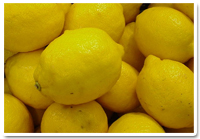
An Introduction to LemonThis oval-shaped yellow citrus fruit with juicy acidic flesh is a globally renowned flavouring agent used for culinary and non-culinary purposes. In every corner of the world, it is a common ingredient of many cuisines, drinks and marinades. Primarily, this fruit is used for its acidic juice which contains about 5% (approximately 0.03 moles/liter) citric acid, the substance responsible for its tart taste. The lemon (citrus X limon) is a hybrid in cultivated wild plants. The name Limonum is derived from the Arabic Limun or Limu, which in its turn probably comes from the Sanscrit Nimbuka.
The exact origin of the lemon is not known, but it is believed that this juicy fruit was originated in Asia,
Besides being widely used for culinary purposes, it also contains many healing properties. For centuries, this yellowish-coloured fruit has been widely used for its therapeutic properties. It acts as a blood purifier and improves the bodys ability to get rid of toxins. Lemons are also used for cosmetics therapy.
History of LemonsSince innumerable, lemons are used for culinary as well as non culinary purposes. Findings suggests that lemon was originated in north-western India. In southern Italy, lemons have been introduced in 200 A.D. and have reached Iraq and Egypt by 700 A.D. It is believed that this juicy fruit has been cultivated in Sicily before 1000 and China between 760 and 1297 A.D. It was distributed widely throughout the Arab world and the Mediterranean region between 1000 A.D. to 1150. In the middle of the fifteenth century, the real cultivation of lemon began in Europe. In 1943, it was introduced in Americas when Christopher Columbus, the Spanish voyager, carried lemon seeds to Hispaniola. Today, USA is one of the largest producers of lemons in the world.
Plant DescriptionBotanically lemon is known by different names like citrus medica, citrus limonum, citronnier, neemoo, leemoo, limoun and limone. Moderate climatic conditions is suitable for the growth of this short herb. Lemon plant tolerates almost all types of soil which are having the pH between 5.5 and 6.5. It is a short and straggling tree which grows upto the height of 11 feet.
This irregularly branched tree has oval shaped leaves which are about two inches long. The solitary, five-petalled flowers, white inside and tinged with deep pink outside, grow on stems in the axils.
| Culinary UsesLemons are inseparable elements of many popular drinks. Lemonade is one of the worlds favourite refreshing summer drinks. Another drink which is equally popular on all corners of the globe is the lemon tea. Needless to explain the popularity of lemon juice. As garnish and as a cooking ingredient, the astringent juice enhances and sharpens the taste of meat, fish and vegetable dishes. Fish are marinated in lemon juice to neutralize the odor. In USA, the popularity of lemons can be judged by the number of lemon-flavoured food items like | |
| lemon pastries, tarts and traditional American lemon meringue pie. Lemon-flavoured hard-boiled candy, cakes, biscuits, and puddings are popular all over the world. | |
Other UsesLemon is also used in other purposes. Some of them are discussed below:
Medicinal BenefitsFor centuries lemon has been widely used for its medicinal properties. It contains higher concentrations of the Vitamin C. They also contain smaller, but significant amounts of the B vitamins thiamine, riboflavin and niacin. Following are the major benefits of using lemon:
| |
 Sunil (Agro Elite)
 125, Gopal Singh Plaza, Bundi, Rajasthan 323001
 Share us via