Write a Review
Our Products
We are leaders in the market for providing best range of Salt
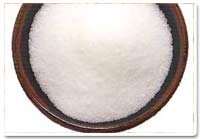
A SaltSalt or a sodium chloride *(NaCl)* is a dietary mineral essential for the existence of animal life. Also known by the names of common salt, table salt, or halite, this chemical compound is responsible for the salinity of the ocean and of the extracellular fluid of many multicellular organisms. It is used as a condiment and a food preservative but doesnt contain calories, proteins, or carbohydrates. Approximately 0.3933 grams of sodium, and 0.6067 grams of chlorine is present in one gram of sodium chloride.Salt is a necessary constituent of the human body. It is the only mineral for which we have an innate craving. The sodium and chloride elements of the salt helps the kidneys to regulate the bodys fluid levels, besides maintaining the life-sustaining balance of acids and bases.
| |||||
| |||||
| Salt & HealthNeedless to say that salt is an essential element for the existence of animal life. Life itself would be impossible without it, since the human body requires salt in order to function properly. Nutritionists recommend about 3 to 8 grams of salt a day in an adult diet. Lets examine the chemical composition of a salt. In fact salt is a composition of many natural minerals and every element has its own medicinal properties. The following chart describes the major constituents of salt together with their medicinal properties: | |||||
| |
Health Benefits
| |
 Sunil (Agro Elite)
 125, Gopal Singh Plaza, Bundi, Rajasthan 323001
 Share us via