Write a Review
Our Products
We are leaders in the market for providing best range of Banana, Fresh Pineapple, Papaya and JAMUN
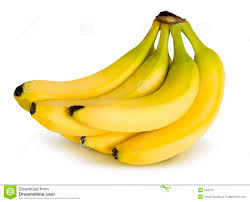
Banana, the fruit of a plant of the genus Musa (family Musaceae) is basically cultivated for food, and secondary for the production of fibers, and also for producing tissue-thin tea bags. Besides this, bananas are also cultivated for some ornamental purposes in various regions of the world. They are also known as Bananier Nain, Canbur, Curro and Plantain. These creamy, rich, and sweet fruits are favourite among the people of all ages right from infants to elders. Bananas consist mainly of sugars (glucose, fructose and sucrose) and fiber. They provide instant energy as they are the rich sources of Vi
| Origin of BananasEdible bananas find their origin in the Indo-Malaysian region and northern Australia. Many varieties and species of wild bananas still occur in Philippines, Malaysia, New Guinea, and Indonesia. Recent archaeological and palaeoenvironmental evidence suggests that banana cultivation goes back to at least 5000 BC, and possibly to 8000 BC in the Western Highlands Province of Papua New Guinea. This would make the New Guinean highlands the first place where bananas were cultivated by human beings. Later these eatables were domesticated in the other parts of southeastern Asia. | |
History of Bananas in a Nutshell
| |
| Botanical DescriptionBanana plants are fast-growing herbaceous perennials that grow at 6 to 7.6 meters (20-25 feet) tall, from a corm. The banana has an underground stem with adventitious roots. Below is the brief botanical description of the banana plant:
| |
| General CultureBanana cultivation requires the following culture:
| |
Varieties of BananasThere are several varieties of edible bananas, classified into several main groups and subgroups. The main species of bananas are Musa Acuminata Colla, M. X Paradisiaca L. (hybrid); whereas Abyssinian Banana (Ensete Ventricossum Cheesman), Musa Balbisina Colla, M. Ornata Roxb., M. Textilis Nee are its related species.It is believed that there are almost 1000 varieties of bananas in the world, subdivided in 50 groups. The most commonly known banana is the Cavendish variety, which is the one produced for export markets. The following are the main varieties of bananas:
| |
Calorie Content of BananaBanana contains about 90 to 93 calories per 100 g. This energy is easily absorbed by the body and hence eating 3-4 bananas daily, especially with milk, is often recommended to gain weight. At the same time, banana is useful for loosing weight. Since it has only 90 calories per 100 g (butter has about 700 calories per 100 g), banana reduces your calorie intake and thus helps in weight loss.
Medicinal Uses of BananasBecause of their impressive potassium content, bananas are highly recommended by doctors. They are helpful in:
| |
Yummy Banana RecipesBesides being eaten raw, bananas are also used in preparing variety of recipes from salads to baked goods. Banana shakes are quite popular in almost in every family of the world. Some of the few banana recipes are:
| |
Other popular Banana Recipes:
| |
How to Choose Good Bananas
| |
| Essential Tips for Banana ExportersFarmers engaged in the harvesting and export of bananas must keep the following tips in their minds for better output: | |
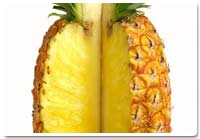
The Pineapple or the (Ananas Comosus) is a tropical berry fruit. It is a multiple fruit, as multiple spirally flowers grow along the axis and each flower produces a single fleshy fruit. Each fruit overlaps the other produced by a different flower adjacent to it, thus, making the pineapple appear as a single fruit. The leaves of the tree are 20-72 inches in length and are needle tipped and bear sharp, up curved spines on their margins. The stem grows straight, and has a tuff of short leaves at the top, which is known as the crown.
A pineapple varies in colour from white to yellow and is sweet in taste. It can be had raw and is also relished when glazed or canned. It serves as an ideal dessert and is often added to salads to enhance their tastes. Pineapples are a rich source of Vitamin C and Manganese. They also contain ample amounts of vitamins B1, B6, Copper and other dietary fiber.
A Brief History
Though some research groups believe that the Pineapple is a native of South America, they were initially discovered by the Europeans in 1943, on the Caribbean island. Various travelers and discoverers brought the fruit back to Europe. Many attempts were made to grow the fruit, but all in vain, as the temperature in the European countries was not conducive for the tree to flourish. By the 16th century many Spanish and Portuguese travelers introduced the fruit in their colonies located in Asia, Africa, and the South Pacific.
Pineapples are known to be highly perishable, and therefore could not be transported to far flung places from the place of their plantations. In America, pineapples were a symbol of status, prestige and social class. A pineapple displayed as a decor in a party was a cynosure of all eyes, and brought the hosts social standing and recognition. Hawaii is the only country in USA to cultivate Pineapples. The fruit is commercially cultivated in China, Thailand, Philippines, Brazil and Mexico.
| Pineapple Varieties | |
| |
| |
| ||||
Health Benefits
Buying and Storing Pineapples While buying a pineapple, care should be taken that the one you choose should be heavy, as the heavier fruits have more edible flesh. It should not have any soft spots, bruises or dark coloured eyes, as all these features are an indication of an over ripe fruit. When the fruit is plucked, it immediately stops ripening, therefore one should choose the one that smells sweet and fragrant at the stem end. If it smells sour, musty or fermented, then it is definitely spoilt. The fruit can be stored at room temperature for a day or two, but then it starts ripening, therefore, it should be wrapped in a poly bag and stored in the refrigerator. It stays fresh for another 4 or 5 days. | ||||
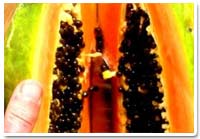
apaya is a Tropical fruit, with a soft musky taste and a butter like consistency. It is the fruit of the plant Carica papaya, in the genus Carica. It is native to the tropics of the Americas, and was cultivated in Mexico several centuries before the emergence of the Meso-American classic cultures. It is often referred to as the tree melon or the pawpaw. It was called the fruit of the angels by Christopher Columbus.
A Papaya tree is a large tree, with a single stem. It grows to about 5 to 10 meters tall, and has spirally arranged leaves mainly confined to the top of the trunk. The leaves are large, ranging from 50-70 cm in diameter. They have deeply palmately lobes having an average of 7 lobes. The tree is generally
| unbranched if unlopped. The tree bears flowers, which are in the shape of the flowers of plumeria, but are comparatively smaller in size and are wax like. The raw papaya fruit id green in colour and attains a yellow-orange hue, when it ripens. The fruit becomes tender as it ripens. | |
| Nutritional ValuePapayas are a rich sources of plethora of vitamins and minerals and essential elements, which are beneficial for the human body. | |||
| Nutritive Values-Per 100 gm | |||
|
Propagation of the Papaya TreePapaya is grown from seeds. The papaya seeds can be dried and stored for more than a year in airtight refrigerated containers. The fresh seeds of the fruit germinate within 10-14 days. The germination time can be further reduced by removing the gelatinous outer seed coat (sarcotesta) before drying.
Papayas grow well in many types of soil, but they must be adequately drained. If the soil drainage is not adequate, it may lead to a number of root diseases. Heavy clay and pahoehoe lava soils should be avoided. Soil pH near neutral (pH 6.0 to 7.0) is preferred.
A papaya tree bears fruit all year round. The papaya plants continue to bear fruits for many years, but with age the yield also falls and the picking becomes difficult.In commercial plantations, the fields are replanted after three years.
Uses of PapayaPapaya is a multi faceted fruit, which can be put to a wide array of uses, some of them may be listed as follows:
CautionPapaya May Cause AllergyMuch like avocados and bananas, papayas also contain substances called the chitinases, which cause the latex fruit allergy. It is often seen that a person suffering from latex allergy is often allergic to these fruits as well. If grown organically, i.e. not treated with gas, the fruit has fewer allergy causing compounds. The cooking of these fruits deactivates these enzymes, thus making them safe for consumption.
How to Choose a Papaya?A healthy fruit, papayas are consumed in large quantities all over the world. As they are highly perishable, care should be taken while selecting the fruit. It is advisable to go for the one that is fairly large, and is more than half yellow. It should yield under palm pressure, but at the same time should not be too tender. Also avoid the ones with scars and blemishes.
If the papaya is not yellow, it may be kept at room temperature for a few days so that it may ripen. Unripe papayas should not be refrigerated, as refrigeration brings the ripening process to a halt. The ripe ones, however may be refrigerated, but should be consumed at the earliest.
Health Benefits of PapayasPapaya is not only a tasty fruit, but is also a rich source of a number of anti-oxidants such as flaunts, carotenes, Vitamin C, Vitamin B, Folate, fiber, potassium, magnesium, etc. All these nutrients promote the health of the cardiovascular system and provide a shield against a number of chronic diseases. Papaya also contains large units of papain, a digestive enzyme. This enzyme is often extracted from the fruit to make anti-inflammatory, anthelmintic, and analgesic medicines.
Some of the health benefits associated with eating the fruit include:
 Sunil (Agro Elite)
 125, Gopal Singh Plaza, Bundi, Rajasthan 323001
 Share us via