Write a Review
Our Products
We are leaders in the market for providing best range of Fire Detection System
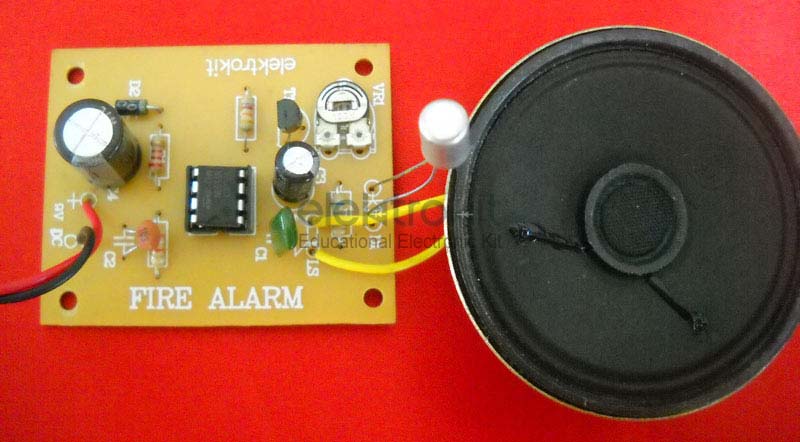
Fire Detection System raises an alarm when temperature increases due to fire. Fire alarm circuit is used to sense the fire as well as temperature. Here reverse bias Germanium (GE) diode is used as a heat sensor. At temperature about 60oC and above, reverse resistance of GE diode drops and makes pin4 (reset) of IC 555 at logic high level. Hence IC generates output pulse and raises the alarm. It has household as well as industrial applications.
Circuit operation :
 Dilip Bhoyar (Elektrokit)
 Keshav Imperial,Shop Nop B-101,B Wing First Floor,Nagpur, , Shani Mandir, Near Shani Mandir, Sitabuldi, Nagpur-440012, Maharashtra, India, Shankar Nagar
 Share us via