Our Products
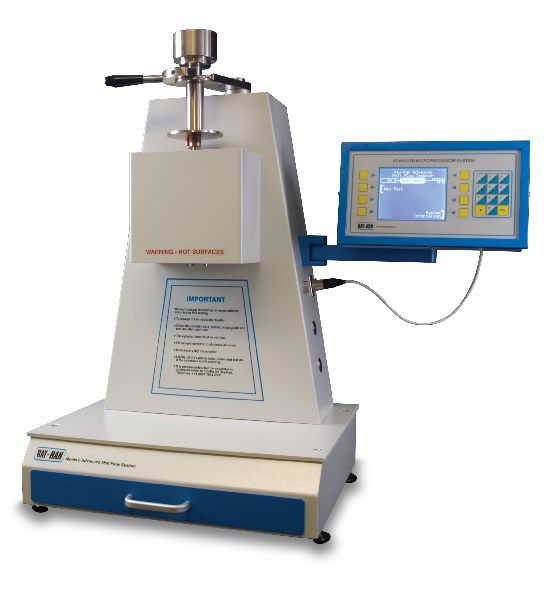
Leading Manufacturer, Supplier & Retailer of Melt Flow Index Tester, PERMATRANW Model, Dart Impact Tester, ADVANCED FALLING DART IMPACT TESTER and Cobb Tester.
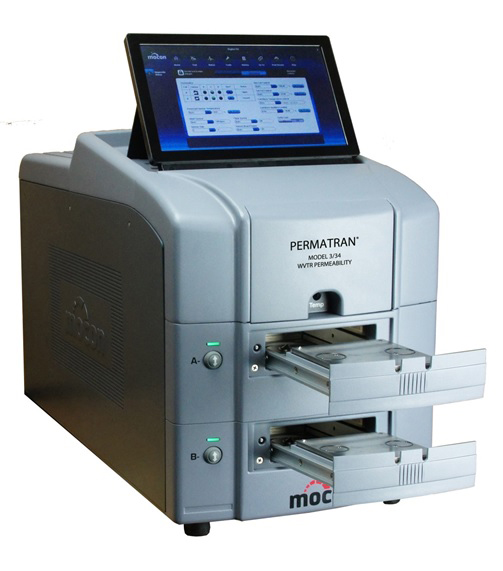
Comply with ASTM F-1249. TAPPI T557. JIS K-7129.
Water vapor transmission rate (WVTR) testing. Fully automated with reduced testing times.
Features and Benefits
Laboratories that test unknown films willappreciate the fully automatic testingmode. Simply place the film, set RHand temperature, start the test and theinstrument will determine the parametersand conduct the test automatically.
Water Vapour Transmission Rate measurement of Pastic Films, Laminates, Foils, Pouches, Bottles, Containers, Blisters, Closures, Sheetings etc.
Reaserch & Development sector with latest features of mocon WVTR 3/34 G.
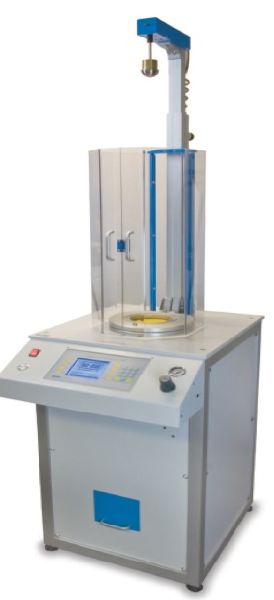
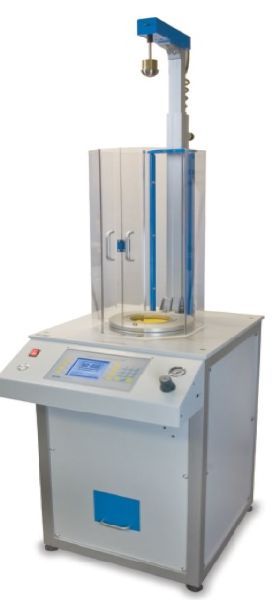
Utilizing on-board microprocessor technology, the Ray-RanMicroprocessor Controlled Falling Dart Impact Testerhas taken falling dart testing machines to an advanced level at an affordable price. Built with operator simplicity in mind, its ease of operation and high accuracy makes it ideal for product development and quality control within production, research and development labs and teaching institutions.
Complying with the ASTM D 1709 Method A & B.
TECHNICAL SPECIFICATION:
Advanced dedicated microprocessor control,
Touch membrane Alpha / Numeric keypad
Easy to read liquid crystal display,
Sequence logic menu auto prompt selection
RS232 interface connector
Ethernet Interface connector for LAN Networking
Self-calibration procedure.
Photo electric cell technology
Variable drop height adjustment as standard 660mm 1500mm
Pneumatic clamping system
Constant sample tension for repeatability
Solenoid actuated dart release mechanism with audible pre-warning
Dart return shoot
38.1mm (1 ) and 50.8mm (2) spherical darts as standard
Binary weight set supplied as standard
Electrical interlock safety guard
Tabular and graphical statistical analysis
Techni-TestPC software
Product User Manual
CE declaration certificate
Traceable Calibration Certificate
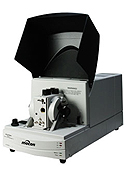
Aquatran Model 2 designed for customers who need to measure WVTR of ultra-high barrier films and packages. The AQUATRAN Model 2 measures water vapor transmission rates accurately and repeatable to 5x10⁻⁵ g/(m2-day) and offers the following advantages:
The AQUATRAN Model 2 measures accurately to 5x10⁻⁵ g/(m2-day) repeatedly. That's an order of magnitude lower than the very successful Model
The AQUATRACE sensor requires no calibration as it follows Faradays Law and converts every molecule that enters the sensor into a measurable charge
The transient data is quantifiable and can be viewed during or after the test. Analysis of transient data can yield important information about an OLED structure. For example, users tell us that viewing transient data is important in detecting defects and voids in the coatings applied in OLEDS.
Some of more than 11 improvements to the Aquatran Model 2 include:
Improved block design - reduced leaks and reduced seal edge leaks
Offered in Two Models:
G Model which offers relative humidity for films from 35-90% and a temperature range of 10-40C. Packages at ambient temperature or 10-40C with option environmental chamber.
W Model with 100% relative humidity for both films and packages and a temperature range from film of 10-50C.
Customers with existing Aquatran Model 1 Master units can upgrade their systems by attaching Model 2 satellites to the Model 1 master.
AQUATRAN MODEL 2 is helpful where we really would like to get the WVTR value of super high barrier material. It helps to precisely measure WVTR up to 0.00005 gm/m2.day
Today's World moving towards high barrier materials, AQUATRAN MODEL 2 is the solution
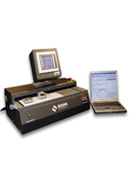
The CF800 Coefficient of Friction Tester is designed to determine the coefficient of friction properties of plastic films, laminates, foils and papers. The apparatus conforms primarily to the BS2782 method 824A and ASTM D 1894-78 but it can be supplied to suit other international test methods.
The equipment is essential for measuring the slip properties of packaging materials to ensure smooth running on production packaging machines or to measure the effect that a coating or print has on base material.
The new CF800XS features the latest in design and technology for machine set up, testing, measurement and recording using touch panel screen display units. The constant, smooth lead screw driven cross arm ensures reliable and repeatable measurement. Other benefits include: Vacuum suction on the bed to clamp the material, optional temperature control circuit to heat the bed for hot slip values, together with analogue recorder output and RS232 output for either chart recorder logging or computer data logging of results.
Vacuum:
Temperature:
Options available:
The CF800 Coefficient of Friction Tester is designed to determine the coefficient of friction properties of plastic films, laminates, foils and papers. The apparatus conforms primarily to the BS2782 method 824A and ASTM D 1894-78 but it can be supplied to suit other international test methods.
Standards:

Lako Tools SL-10 Hot Tack Tester & Seal Tester, is the most precise and consistent heat seal tester in the packaging industry!
Testing capabilities include: heat sealing, heat-seal testing and hot-tack testing. The SL-10 provides critical nformation needed to determine ideal sealing conditions for packaging films.
FEATURES
OPTIONAL FEATURES
Conforms to ASTM F2029 Standard Practices for Making Heatseals for Determination of Heatsealability of Flexible Webs as Measured by Seal Strength

The CHATILLON TCD Series is an advanced force testing system optimized for production, quality control and engineering applications.
The TCD System consists of a powerful, yet easy-to-use console; a rugged frame upto 5kN load capacity, and an intelligent load sensing system with measuring accuracies better than 0.1% full scale.
The TCD console features a high resolution color graphical display featuring menus, function and numeric keys and status indicators that assist the user in setup, operation and analysis. Information may be displayed in large-format tabular and graphical formats for easy viewing.
The frame employs an advanced closed-loop PID controller for precision travel (accuracy better than 0.25% unloaded), ideal for applications such as spring testing where exact distance control is required. The TCD System permits the user to measure heights based on a datum or absolute position. Deflection compensation is standard. Standard test setups for load limits, distance limits, time limits, break tests, rupture tests, cycling and loop tests are included. No computer software is necessary.
If data management and analysis is required using a personal computer, you may connect your TCD System with our optional TCD WEDGE application software. This lets you automatically transmit data to your personal computer in a Microsoft Excel format.
Advanced Yet Simple to Use Test Setups

The Vent & Release is a robust bench top device; the unique adjustable tooling accommodates regular, wide neck and sports closures without requirement for tooling change. An interlocked safety guard protects the user for the duration of measurement of the Vent and Release angle. A real time graph displays on the operator panel.
Closures on a PET bottle

An innovative fixture to test parallelism or concentricity in Glass bottles, holds up to 1 Litre size. The unique holding mechanism, a pivot arm which engages the top of the bottle with a downward force, ensures accuracy and repeatability across operators.
Parallelism or concentricity in Glass bottles

Degassing carbonated beverages is an essential pre treatment for quality control analysis, it can significantly influence pH, Brix Acidity & Aspartame results. The Somex has been scientifically proven to be the most accurate repeatable and efficient method of degassing carbonated beverage samples.
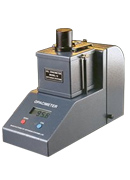
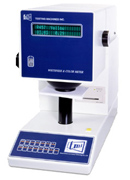
The EEL12M Opacimeter is a convenient, self-contained instrument for measuring the percentage opacity and whiteness of printing ink paper and plastics in a research and production environment. A microprocessor inside the unit compares the diffuse reflectance of the sample against black and white references to display opacity.
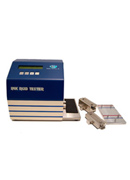
The Digital Ink Rub Tester is designed to measure scuffing or rubbing resistance. Several tests can be performed including dry rub-the amount of transfer ink from one dry surface to another, wet rub-the amount of transfer of ink from wetted surface to another, wet bleed or transfer-ink transfer to a water-saturated blotter, wet smear-similar to wet bleed with the addition or rub cycles, functional rub/wet rub-smear or transfer tests using a liquid other than water and hot abrasion. An optional heated weight provides a uniform test for evaluating hot abrasion resistance of printed cartons, labels etc.
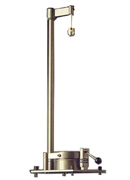
The Falling Dart Impact Tester is intended for the determination of mechanical properties of packaging material such as plastic films, laminates and paper.
The tester comprises a horizontal base-plate on which a vertical column of steel has been erected and which on its top carries a release mechanism in which the falling dart can be inserted.
The Falling Dart Impact Tester is intended for the determination of mechanical properties of packaging material such as plastic films, laminates and paper. ASTM Standard D 1709-62 Procedure A.
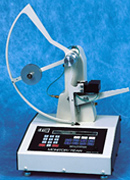
The tear test, also known as the Elmendorf Test, measures the internal resistance to tearing. The Monitor/Tear features a digital display and interchangeable pendulums to measure forces up to 6.4N or an optional fast-change universal pendulum.Tear testing determines the force required to continue the tearing of an initial cut in sheet materials. This is also used to evaluate strength of perforated materials such as postal reply cards.
The Monitor/Tear is an automated tear tester equipped with an optical encoder, measuring the angular position of the pendulum during the tearing operation, and converting this measurement to tear units.
Paper, Foil, Film, Textiles, Nonwovens Conforms to TAPPI T-414, ASTM D1922 and D1424, ISO 1974, CPPA D.9, AS/NZ 1301.400S, BS 4468, and SCAN P-11.
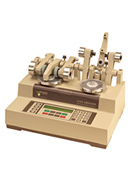
Taber abrading wheels produce characteristic rub wear action Mounted to a rotating turntable, specimens are subjected to the rub-wear action of two abrasive wheels. Driven by the test sample, the wheels produce abrasion marks that form a pattern of crossed arcs over a circular ring approximately 30 square centimeters. This reveals abrasion resistance at all angles relative to the weave or grain of the material.
Test wear and durability of ceramics, plastics, textiles, flooring, paper, metals and coated surfaces & wide range of products. Single and dual sample table models.

A removable scale beam is mounted on a pivotal shaft projecting from an adjustable gage block. An adjusting screw permits the height of the pivotal shaft to be raised or lowered, corresponding with the thickness of a test specimen up to 12.7 mm (0.5 inches). This adjustment allows the scale beam to be maintained in a level position in respect to the specimen and turntable. Designed with an integrated bearing, the scale beam can be tilted in a rest position enabling the operator to mount or remove specimens.
Evaluate resistance to shearing, scratching, gouging, marring, scraping and engraving on a variety of flat, rigid specimens. It may also be used to test the relative homogeneity of materials, the adhesive qualities of protective coatings and the effects of age on similar materials.
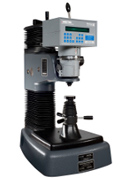
The VERSITRON Series is a top-loading tester with our exclusive test surface referencing feature, that applies the preload and full load through the test head. These systems comply with ASTM E-18. The preload is not applied through the elevating screw. In fact, the entire load system is modular and self-contained within the test head. With a single pull of a lever, the operator can perform an entire test cycleapplying both the preload and full load and obtained results in as little as 4 seconds. Operator influence on the test is negligible. Motor-drive systems are even easier using a footswitch or push button.
Features & Benefits:
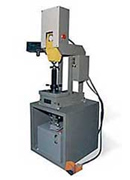
The automatic 9000N Series Brinell hardness tester displays the hardness result without using a Brinell scope. Used for high volume testing without operator influence. Uses a Rockwell-type method with a standard Brinell ball and test load to read out directly in Brinell scales.
The Newage 9000N Series production tester makes a Brinell impression in conformance with the standard method for Brinell testing as described in ASTM E-10. These testers are typically used in custom applications where Newage Testing Instruments customizes this tester for the customers exact testing requirements. The resulting impression may be measured optically to determine the Brinell number. However, the 9000N Series automatically measures the depth of the impression, similar to the Rockwell method. The depth of the indentation method is described in ASTM E103. This technique offers users greater testing speed and reduced operator influence on test results. Like a Rockwell test, the 9000N Series applies a preload and then a major load. The depth of measurement is calculated on the difference between these loads.
The 9000N Series also feature a special test reference device- a floating nose piece that surrounds the indenter and which references the surface of the specimen. This allows the tester to retain accurate readings throughout the entire load application and that is allows testing on specimens that may be out of level by up to 2-degrees. This means that castings with a normal draft angle may be tested with accurate results. Also, normal dimensional variation on parts will not adversely affect the result.
With Many Applications in Primary Metals, Automotive and Transportation Manufacturing, Oilfield Pipe and Pressure Vessels, etc
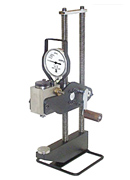
The Newage KB Series is a popular, manually-controlled Brinell hardness tester that meets ASTM E-110. This lightweight, portable tester is ideal for virtually any size or shape of metal specimen. Simply place the specimen between the anvil and test head; manually crank the test head downward onto the specimen; and apply the desired load using the hydraulic lever. Overload protection is standard. The tester applies up to 3000 kg load on a 10mm ball, making a visible indentation that is read using a Brinell scope or our B.O.S.S. system. The calibrated accuracy is better than 0.5% of the applied load.
The KB Series tester is available with load measurement systems of 1000 kgf and 3000 kgf with variations for extended rams or with a chain adapter. The chain adapter is 4 ft in length and is used for large cylinder samples. It secures onto the test head and wraps around the specimen holding the specimen securely during the test procedure. The test head may also be supplied with an extended ram length. The extended length is ideal for recessed areas or over raised edges. Other options include a reverse direction load adapter used for measuring inside diameters on pipe, tube, etc.

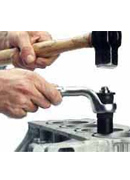
The Newage Pin Brinell is the de-facto standard for economical Brinell hardness measurement. This simple-to-use and inexpensive tester can be used across the entire Brinell range (HB100 to HB700). The Pin Brinell applies force to the indenter by the operator using a hammer or a clamping device. The force applied is controlled using a calibrated shear pin. When the load is applied and the force applied reaches the shear pins shear limit, the shear pin breaks. The diameter of the resulting indentation can then be read on a Brinell scope, such as our HiLight scope, or for more exacting measurements, on the Newage B.O.S.S. system.
The Pin Brinells load to indentation size ratio provides a displacement that is equivalent to the most common Brinell test (3000 kg load, 10mm ball). The Brinell values are arrived at using the standard Brinell formula.
Available in two models: the CPIT Impact Tester and CPST Static & Impact Tester.
The Pin Brinell is compact and is ideal for those applications where mounting the sample on a more traditional bench tester may be impractical.
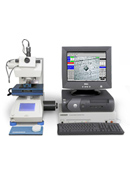
The HMV-2 Series is designed for measuring the hardness of small parts and metallic structures used in precision equipment, processed surface layers, and metal plating layers. The HMV-2 Series is ideal for metallographic research and product quality control. It features an intuitive LCD touchscreen operator interface combined with an excellent optical system with a minimum unit of diagonal length measurement of 0.01 m for extremely high accuracy.
The HMV-2 offers two modes of testing. The standard testing modes lets you setup your test for fast, efficient hardness testing based on only a test load and test duration period. However, the serial testing modes lets you generate a batch of indentations and then measure the diagonal length of those indentations.
The HMV-2 includes a variety of analysis functions including statistical calculations and data editing, hardness conversion and data output in tabular or graphical representations.
Measurinmg hardness value of small parts & metallic structure, case depth measurement.
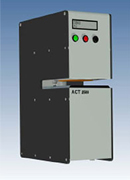
This innovative principle offers a completely new opportunity to characterise and understand the phenomena of dynamic water absorption. Here the water uptake is continuously monitored across a full 100 cm area of sized paper or board as a function of time. Apart from the total amount of absorbed water over 60 seconds, this technology reveals the different dynamic components of water absorption. Once the operator has inserted the test specimen, the test is done automatically by the instrument as no weighing or blotting of the specimen is required. This way the regular operator time of three minutes for a 60 second Cobb test is reduced to only a few seconds for loading of the specimen.
FEATURESThe specimen is clamped in a closed chamber against a porous membrane saturated with water. The absorbed amount of water is then continuously monitored using a precision level sensor. After apreset time (e.g. 60 seconds), the test is automatically terminated, free water on the test surface is removed and the clamp is opened up releasing the specimen. A Cobb value is finally displayed together with the curve showing dynamic water absorption as a function of time (see reverse for chart).
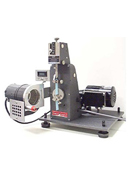
With this machine, a pliable specimen is placed under a constant tension load. The specimen is then folded to an angle of 135 in either direction, at the rate of 175 double folds per minute until the specimen is severed at the crease. A variable folding rate option allows the operator to vary the folding rate between 20 and 175 double folds per minute.
Three Models to Meet Your RequirementsModel 1 - PaperFor paper, leather, fine wire and other pliable materials with comparatively low elongation characteristics. This machine accepts standard 14 cm long by 15 mm wide specimens. Holding jaws are available that will accept specimens varying in thickness from 0.01 to 0.07 in. Jaw size(s) required should be stated when ordering.
The optional centrifugal exhaust fan draws conditioned room air across the specimen and the head to accurately control the temperature and humidity in the fold area in accordance with TAPPI Method T 511 and ASTM D 2176.
Model 2 - PlasticsFor plastics and other materials with relatively high amounts of elongation, this machine provides the same operating principles and holding jaw options as the Model 1, however, the loading system has been modified to automatically compensate for specimen elongation up to 100% on a 1 inch gage length. Loads of any desired magnitude from lb. to 5 lb. in increments of lb. can be applied with full assurance of uniformity throughout the test.
Model 3 - Combination Paper and Plastics Tester.For maximum flexibility in testing both paper and plastic specimens, this versatile folding endurance tester incorporates the features and capacities of both Models 1 and 2, as described above, in a single unit.
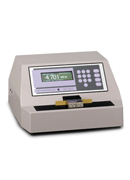
The Short Span Compression Tester is an advanced microprocessor-controlled instrument for determining the compression strength of fluting medium or test liner, and offers unrivalled repeatability and reproducibility. Considerable cost savings are possible through accurate prediction of corrugated component performance.
APPLICATIONSPaperboard, Paper, Liner, Medium, Paper/Film/FoilLaminations
SPECIFICATIONS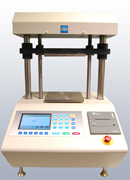
Designed in close cooperation with industry, the Model 17-76 Compression Tester is rugged enough for any production testing environment. The TMI Compression Tester is designed to provide highly accurate measurement of compressive strength for a variety of materials.
Microprocessor control and operator friendly software makes the Model 17-76 simple to operate. A new Servo Motor design provides closed loop feedback for accurate and repeatable position control. Ergonomic control layout maximizes the testing sequence while minimizing sample testing errors resulting in incorrect data. The instrument meets or exceeds all International Testing standards for accuracy, precision, and parallelism.
System Software includes 8 Corrugated Test Methods for quick access including: RCT, CCT, ECT, CMT, FCT, PAT, CLT and SQT- score test which calculates Score Ratio of scored verses unscored samples. Test Methods can be created by the operator and stored for future reference to simplify test set up. Other compression methods include Peak Force, Peak Height and Stack Load.
APPLICATIONSCorrugated, Tubes and Cores, Bottles and Cans, Flexible Packaging, Plastic Products, Building Products
SPECIFICATIONSElectrical: 120V/220Volt 50Hz/60Hz
RS232C output, Built-in Printe
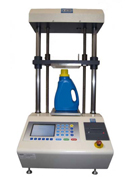
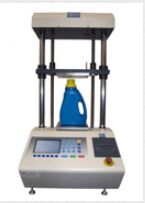
The performance of a container in production and transit is critical to the manufacturer. Product failures during filling, packing, warehousing and shipping are costly and can easily be prevented when containers and finished goods are tested for Top-load strength.
Top-load strength is an excellent method to optimize the necessary force required to produce deformation and failure of bottles and containers. Top load strength can also identify thinned areas in the wall of the bottle resulting in poor wall-thickness distribution.
Model 17-77 Compression Tester meets International Standards and Corporate testing methods for compression strength requirements for a variety of materials and products. A new enhanced microprocessor design with servo motor provides precision force and position control for repeatable instrument performance.
APPLICATIONSBeverage, Cosmetics, Pharmaceuticals, Blow molded containers for beverage, and household use PET bottles, Tubes and Cores, Corrugated Boxes Stacking strength of cases
STANDARDSPower: 120V/220Volt, 50Hz/60HzRS232C output, Built-in Printer
SAFETY FEATURESOverload protection based on load cell in use

The Smith Roll Tightness Tester determines roll winding uniformity to eliminate roll bursting and press breakdown from poorly wound rolls.
Paper Rolls not wound with uniform tension can cause a variety of problems. Large diameter rolls that are extremely tight on the outside tend to burst during handling and shipping. Uneven roll tightness often results in starring- the warping of the winding core. On highspeed web presses, the warped core causes uneven feed and paper jerking and can cause the breakdown of the press.
FEATURES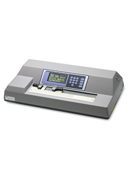
The Schmidt Roll Hardness Tester determines the hardness of large rolls of paper, film and foil. It provides fast, accurate, non-destructive hardness profiles of rolls to assure smooth and efficient printing. Rolls that are too hard, or too soft, rolls that are unevenly wound, or rolls with different moisture contents can cause difficulties during the printing process. The Schmidt Roll Hardness Tester is often used in conjunction with the Smith Roll Tightness Tester (TMI 40-54-00) to provide a complete profile of roll properties.
PRINCIPLEThe Original SCHMIDT test hammer is based on the principle of rebound measurement and is very simple in its handing. The impact plunger of the instrument is pressed against the paper roll which compresses a spring. After reaching a certain point, the spring is released and an internal hammer mass is launched against the impact plunger. The amount of hammer mass rebound depends on the hardness of the test piece. This rebound amount is then shown on a scale of 10 to 100. Test intervals of 2" to 4" (5 to 10 cm) across the whole width of the roll will give the values for the Hardness-Profile within a short period of time. The testing is non-destructive with exception of very light marks that the instrument leaves on the top two or three layers. Such Hardness-Profiles will show immediately whether the rolls have the necessary consistency. Rolls that are too soft, or rolls with inconsistent hardness are immediately recognized and can be rejected before the actual insertion in the press.
APPLICATIONSPaper, Film, Foil, Printing, Graphic Arts
FEATURES
Tensile testing is the most widely used method for indicating the serviceability of many papers. Tensile Energy Absorption (T.E.A.) indicates the durability of papers which are subjected to repetitive straining and stressing. The Horizontal Tensile Tester offers menu driven pre-selection of parameters and infra-red sample detection for quick, effortless testing.
The tensile measurement aids in assessing the suitability of a product for its end use and close relationship between tensile strain and fiber bonding serve to make this a very important test. Bchel B.V. has developed the Horizontal Tensile tester to perform these relevant tests in a professional way. The instrument has a build in large black & white liquid crystal display that is used in a conversational mode, allowing input of specimen identity and all relevant test parameters. The test results are displayed and transmitted via the RS232-C serial output. The transmitted data may be used in a data acquisition system. Statistical data is calculated and displayed after the operator ends a test series.
APPLICATIONSNewsprint, Packaging Papers, Liner, Medium, Carton board, Foils, Low elongation films
STANDARDSISO 12625-4
SPECIFICATIONSCONNECTIONS
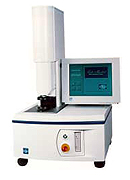
The measurement of Z-Directional tensile strength was developed to determine the structure of a sheet of paper or board when subjected to tensile stresses in the out-of-plane direction or Z-Direction. Z-Directional Tensile Strength is a measure of the internal fiber bonding strength of a substrate.
ZDTZ Directional Tensile Strength is different than other conventional means of measuring maximum force (Tensile Strength) or internal bonding strength such as the Scott Bond method for materials strength testing. Other strength properties for this type of measurement include: internal bond strength, ply adhesion and ply bond strength.
LAB MASTER ZDTThe Lab Master ZDT Tester is a precision PC Controlled testing instrument which automatically determines internal bond strength according to TAPPI T 541. All testing parameters such as test speed, dwell time and compression force are selectable in an easy to use, intuitive software program supplied with the instrument.
PRECISION TESTINGPeak Force is measured to a maximum capacity of 1100 N (250 Lbs) with a 0.04 N (0.01Lbs) resolution and accuracy of 0.5% of reading. Position is measured and controlled with 0.1m resolution and 0.2 m repeatability. Peak force is measured by applying a force in the z-direction until ply separation occurs.
APPLICATIONSZDT measurements are an effective tool for monitoring a variety of strength properties which aid in improving printing and coating applications, bonding strength of paper cores, delamination strength, intrinsic fiber bond strength, paperboard and combined board strength and fiber-to-fiber bond strength.
Lab Master ZDT Advantages
| Force (tension and compression) | |||
| Maximum | 1100 N | ±250 lbs | |
| Resolution | 0.04 N | 0.01 lbs | |
| Accuracy | ±0.5% of reading | ±0.5% of reading ±0.25 lb. | Exceeds the requirements of ISO 7500-1 Class 0.5 Tension or Compression |
| Overload rating | 150% | 150% | |
| Travel and Position | |||
| Travel (maximum) | 160 mm | 6.25 inches | Varies depending on attachment |
| Position Resolution | 0.1µm | 0.00004 inches | |
| Position Repeatability | 0.2 µm | 0.00008 inches | |
| Position Accuracy | ±1.0 µm | ±0.00004 inches | |
| Position Accuracy (cumulative) | ±1.0 µm/60mm (cum.) | ±0.000017 inches/2.4 inches (cum.) | |
| Speed | |||
| Range | 0.01 to 13 mm/second | 0.01 to 0.5 inches/second | |
| Accuracy (steady state) | Better than 0.05% | Better than 0.05% | |
| Data Acquisition rate | 2 kHz | 2 kHz | |
| Throat Depth | 82 mm | 3.3 inches | |
| Number of repeat cycles | As required | As required | |
| Display- TFT flat panel touch screen | 300 mm | 12 inch | |
| Environmental Range | |||
| Temperature (operating) | 5ºC to 35ºC | 40º to 95ºF | |
| Temperature (storage) | -20ºC to 55ºC | -4º to 130ºF | |
| Humidity (operating and storage) | 10% to 85% Non-condensing | 10% to 85% Non-condensing | |
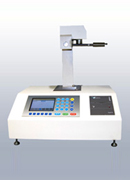
TheNEW Internal Bond Testeris designed to determine the internal bond strength of a variety of Paper and Board materials according to TAPPI T 569. The instrument design is based on a falling pendulum which creates a high speed impact on a paper specimen. The paper specimen is sandwiched between two double-coated tape substrates. The pendulum impact measures the total energy required to delaminate the internal fibers of a specimen in a "Z" type direction into two separate piles. The system also incorporates an automatic sample preparation station which allows five specimens to be accurately prepared simultaneously.
APPLICATIONSNewsprint, Fine Paper, Liner Board, Book Stock, Carton Board, Medium, Coatings, Laminates
FEATURESA precision sample Preparation station with digital display and direct read out in kPa and psi units is available to prepare up to 5 test pieces at the same time. The Sample Prep Station is supplied to provide a consistent adhesive transfer when pressing the test specimen between the double-sided tape and aluminum platens.
Included with the Sample Prep Station are 5 aluminum platens with a sample size of 25.4 x 25.4 mm (1.0 x 1.0 inches). The clamping pressure is adjustable from 345 kPa (50 psi) to 1379 kPa (200 psi). During the pressing operation a selectable dwell time can be set by the operator from 0-4 seconds. The factory setting is 3 seconds in accordance with TAPPI T 569. The system is designed with a reinforced anvil to prevent deflection during sample preparation.
Reinforced anvil system prevents sample deflection during preparation!Prep Station Specifications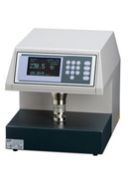
Model 58-03 measures air permeability (Gurley type) of sheet like materials including Paper, Paperboard and nonwovens. Porosity of paper or density is an important measurement when simulating conditions where paper is picked up under vacuum.
Air resistance by the Gurley method measures the amount of time in seconds for a specific volume of air to pass through the voids in a sheet of paper under a specified clamping pressure.
The Gurley type porosity tester is similar to the Bendtsen air permeance tester, see catalog # 58-21 Roughness and Air Permeance Tester.
APPLICATIONS
Liner, Paper, Tissue, Printing
STANDARDS
FEATURES
ACCESSORIES
Smoothness/Softness Kit includes 2 weights, smoothness plate, softness plate and paper punch
With Smoothness/Softness Kit meets T-479, T-460, T-490, D-726 and D-202)

TheRoughness and Air Permeance Testeris an advanced microprocessor-controlled instrument for measuring the roughness and air permeance of paper and board using the Bendtsen method. The instrument incorporates significant technological advances to offer unrivalled accuracy and reproducibility.
Test result variability inherent in Dr. Bendtsen's original design has been eliminated by measuring the air pressure in the head directly over the substrate and by the subsequent electronic regulation of that air pressure.
APPLICATIONS
Paper
SPECIFICATIONS
INCLUDED ACCESSORIES
OPTIONAL ACCESSORIES
FEATURES

TheMonitor/Smoothness II Testeris designed to work with existing smoothness and porosity heads. It provides an inexpensive means to improve measurement accuracy, and to remove old style mercury-based measuring systems.
APPLICATIONSLinerboard, Carton board, Coated board, Fine paper, Coated paper, Newsprint, Films AND foils, Printing/graphics, Packaging.
SPECIFICATIONS
FEATURES
ONNECTIONS
Electrical: Specify voltage requirements when ordering
Air: (instrument quality) 207 kPa
 Viraj Devasthale (Hemetek Techno Instruments Pvt. Ltd)
 503 & 5, Acme Industrial Park, W.E. Highway, Near Aarey Flyover, Goregaon (E), Mumbai. 400 063., Maharashtra - 400063
 Share us via







 Write a Review