 GST : 27AAFCK8016J1ZC
 Write a Review
Our Products
Our offered Product range includes Wheat, Wheats and Milling Wheat.
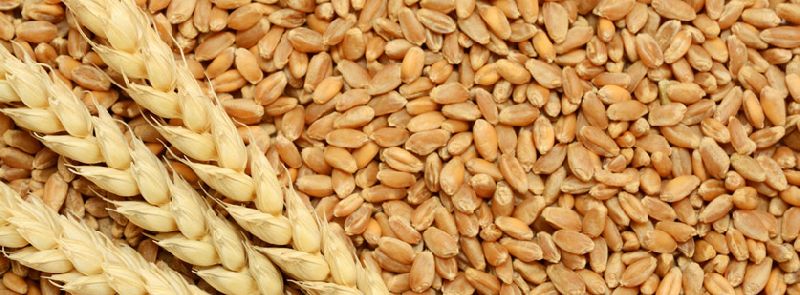
Wheat is a cereal grain, (botanically, a type of fruit called a caryopsis) originally from the Levant region of the Near East but now cultivated worldwide. In 2013, world production of wheat was 713 million tons, making it the third most-produced cereal after maize (1, 016 million tons) and rice (745 million tons). Wheat was the second most-produced cereal in 2009; world production in that year was 682 million tons, after maize (817 million tons), and with rice as a close third (679 million tons).
There are many botanical classification systems used for wheat species, discussed in a separate article on wheat taxonomy. The name of a wheat species from one information source may not be the name of a wheat species in another.
This grain is grown on more land area than any other commercial food.[citation needed] World trade in wheat is greater than for all other crops combined. Globally, wheat is the leading source of vegetable protein in human food, having a higher protein content than the other major cereals maize (corn) and rice. In terms of total production tonnages used for food, it is currently second to rice as the main human food crop and ahead of maize, after allowing for maize's more extensive use in animal feeds.[citation needed] The archaeological record suggests that this first occurred in the regions known as the Fertile Crescent.
Health Benefits of Wheat:
Container:
Load ability: 20 to 24 MT in one 20 FT Container
Additional Information:
Payment Terms : L/C, D/P, T/T
Packaging Details : Packing in 25/50 Kg PP bags.
| Specifications of Wheat We offer wheat for human consumption of the following specifications: |
|||
|---|---|---|---|
| Grain | Wheat | Mineral admixture | 0.15 %max |
| Type | Wheat for human consumption | Harmful impurities | 0.2 %max |
| Origin | India | Total waste impurities | 2 % max |
| Protein | 12.5 % min. | Wet gluten | 24 – 25 % max |
| Moisture Content | 13.5 % max | 13.5 % max | 740 g/l min. |
| Broken kernels | 4 % max | Falling number | 240 /sec |
| Sprouted grains | 2 % max | Radiation | Normal |
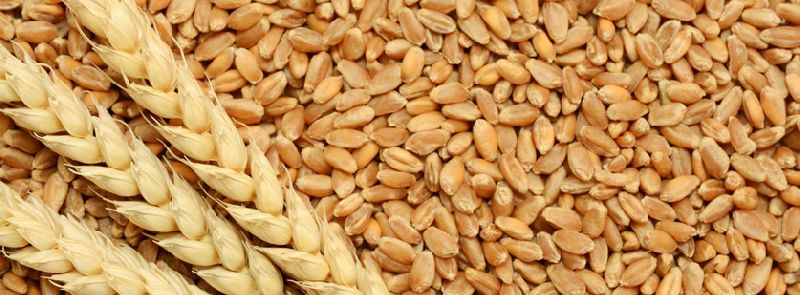
Wheat is a cereal grain, (botanically, a type of fruit called a caryopsis) originally from the Levant region of the Near East but now cultivated worldwide. In 2013, world production of wheat was 713 million tons, making it the third most-produced cereal after maize (1, 016 million tons) and rice (745 million tons). Wheat was the second most-produced cereal in 2009; world production in that year was 682 million tons, after maize (817 million tons), and with rice as a close third (679 million tons).
There are many botanical classification systems used for wheat species, discussed in a separate article on wheat taxonomy. The name of a wheat species from one information source may not be the name of a wheat species in another.
This grain is grown on more land area than any other commercial food.[citation needed] World trade in wheat is greater than for all other crops combined. Globally, wheat is the leading source of vegetable protein in human food, having a higher protein content than the other major cereals maize (corn) and rice. In terms of total production tonnages used for food, it is currently second to rice as the main human food crop and ahead of maize, after allowing for maize's more extensive use in animal feeds.[citation needed] The archaeological record suggests that this first occurred in the regions known as the Fertile Crescent.
As a Food:
Raw wheat can be ground into flour or, using hard durum wheat only, can be ground into semolina; germinated and dried creating malt; crushed or cut into cracked wheat; parboiled (or steamed), dried, crushed and de-branned into bulgur also known as groats. If the raw wheat is broken into parts at the mill, as is usually done, the outer husk or bran can be used several ways. Wheat is a major ingredient in such foods as bread, porridge, crackers, biscuits, Muesli, pancakes, pies, pastries, cakes, cookies, muffins, rolls, doughnuts, gravy, boza (a fermented beverage), and breakfast cereals (e.g., Wheatena, Cream of Wheat, Shredded Wheat, and Wheaties).
Commercial Use:
Harvested wheat grain that enters trade is classified according to grain properties for the purposes of the commodity markets. Wheat buyers use these to decide which wheat to buy, as each class has special uses, and producers use them to decide which classes of wheat will be most profitable to cultivate.
Wheat is widely cultivated as a cash crop because it produces a good yield per unit area, grows well in a temperate climate even with a moderately short growing season, and yields a versatile, high-quality flour that is widely used in baking. Most breads are made with wheat flour, including many breads named for the other grains they contain, for example, most rye and oat breads. The popularity of foods made from wheat flour creates a large demand for the grain, even in economies with significant food surpluses.
Nutrition:
In 100 grams, wheat provides 327 calories and is an excellent source (more than 19% of the Daily Value, DV) of multiple essential nutrients, such as protein, dietary fiber, manganese, phosphorus and niacin (table). Several B vitamins and other dietary minerals are in significant content (table). Wheat is 13% water, 71% carbohydrates, 1.5% fat and 13% protein.
Health Benefits of Wheat:Load ability:20 to 24 MT in one 20 FT Container
Analysis of Exports of Wheat:India exported wheat worth USD 1, 338, 104, 626 with total quantity of 4, 274, 131, 498. United Arab Emirates is the largest buyer of wheat accounting for exports worth USD 234, 194, 618 followed by Bangladesh and Indonesia which imported wheat worth USD 223, 413, 410 and USD 124, 135, 664 respectively.
| Specifications of Wheat We offer wheat for human consumption of the following specifications: |
|||
|---|---|---|---|
| Grain | Wheat | Mineral admixture | 0.15 %max |
| Type | Wheat for human consumption | Harmful impurities | 0.2 %max |
| Origin | India | Total waste impurities | 2 % max |
| Protein | 12.5 % min. | Wet gluten | 24 – 25 % max |
| Moisture Content | 13.5 % max | 13.5 % max | 740 g/l min. |
| Broken kernels | 4 % max | Falling number | 240 /sec |
| Sprouted grains | 2 % max | Radiation | Normal |
 Mr.Vishal Umbarkar (Kinal Global Care Private Limited)
 Kinal Global Care Pvt. Ltd.,Unit 4/705, Plot No. 4, Sector 9E, Kalamboli, Navi Mumbai – 410218, Maharashtra.
 Share us via