Our Product / Services
Our product range contains a wide range of Analog/digital Controller
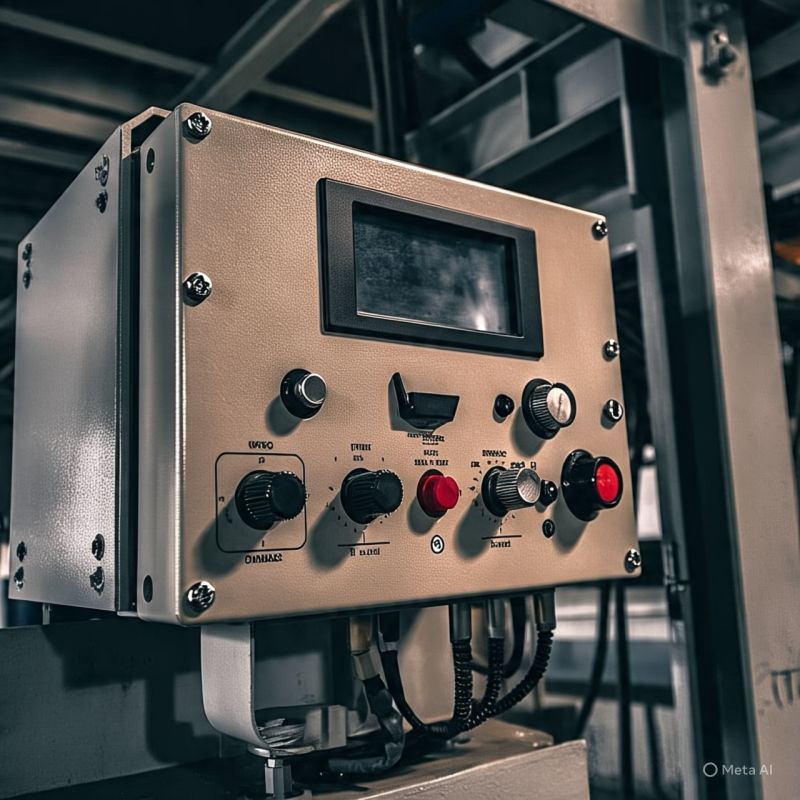
We are engaged in supplying of analog controller Benefits of Analog Controllers
No need for PLCs, HMIs, or programming
Quick deployment: Just wire and turn a knob or apply a signal
Smooth, noise-free operation: Especially when using filtered PWM
leelavati automation
Reliable in harsh environments: Less prone to digital EMI/ESD issues
analog motor controller is a device that regulates the operation of electric motors using continuous analog signals such as voltage (e.g., 010V) or current (e.g., 420mA). These controllers offer proportional, open-loop or closed-loop control over motor speed, torque, and direction without the need for digital programming or communication protocols.
Input Control Signals 010V, 10V, 420mA, potentiometer input
Output Modes PWM, linear voltage, or current to drive the motor
Direction Control Forward/reverse via discrete switch inputs or analog bias
Feedback Support Tachometer, encoder (in closed-loop variants)
Motor Types Supported DC brushed, DC brushless (BLDC), universal motors
Mounting DIN rail, panel-mount, or PCB embedded
Power Ratings From 12V to 110V DC (or up to 230V AC input models)
Applications
Speed control of DC motors in conveyor belts, fans, pumps, and mixers
Manual or sensor-driven process control in HVAC, packaging lines
Retrofit or replacement of digital controllers in analog-only systems
leelavati automation
Adjustable lab or testing rigs with potentiometer speed dials
Controller Configurations
Parameter Common Options
Input Voltage 12V, 24V, 48V, 110V DC
Output Current 1A 30A
Control Input 010V, 10V, 420mA, 5k pot
Output Type PWM or linear DC
Enclosure Open-frame or enclosed with heat sink
Safety Features Overcurrent, undervoltage, reverse polarity, thermal cutoff
Small DC (1224V,
Additional Information:
Payment Terms :
Packaging Details : Benefits of Analog Controllers
No need for PLCs, HMIs, or programming
Quick deployment: Just wire and turn a knob or apply a signal
Smooth, noise-free operation: Especially when using filtered PWM
leelavati automation
Reliable in harsh environments: Less prone to digital EMI/ESD issues
analog motor controller is a device that regulates the operation of electric motors using continuous analog signals such as voltage (e.g., 010V) or current (e.g., 420mA). These controllers offer proportional, open-loop or closed-loop control over motor speed, torque, and direction without the need for digital programming or communication protocols.
Input Control Signals 010V, 10V, 420mA, potentiometer input
Output Modes PWM, linear voltage, or current to drive the motor
Direction Control Forward/reverse via discrete switch inputs or analog bias
Feedback Support Tachometer, encoder (in closed-loop variants)
Motor Types Supported DC brushed, DC brushless (BLDC), universal motors
Mounting DIN rail, panel-mount, or PCB embedded
Power Ratings From 12V to 110V DC (or up to 230V AC input models)
Applications
Speed control of DC motors in conveyor belts, fans, pumps, and mixers
Manual or sensor-driven process control in HVAC, packaging lines
Retrofit or replacement of digital controllers in analog-only systems
leelavati automation
Adjustable lab or testing rigs with potentiometer speed dials
Controller Configurations
Parameter Common Options
Input Voltage 12V, 24V, 48V, 110V DC
Output Current 1A 30A
Control Input 010V, 10V, 420mA, 5k pot
Output Type PWM or linear DC
Enclosure Open-frame or enclosed with heat sink
Safety Features Overcurrent, undervoltage, reverse polarity, thermal cutoff
Small DC (1224V,
Delivery Time : ref desptn
 Prashant Tempe (Leelavati Automation Pvt Ltd)
 Unit No. 809, 8th Floor, The EPI Centre SATTVA The Wadhwa Group, above D-Mart, Chembur(E, Mumbai, Maharashtra 400071 - 40061, India
 Share us via








 GST : 27AABCL9949B1ZC