 Write a Review
Our Products
Our product range contains a wide range of Sweet Corn and Green Peas
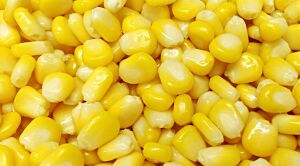
Sweet corn is a particular maize species which differ genetically from the field maize. Its kernels are tender, delicious and eaten as avegetablein many cuisines worldwide. In contrast to the traditional field corn, sweet corn crops are harvested while their corn-ears have just attained the milky stage. The cob either used immediately or frozen for later use since its sugar content turns quickly into starch.
Corn is native to the Central Americas which then introduced to the rest of the world through Spanish explorers. Sweetcorn differs genetically from the field maize by mutation at thesugary (su)locus.
The crop has achieved a major success as one of the important commercial cash crops in many tropical and semi-tropical countries, incuding the USA. Scientific name:Zea mays var. saccharata.
Corn grows to about 7-10 feet in height. It grows quickly under sunny, fertile, and well-drained soil supplanted with good moisture conditions. Each plant bears about 2-6, long husked "ears" filled with rows of tooth-like seeds arranged around a central woody core (cob). Optimum pollination is essential for full kernel development.
Several different sweet corn cultivars with variations in their sweetness, color, and maturation are grown keeping in mind of local and regional demands. Most farmers opt for crops that attribute superior eating and keeping quality and high yields. Examples include Standard (su), Sugary Extender (se), Supersweet (sh2), Synergistic (sy), and Augmented Supersweet. Depending on the cultivar type, the crop can be ready for harvesting in 65-90 days. Harvesting is done when the free end (silk end) of the ear is full, its silk has turned brown, and its kernels are firm but in the milky stage. Often, farmers check the kernels by pricking them with their thumbnail to ascertain harvest timing.
Baby corns are very young, miniature ears harvested when their kernels are still at the incipient stage. Its central core is sweet and tender enough to be eaten raw. Baby corns measure about 3-5 inches in length and weigh about 20-50 g each.
Health benefits of sweet corn
| Principle | Nutrient Value | Percentage of RDA |
| Energy | 86 Kcal | 4% |
| Carbohydrates | 18.70 g | 14% |
| Protein | 3.27 g | 6% |
| Total Fat | 1.35 g | 7% |
| Cholesterol | 0 mg | 0% |
| Dietary Fiber | 2.0 g | 5% |
| Vitamins | ||
| Folates | 42 µg | 10.5% |
| Niacin | 1.770 mg | 11% |
| Pantothenic acid | 0.717 mg | 14% |
| Pyridoxine | 0.093 mg | 7% |
| Riboflavin | 0.055 mg | 4% |
| Thiamin | 0.155 mg | 13% |
| Vitamin A | 187 IU | 6% |
| Vitamin C | 6.8 mg | 11% |
| Vitamin E | 0.07 mg | <1% |
| Vitamin K | 0.3 µg | 2% |
| Electrolytes | ||
| Sodium | 15 mg | 1% |
| Potassium | 270 mg | 6% |
| Minerals | ||
| Calcium | 2 mg | <1% |
| Copper | 0.054 mg | 6% |
| Iron | 0.52 mg | 6.5% |
| Magnesium | 37 mg | 9% |
| Manganese | 0.163 mg | 7% |
| Selenium | 0.6 µg | 1% |
| Zinc | 0.46 mg | 4% |
| Phyto-nutrients | ||
| Carotene-ß | 47 µg | -- |
| Carotene-α | 16 µg | -- |
| Cryptoxanthin-ß | 115 µg | -- |
| Lutein-zeaxanthin | 644 µg | -- |
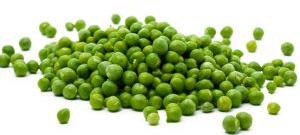
Green peas are one of the most nutritious leguminous vegetables rich in health promoting phytonutrients, minerals, vitamins and antioxidants.
Fresh, tender peas are relatively low in calories in comparison to beans, and cowpeas. 100 g of green peas carry just 81 calories and no cholesterol. Nonetheless, they are good sources of protein, vitamins, and soluble as well as insoluble fiber.
Fresh pea pods are excellent sources of folic acid. 100 g provides 65 g or 16% of recommended daily levels of folates. Folates are one of the B-complex vitamins required for DNA synthesis inside the cell. Studies suggest that adequate folate-rich foods when given to expectant mothers would help prevent neural tube defects in their newborn babies.
Fresh green peas are healthy sources of ascorbic acid (vitamin-C). 100 g of fresh pods carry 40 mg or 67% of daily requirement of vitamin-C. Vitamin-C is a powerful natural water-soluble antioxidant. Vegetables rich in this vitamin would help the human body develop resistance against infectious agents and scavenge harmful, pro-inflammatory free radicals from the body.
Peas contain phytosterols, especially -sitosterol. Studies suggest that vegetables like legumes, fruits, and cereals rich in plant sterols help lower cholesterol levels inside the human body.
Garden peas are also good in vitamin-K. 100 g of fresh seeds contain about 24.8 g or about 21% of daily requirement of vitamin K-1 (phylloquinone). Vitamin-K has been found to have a potential role in bone mass building function (mineralization) through the promotion of osteoblastic activity inside the bone cells. It also has an established role in the cure of Alzheimer's disease patients by limiting neuronal damage in the brain.
Fresh green peas also carry adequate amounts of antioxidants flavonoids such as carotenes, lutein, and zeaxanthin as well as vitamin-A (provide 765 IU or 25.5% of RDA per 100 g). Vitamin-A is an essential nutrient required for maintaining healthy membranes, skin, and eyesight. Additionally, consumption of natural fruits/vegetables rich in flavonoids helps to protect from lung and oral cavity cancers.
In addition to folates, peas are also good in many other essential B-complex vitamins such as pantothenic acid, niacin, thiamin, and pyridoxine. Furthermore, they are a rich source of many minerals such as calcium, iron, copper, zinc, and manganese.
| Principle | Nutrient Value | Percentage of RDA |
| Energy | 81 Kcal | 4% |
| Carbohydrates | 14.45 g | 11% |
| Protein | 5.42 g | 10% |
| Total Fat | 0.40 g | 2% |
| Cholesterol | 0 mg | 0% |
| Dietary Fiber | 5.1 g | 13% |
| Vitamins | ||
| Folates | 65 µg | 16% |
| Niacin | 2.090 mg | 13% |
| Pantothenic acid | 0.104 mg | 2% |
| Pyridoxine | 0.169 mg | 13% |
| Riboflavin | 0.132 mg | 10% |
| Thiamin | 0.266 mg | 22% |
| Vitamin A | 765 IU | 25.5% |
| Vitamin C | 40 mg | 67% |
| Vitamin E | 0.13 mg | 1% |
| Vitamin K | 24.8 µg | 21% |
| Electrolytes | ||
| Sodium | 5 mg | <1% |
| Potassium | 244 mg | 5% |
| Minerals | ||
| Calcium | 25 mg | 2.5% |
| Copper | 0.176 mg | 20% |
| Iron | 1.47 mg | 18% |
| Magnesium | 33 mg | 8% |
| Manganese | 0.410 mg | 18% |
| Selenium | 1.8 µg | 3% |
| Zinc | 1.24 mg | 11% |
| Phyto-nutrients | ||
| Carotene-ß | 449 µg | — |
| Crypto-xanthin-ß | 0 µg | — |
| Lutein-zeaxanthin | 2477 µg | — |
 Sangam Agro Foods (Sangam Agro Foods)
 Behind IDBI Bank, Manchar, Ambegaon, 410503, , Pune, Maharashtra
 Share us via








