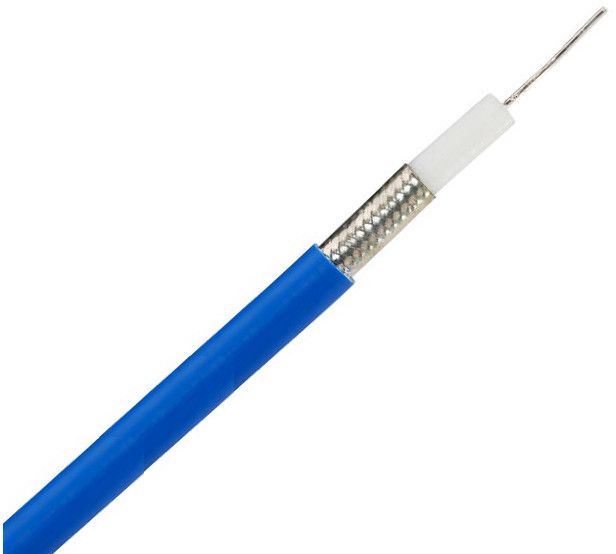
RG-141 is a semi-flexible coaxial cable commonly used in radio frequency (RF) applications. It offers a balance between flexibility and performance, making it suitable for a wide range of installations.
rn
Key Features and Benefits:
rn
rn- Semi-Flexibility: While not as flexible as fully flexible cables, RG-141 provides a good balance between rigidity and bendability. This makes it easier to route and install compared to rigid cables, while still maintaining structural integrity.
rn- Low Loss: RG-141 has a relatively low loss characteristic, ensuring efficient transmission of RF signals over long distances.
rn- Wide Frequency Range: It can operate across a broad spectrum of frequencies, making it suitable for various RF applications.
rn- Weather Resistance: The cable is typically weatherproofed, allowing for outdoor installations without concerns about moisture or temperature extremes.
rn- Durability: RG-141 is constructed to withstand mechanical stress and abrasion, ensuring long-term reliability.
rn
rn
Common Applications:
rn
rn- Antenna Feedlines: Connecting antennas to transmitters or receivers in various RF systems.
rn- Interconnect Cables: Used to connect RF components and devices, such as amplifiers, filters, and modulators.
rn- Test Equipment: Employed in laboratory and field testing setups for RF and microwave signals.
rn- Industrial Applications: Used in industrial control and communication systems that require RF transmission.
rn
rn
Factors to Consider:
rn
rn- Frequency Range: Ensure that the cable\'s frequency range meets the specific requirements of your application.
rn- Power Handling: If you need to transmit high power levels, consider the cable\'s power handling capacity.
rn- Installation Environment: Take into account the installation environment, including temperature, humidity, and mechanical stresses.
rn- Cable Length: Select a cable length that is appropriate for your application and minimizes losses.
rn
Payment Terms :
L/C, D/A, D/P, T/T
Delivery Time : 5 Days

 GST : 23AADCL3954C1ZV
 4.7/5
4.7/5

 Ms. Ritika Shivhare (Eteily Technologies India Pvt Ltd)
 B, 28, Narmadapuram Rd,, Vidya Nagar, Bhopal, Madhya Pradesh - 462026, India
 Share us via