Product Specifications
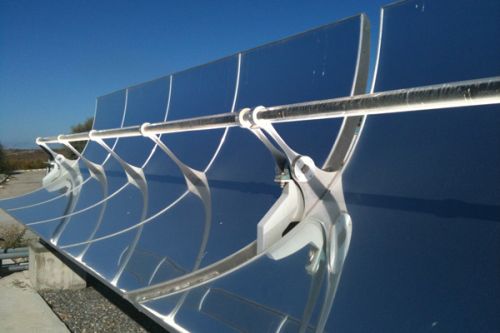
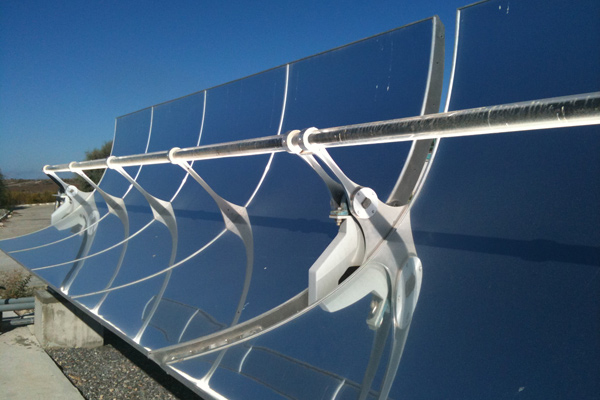
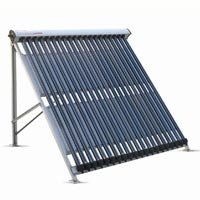
A parabolic trough is a type of solar thermal collector that is straight in one dimension and curved as a parabola in the other two, lined with a polished metal mirror. The energy of sunlight which enters the mirror parallel to its plane of symmetry is focused along the focal line, where objects are positioned that is intended to be heated. For example, food may be placed at the focal line of a trough, which causes the food to be cooked when the trough is aimed so the Sun is in its plane of symmetry. For other purposes, there is often a tube, frequently a Dewar tube, which runs the length of the trough at its focal line.
| ||||
|

Company Information
 Member Since 12 Years
 Nature of Business Retailer
 Address Survey No. 127, Plot No. 98 to 101, S.i.d.c., Veraval (shapar), Shapar, Rajkot, Gujarat, IN
Ask for more detail from the seller
Contact Supplier

Connect with us





 For Buyer
  For Seller
  Help
Help 
 Twitter
 WhatsApp
 Facebook
 Linkedin