Our Product / Services
Our offered Product range includes Double Pass Dust Monitor, Dust Particulate Monitor, Environmental Emissions Monitoring Systems, Online Continuous Stack Emission Monitoring Systems Model Ats 208A and DSL-340 Opacity Monitoring.

Features:
Benifits:
Technology:
Applications:
Additional Information:
Payment Terms : T/T, Western Union,
Packaging Details : As Per Customer Requirement
Delivery Time : 3-4 Weeks

TheATS-DOM100 Dust Opacity Monitoris an advanced instrument designed for thecontinuous measurement of particulate matter emissionsin flue gas and stack applications. It usesoptical light attenuation (opacity) technologyto monitor dust levels in compliance with air pollution control regulations.
Technical Specifications:
| Measurement Principle | Optical Light Transmission / Opacity | ||||||||||||||||||||||||||||||
| Measurement Range | 0100% opacity or 01000 mg/Nm (configurable) | ||||||||||||||||||||||||||||||
| Light Source | Green/Infrared LED or Laser (Class 1) | ||||||||||||||||||||||||||||||
| Path Length | 0.5 10 meters (adjustable) | ||||||||||||||||||||||||||||||
| Accuracy | 2% of full scale | ||||||||||||||||||||||||||||||
| Resolution | 0.1% opacity or 0.1 mg/Nm | ||||||||||||||||||||||||||||||
| Response Time |
Additional Information: Payment Terms : T/T, Western Union Packaging Details : As Per Customer Requirement Delivery Time : 1-2 Weeks 
Environmental Emissions Monitoring Systems₹ 12.50 Lakh / Piece
Get Latest Price
Environmental Emissions Monitoring Systems (CEMS)are technologies and tools used to measure, analyze, and track pollutants released into the air, water, or soil by industrial processes, transportation, and other sources. These systems are essential for ensuring compliance with environmental regulations, assessing the impact of emissions on air quality, and enabling industries to monitor their environmental footprint. rnKey Features of Environmental Emissions Monitoring Systems (EEMS) rn
Additional Information: Payment Terms : T/T, Western Union Packaging Details : As Per Customer Requirement Delivery Time : 3-4 Weeks 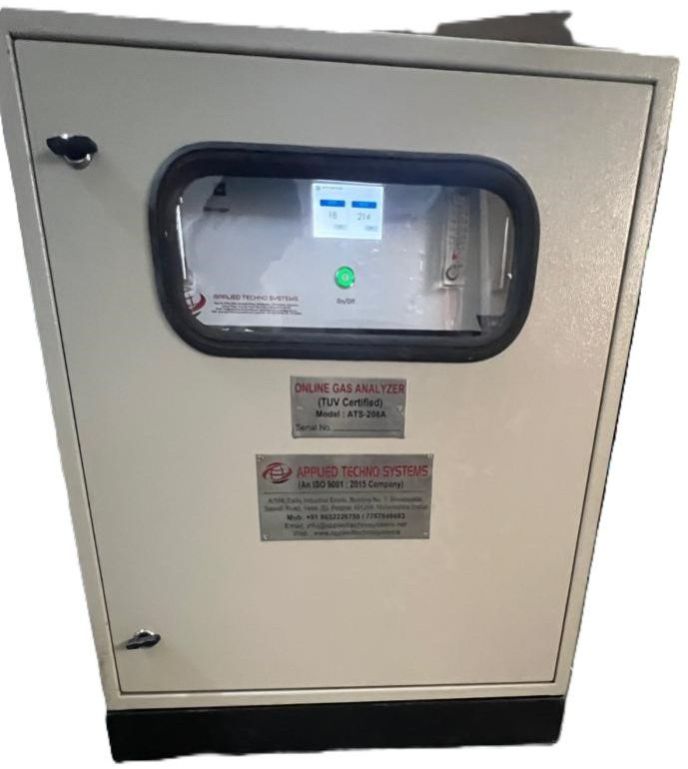
Online Continuous Stack Emission Monitoring Systems Model Ats 208A₹ 9.50 Lakh / piece
Get Latest Price
Model ATS-208A** is an advancedOnline Continuous Stack Emission Monitoring System (CEMS)designed forreal-time monitoring of critical air pollutantsemitted from industrial stacks, flue gas ducts, and exhaust systems. It ensures compliance withCPCB, EPA, and international emission standards, helping industries control pollution and meet regulatory obligations. Technical Specifications:
Additional Information: Payment Terms : T/T, Western Union Packaging Details : As Per Customer Requirement Delivery Time : 3-4 Weeks 
DSL-340 Opacity Monitoring₹ 3.20 Lakh - ₹ 4.20 Lakh / Piece
Get Latest Price
DSL-340 appears to be a model related to opacity monitoring, commonly used for environmental and industrial applications, especially for monitoring emissions from various industrial processes like power plants, refineries, and other facilities where air pollution may be a concern. The DSL-340 could be a device that measures the opacity of gases being released into the atmosphere. These types of systems are important for ensuring compliance with environmental regulations to limit air pollution. Additional Information: Packaging Details : The product will be securely packaged in a Thermocal box, designed to provide thermal insulation and protection during transit. Each unit will be sealed in a protective plastic cover to prevent dust, moisture, and other contaminants from damaging the product during transport and storage. Including Calibration Certificate, Warranty Certificate & Operation Manual Delivery Time : 2 weeks 
Continuous Emissions Monitoring Systems (Ocems)₹ 12.50 Lakh / piece
Get Latest Price
Applied Techno Systems is Inginiuos manufacturer ofContinuous Emission Monitoring Systemswhich includes Gas ANalyser, Gas Sampling Systems, Tempreture , flow & Opacity dust Monitoring Systems with real time data transmission Systems to CPCB & SPCB.
Additional Information: Payment Terms : T/T, Western Union, Packaging Details : As Per Customer Requirement Delivery Time : 4-6 Weeks 
Online Stack Emission Monitor System With Dual Display₹ 12.50 Lakh / piece
Get Latest Price
Model ATS -208AGas with dual displayAnalyzer continuously monitors the concentration of gasesranging from 100%V/V down to PPM level. Feature includes a duel wavelengthsensor, Remote Sampling, Graphics LCD Display, adjustable level relay output foralarm and 4-20mAoutput for control purpose and minimal maintenance.Special gas sample Conditioning systems are used to clean and dry the gas samplefor accurate and High performance operation. An Internal Pump draw gas sampleinto the sensor through a dust particle filter from an intake which can be located atdistance up to 40 meter form the monitor.The Sensor and Electronic component are housed in tough aluminium housingFor hazardous area applicationsthe sensor may be mounted remotely in thehazardous areaand safely connected via anzener barrier to the electronics unit inthe safe area. Alternatively the electronicsunit can be supplied in an Explosion proofenclosure.
Additional Information: Payment Terms : T/T, Western Union, Packaging Details : As Per Customer Requirement Delivery Time : 4-6 Weeks 
Continuous Stack Emission Monitoring Systems OCEMS₹ 7.50 Lakh - ₹ 12.50 Lakh / Piece
Get Latest Price
Model ATS -208AGas with dual display Analyzer continuously monitors the concentration of gases ranging from 100%V/V down to PPM level. Feature includes a duel wavelength sensor, Remote Sampling, Graphics LCD Display, adjustable level relay output for alarm and 4-20mA output for control purpose and minimal maintenance. Special gas sample Conditioning systems are used to clean and dry the gas sample for accurate and High performance operation. An Internal Pump draw gas sample into the sensor through a dust particle filter from an intake which can be located at distance up to 40 meter form the monitor. The Sensor and Electronic component are housed in tough aluminium housing For hazardous area applications the sensor may be mounted remotely in the hazardous area and safely connected via an zener barrier to the electronics unit in the safe area. Alternatively the electronics unit can be supplied in an Explosion proof enclosure. spacification
Additional Information: Payment Terms : L/C, D/A, D/P, T/T, Western Union, Packaging Details : Normal Thermacol Packing or wooden packing Delivery Time : 2-3 WEEKS Continuous Stack Emission Monitoring Systems₹ 8.50 Lakh / Piece
Get Latest Price
Online Continius eission Monitoring systems Microcontroller based NDIR Technology online continous emission monitoring systems can measure the gases like CO. CO2, SO2 and NOX. We have OPacity Based Technology for the measurment of PM from Stack. For Oxygen Measurment we have Zirconia and Paramagnetic sensor for Exact measurment of Oxygen. We have compalte tempreproof Dataacquisition systems for real time data tranmisssion to CPCB (Central Pollution Control Board )and SPCB (State Pollution Control Board) Analyzer conssit differnt satage of sampling conditioning systems for flitration of gas sample. The range of gases are as follows SO2 0-2000 PPM NOx 0-2000 PPM O2 0-25 % V/V CO2 : 0-5000 PPM SPM : 0-999 mg/nM3 Gas Sampling systems consist the gas cooler to maintain the gas tempreture. Auto Drain Pot is also available to drain the moisture timely. 230 V 50 Htz Power supply Additional Information: Payment Terms : Packaging Details : wooden Packing Delivery Time : 2-4 weeks 
Continuous Stack Emission Monitor Systems₹ 9.50 Lakh / piece
Get Latest Price
Continuous Emission Monitoring Systems (CEMS) are devices used to monitor and analyze the concentration of pollutants released into the atmosphere from industrial processes. These systems are commonly used in power plants, refineries, chemical plants, and other facilities that may produce air emissions, to ensure compliance with environmental regulations and to monitor air quality in real-time.
Types of CEMS: rn
Applications: rn
Additional Information: Payment Terms : L/C, T/T, Western Union Packaging Details : As Per Customer Requirement Delivery Time : 3-4 Weeks 
PORTABLE DUST MONITOR₹ 1.38 Lakh - ₹ 3.10 Lakh / Bag
Get Latest Price
We have gained a remarkable position in the industry by offering a qualitative assortment ofHandheld Dust Monitorthat is used to monitor the suspended Particulate concentration in the air. The offered monitor is manufactured employing high-end technology and well-tested components in observance to industry defined guidelines. Apart from this, the entire range is scrupulously tested under the strict inspection of our quality controllers. This range can be availed from us in various specifications at market leading prices. Features:
Specification :
Additional Information: Payment Terms : L/C, D/A, D/P, T/T, Western Union Packaging Details : BOX PACKING Delivery Time : 2-3 WEEKS Tell Us What are you looking for? Will call you back
Contact Us
|





 Vasai, Mumbai, Maharashtra