 GST : 33AAIPN8819N1Z3
Our Product / Services
Our Complete range of products are Aggregate Crushing Value Apparatus, Vibration Instruments, Digital Protractor, Direct Shear Test Apparatus and Jolting Apparatus.
The DM Manual Equipment is a sturdy, manually operated device constructed from durable mild steel. With a diameter of 150 mm, it is designed for practical industrial or laboratory use. Its manual operation ensures simplicity and reliability, making it suitable for various basic applications where automation is not required.
Key FeaturesManual operation for simple, reliable use
Constructed from durable mild steel
Diameter: 150 mm
Compact and easy to handle
No electronic balance required
In-stock and ready for immediate use
Industrial workshops and manufacturing
Laboratory and basic testing tasks
Manual material handling or measurement tasks
Educational or demonstration purposes
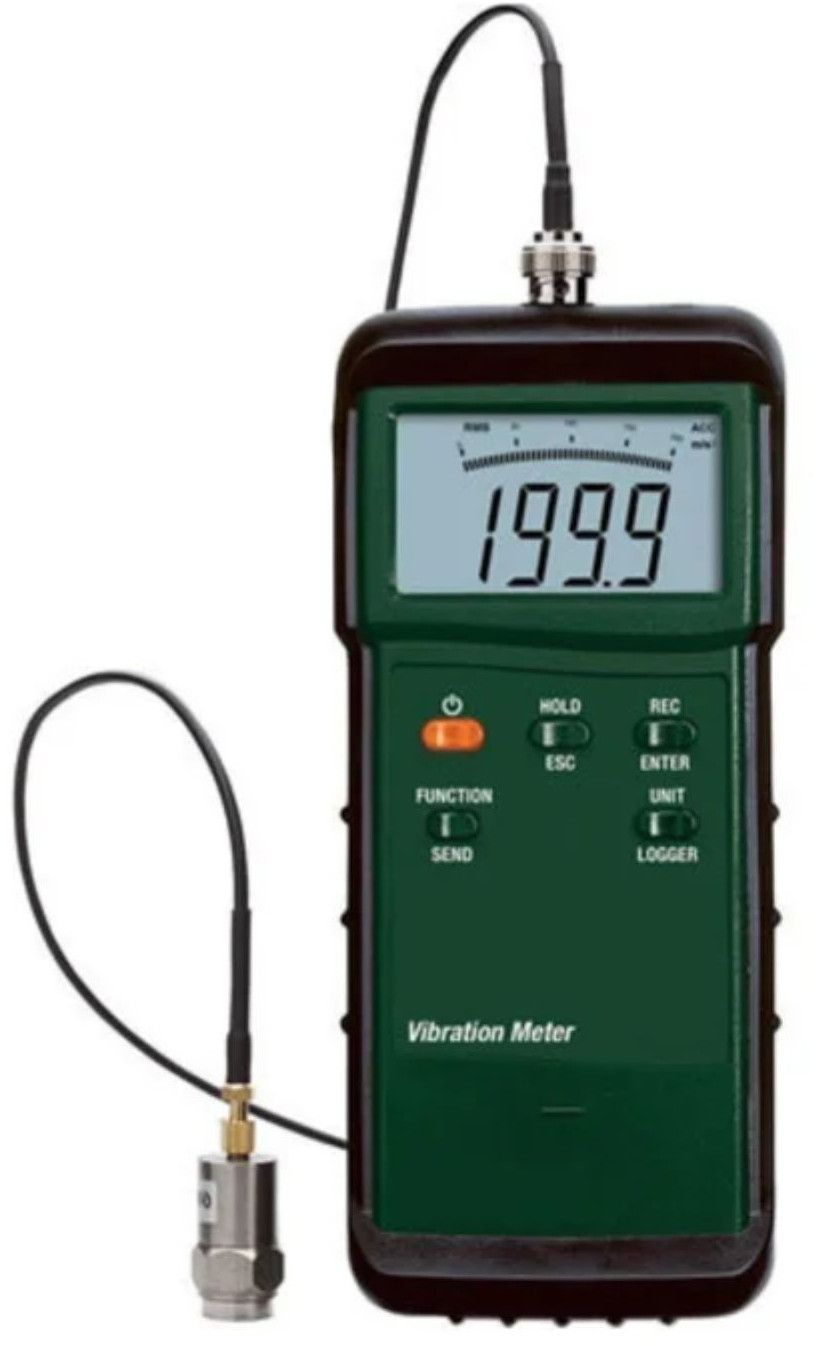
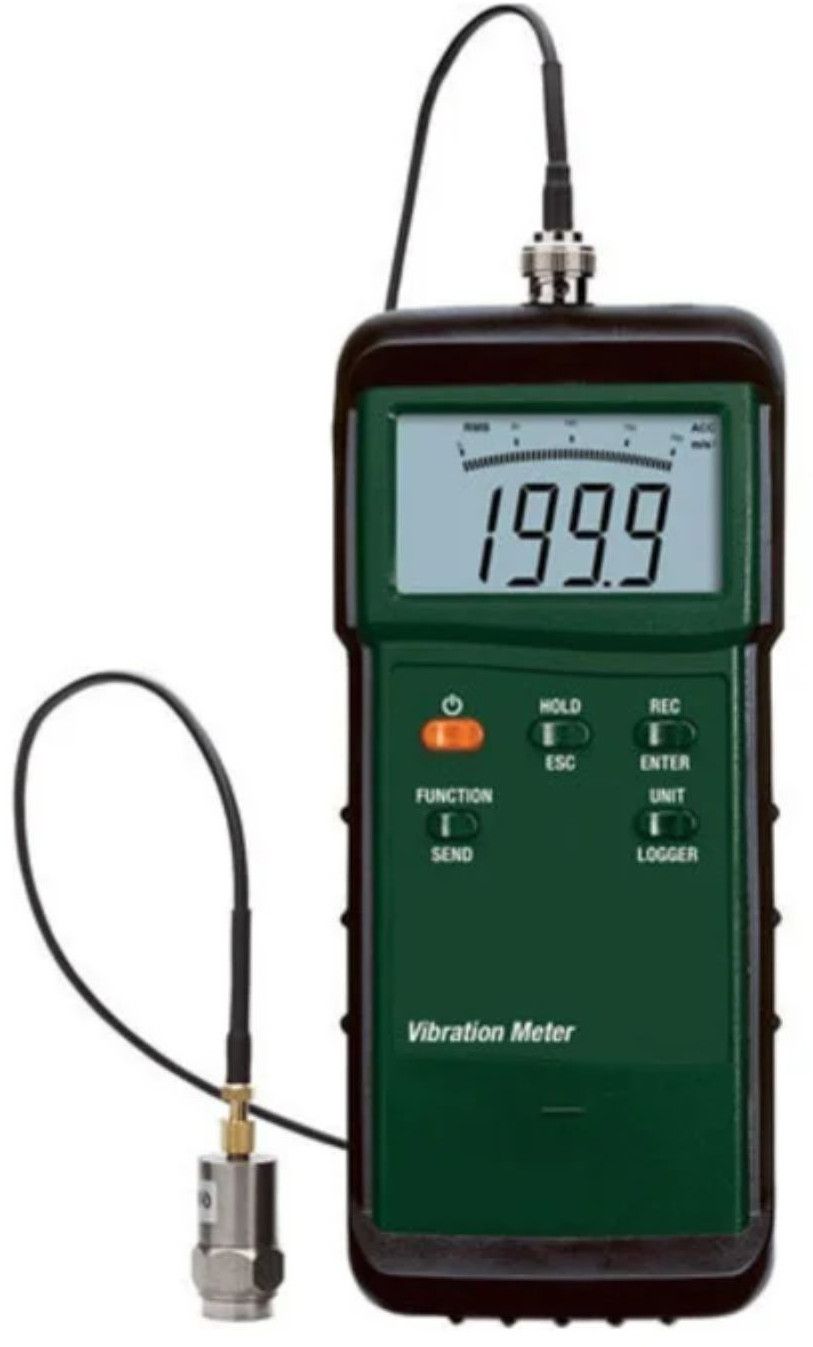
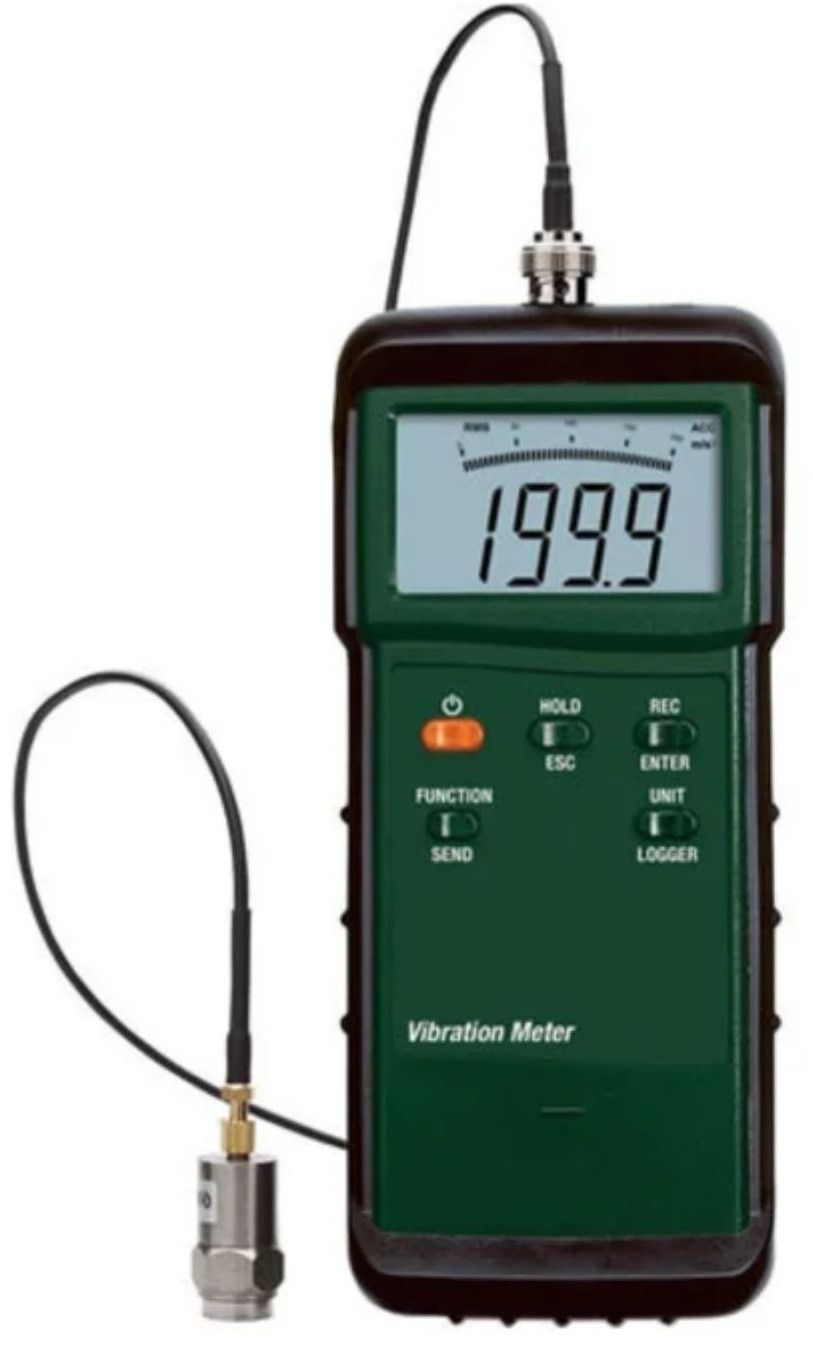
The Heavy-Duty Vibration Meter is a handheld instrument designed for industrial vibration measurement and condition monitoring. It supports three primary vibration parameters: acceleration, velocity and displacement making it versatile for assessing machine health, bearings, fans, motors, pumps and other rotating equipment. The unit comes with a remote vibration sensor (mounted via magnetic adapter) on a 1m cable, enabling convenient placement on the machine under test while the operator holds the meter in hand. The wide frequency range (10 Hz to 1 kHz) and multiple units of measure allow users to tailor measurements to the type of machine and fault characteristics (e.g., unbalance, misalignment, looseness, bearing faults). The meter also incorporates a built-in data logger (up to 500 readings), min/max memory, data hold, auto shut-off, and optional PC interface for downloading data to a computer for further analysis or reporting.
Key FeaturesMulti-parameter measurement Supports acceleration, velocity and displacement (peak or RMS) in one instrument.
Wide measurement range Up to 200 mm/s (velocity), 200 m/s (acceleration) and 2 mm (displacement) enable use on a wide variety of machines.
Wide frequency response 10 Hz to 1000Hz covers most machinery vibration needs.
High basic accuracy (5% + 2 digits) under calibration conditions.
Data logger Store up to 500 readings, with selectable sample rates, manual or auto store/recall.
PC connectivity RS-232 interface and optional software for data download.
Remote sensor with cable The detachable sensor with magnetic mount and 1m cable allows flexible measurement placement.
Portable & rugged Handheld size, lightweight (395 g), protective rubber holster with stand (included).
Battery powered + optional AC adaptor Field-ready with 9 V battery; optional adaptor for benchtop use.
Three-year warranty Good warranty support for industrial use.
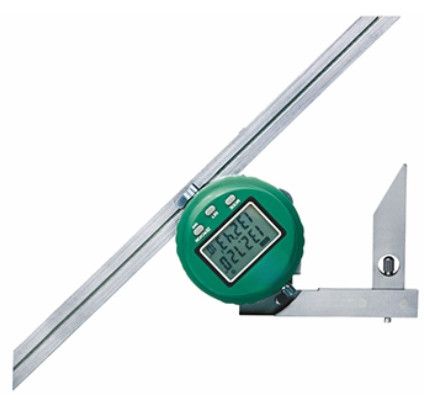
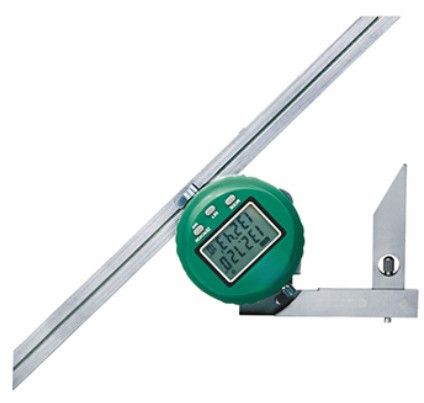
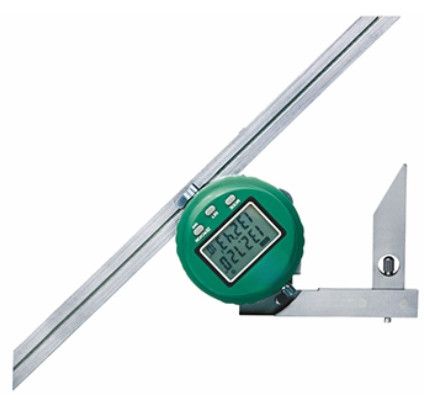
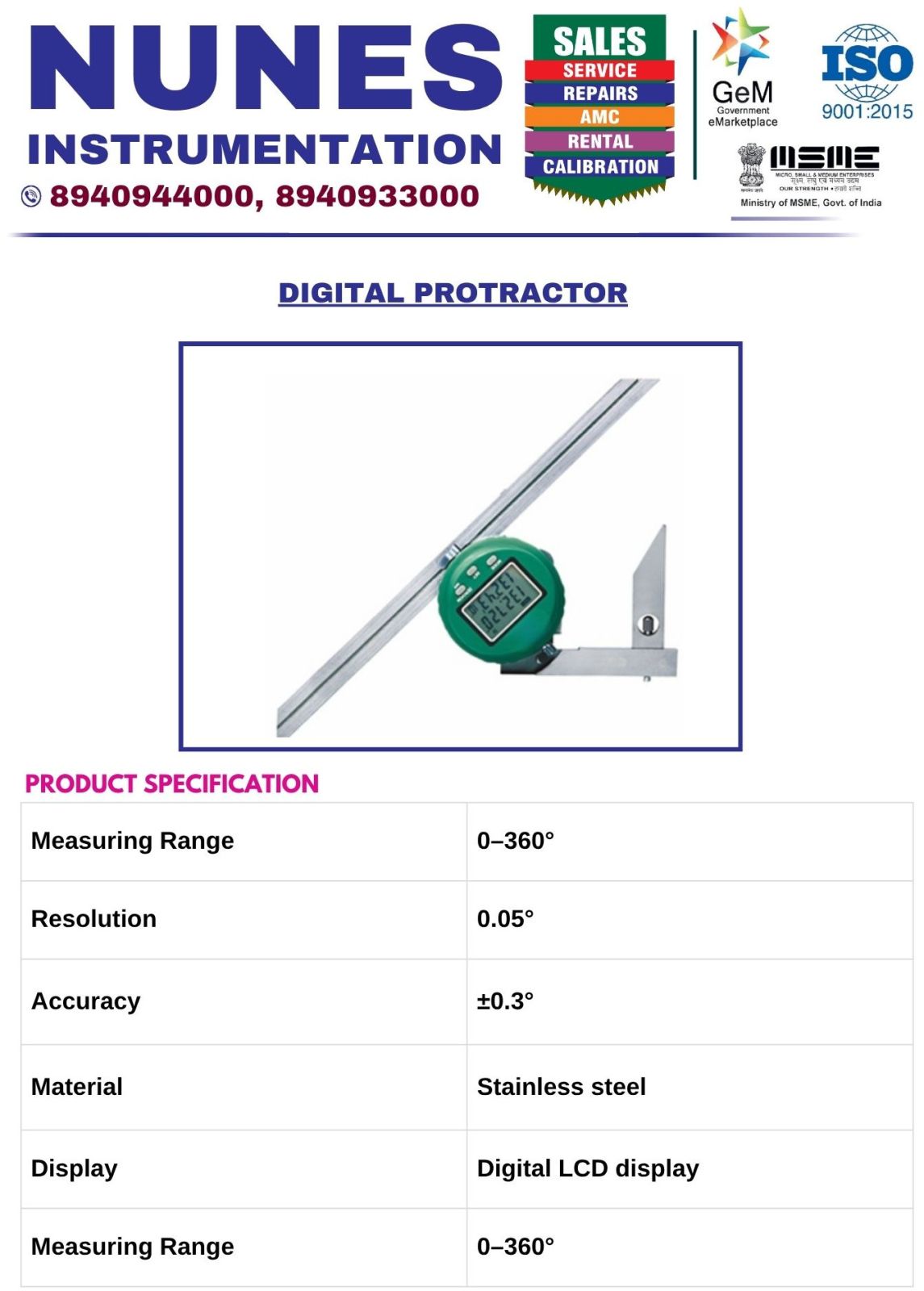
The Electronic Protractor is a precision digital angle measuring instrument designed for quick and accurate angle measurements over a full 0360 range. Constructed from stainless steel, it provides superior durability and corrosion resistance. The large digital LCD display offers easy-to-read measurements with 0.05 resolution, making it ideal for inspection, machining, and alignment tasks.
This model supports readings in both decimal degrees and degrees/minutes/seconds (DMS), and features auto power-off to conserve battery life. It can also be connected to external devices using an optional data output cable, facilitating data logging or quality control documentation in industrial environments.
Key FeaturesFull 0360 measurement range for complete angular coverage.
High resolution (0.05) ensures precise alignment and measurement.
0.3 accuracy suitable for both workshop and laboratory use.
Stainless steel body ensures durability and long life in industrial conditions.
Large, clear LCD display for quick readings.
Selectable units view angles in decimal degrees or DMS format.
Auto power-off extends battery life during inactivity.
Optional data output for recording or integrating with digital QC systems.
Compact and lightweight design for portability and ease of use.
Machine tool setup and calibration ensuring correct angle settings on milling, drilling, or grinding machines.
Woodworking and carpentry measuring and marking angles precisely for joints and cuts.
Metal fabrication and welding verifying angles of fixtures, frames, or components.
Inspection and quality control checking angular tolerances of parts during production.
Engineering and R&D laboratories for mechanical and geometric analysis of prototypes.
Construction and field alignment tasks determining slopes or aligning beams and structures.
Description
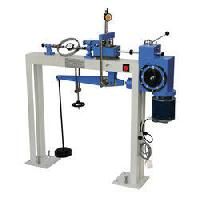
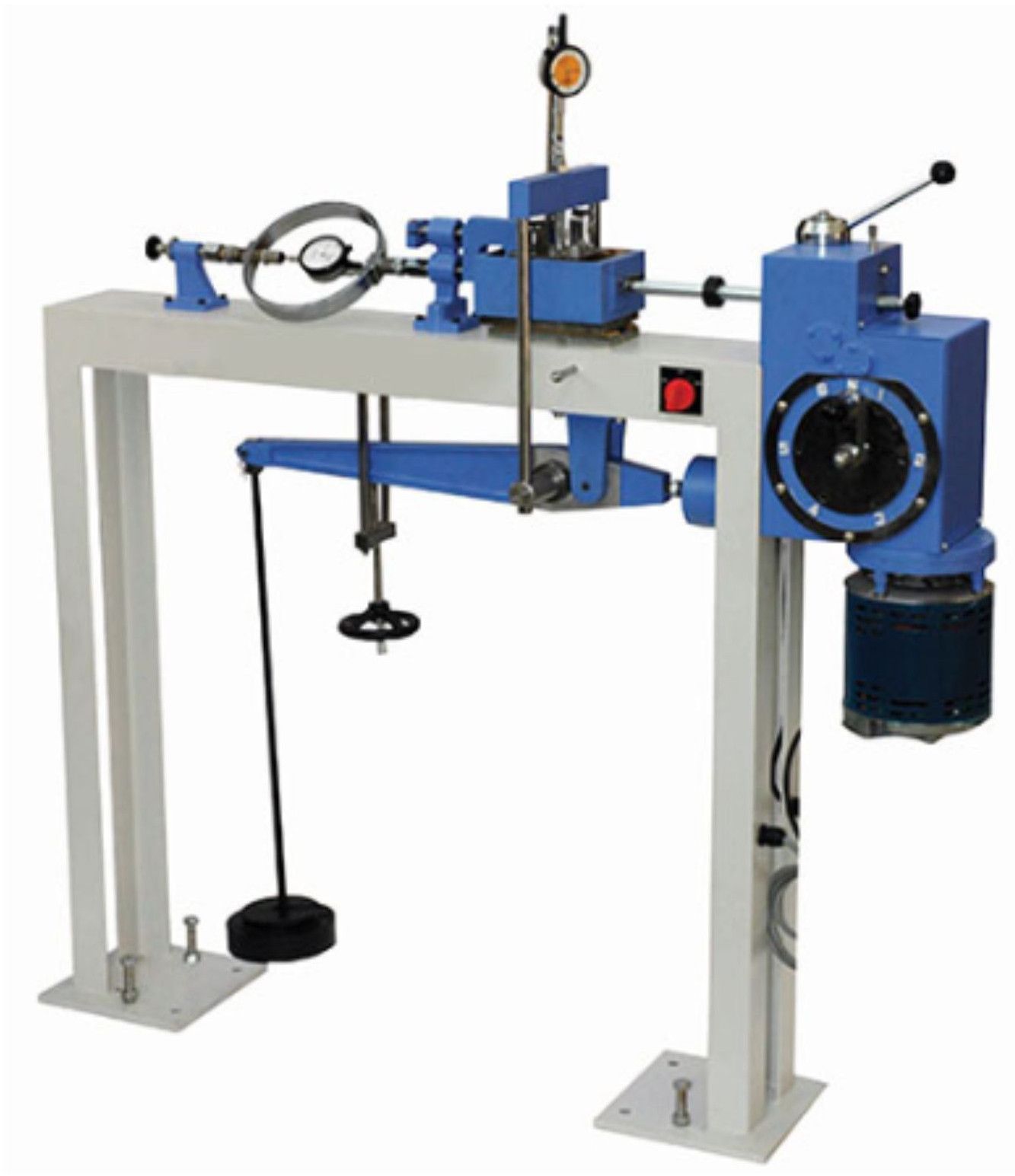
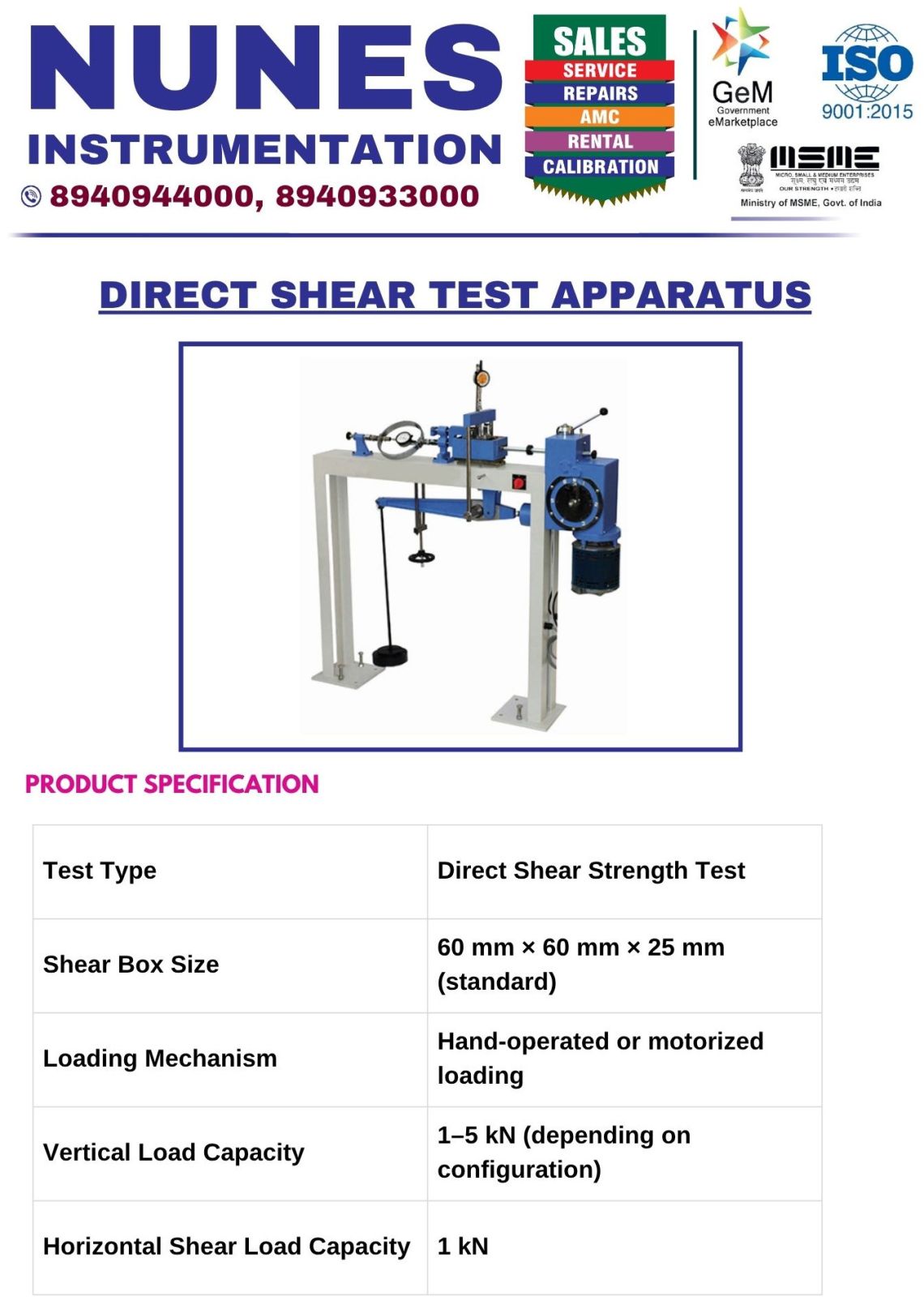
The Direct Shear Test Apparatus is a soil testing instrument used to determine the shear strength parameters of soil, including cohesion (c) and angle of internal friction (). The apparatus applies a horizontal shear force to a soil specimen under a constant vertical load to measure shear resistance at failure. It is widely used in geotechnical engineering, foundation design, slope stability analysis, retaining wall design, and earthworks.
Key Features
Determines shear strength parameters (c and ) under controlled normal stress.
Rigid and stable frame ensures accurate load transmission.
Interchangeable shear boxes for different soil types and specimen sizes.
Available as manual or motorized movement apparatus.
High precision dial gauges / digital measurement options for improved accuracy.
Comes with water tank for saturated soil testing conditions.
Suitable for both laboratory and educational use.
Applications
Foundation Design
Helps determine soil bearing capacity and stability under load.
Slope Stability Analysis
Used to assess soil resistance against slope or embankment failure.
Retaining Wall and Earth Pressure Studies
Provides shear parameters required for structural earth retaining systems.
Pavement and Road Subgrade Evaluation
Used in selecting suitable soil types and compaction parameters.
Geotechnical Research and Quality Control
Common tool in soil testing laboratories and civil engineering institutes.
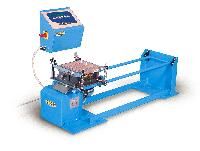
The Jolting Apparatus 40 x 40 x 160 mm is a precision laboratory instrument designed for compacting cement mortar specimens in standardized moulds for strength testing. Manufactured using durable aluminium alloy, the apparatus ensures stability, long service life, and reliable performance in laboratory environments.
The equipment consists of a rectangular table rigidly connected by two support arms to a spindle positioned at a horizontal distance of 800 mm from the centre of the table. A projecting lug with a plane face is provided on the upper surface of the table, beneath which a stop with a rounded upper surface is installed. The table can be lifted and allowed to fall freely on the stop through a cam mechanism connected to a motor and gearbox using V-belts and pulleys.
Key FeaturesHeavy-duty aluminium alloy construction for durability
Semi-automatic operation with motorized jolting mechanism
Cam rotation speed of 60 RPM for uniform compaction
Built-in stroke counter with micro-switch for automatic stop after 60 jolts
Locating pins for accurate mould placement
Rigid clamping system for mould and hopper
Stable rectangular table design for reliable testing
Supplied complete with mould and hopper
Cement testing laboratories
Construction material testing labs
Quality control in cement plants
Civil engineering laboratories
Research and educational institutions
Mortar strength testing and specimen preparation
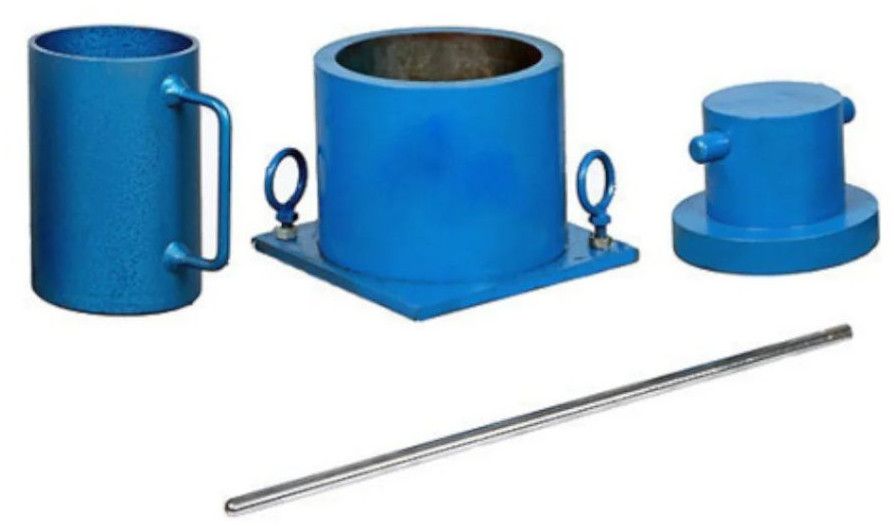
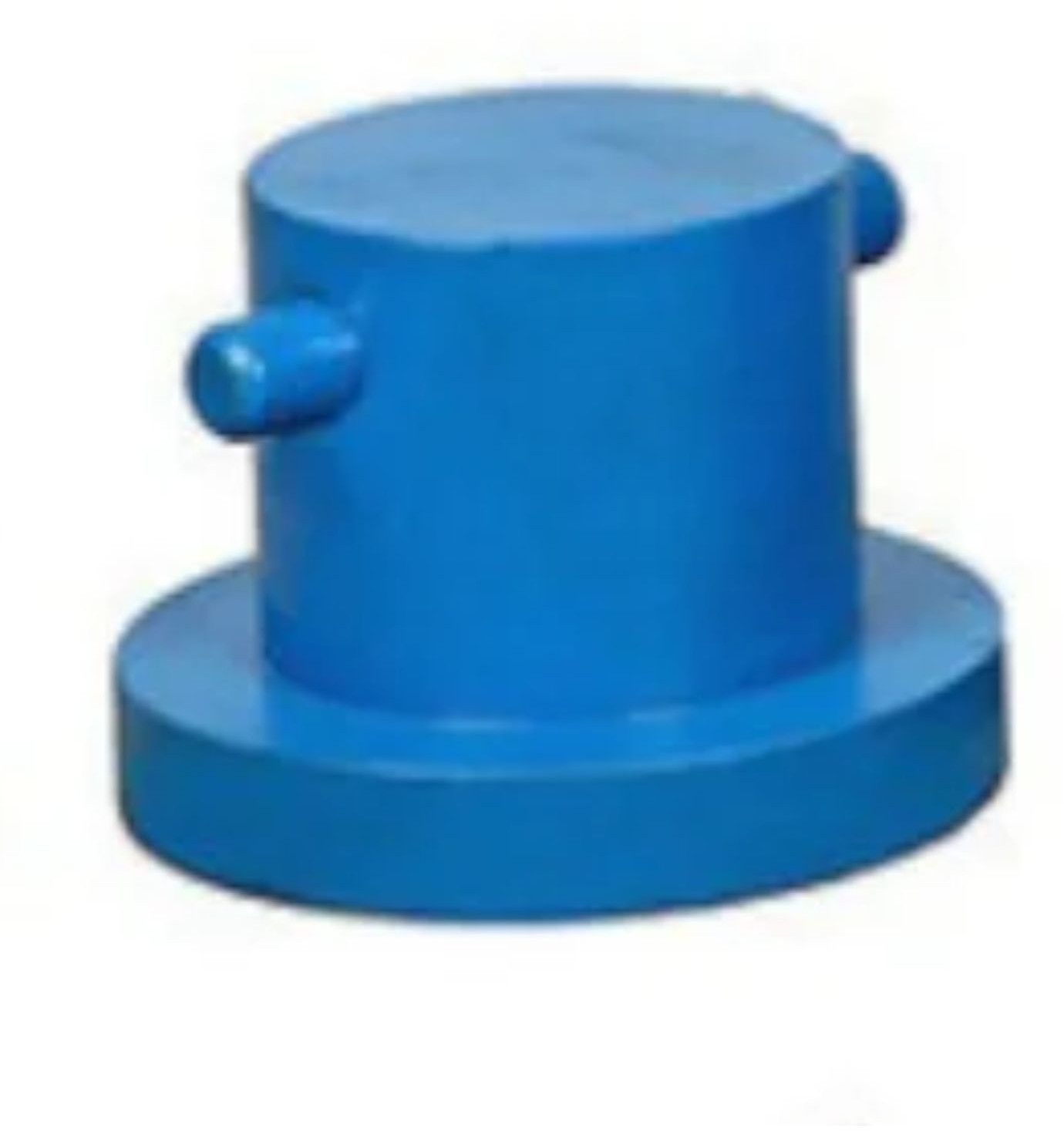
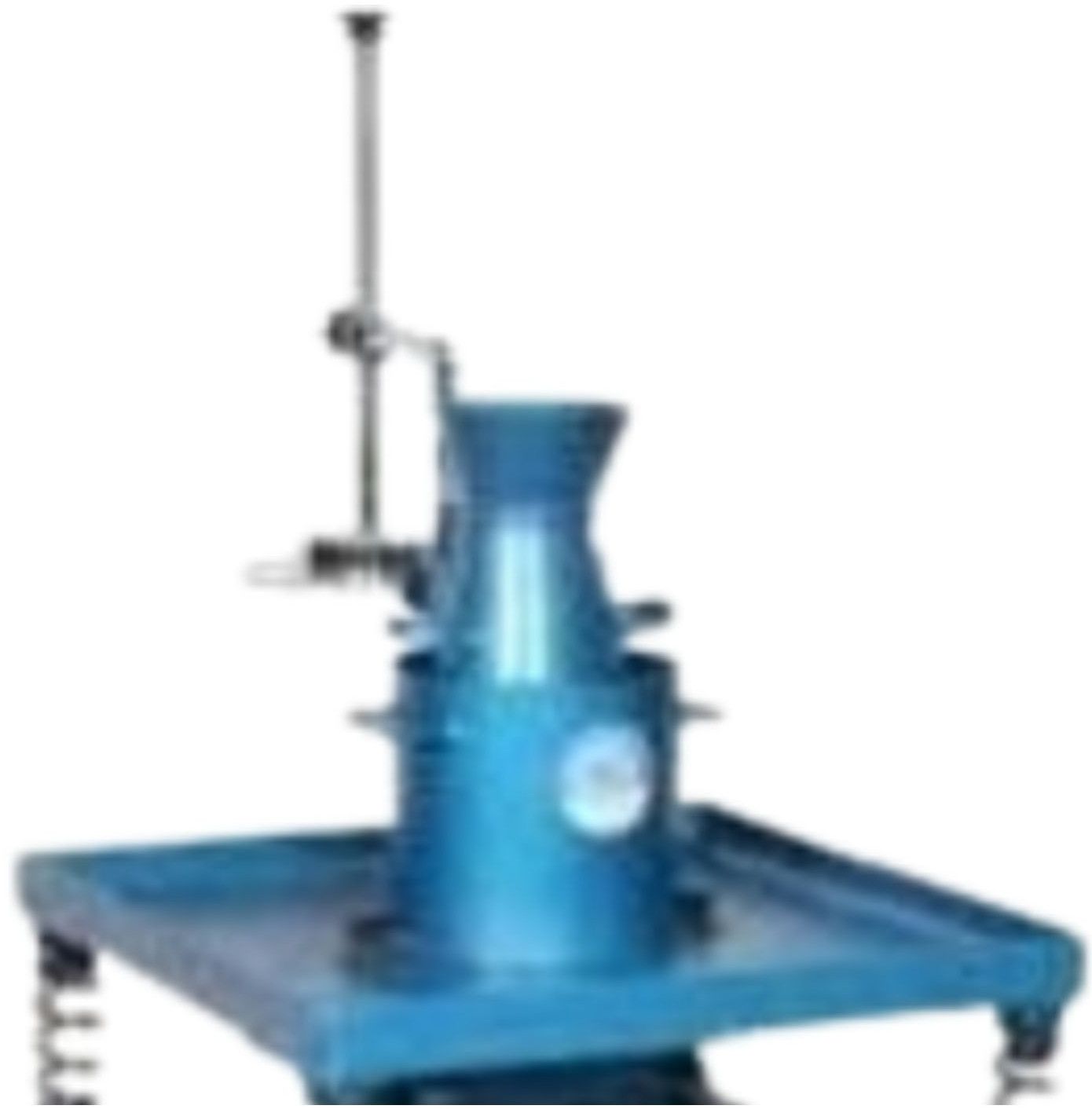
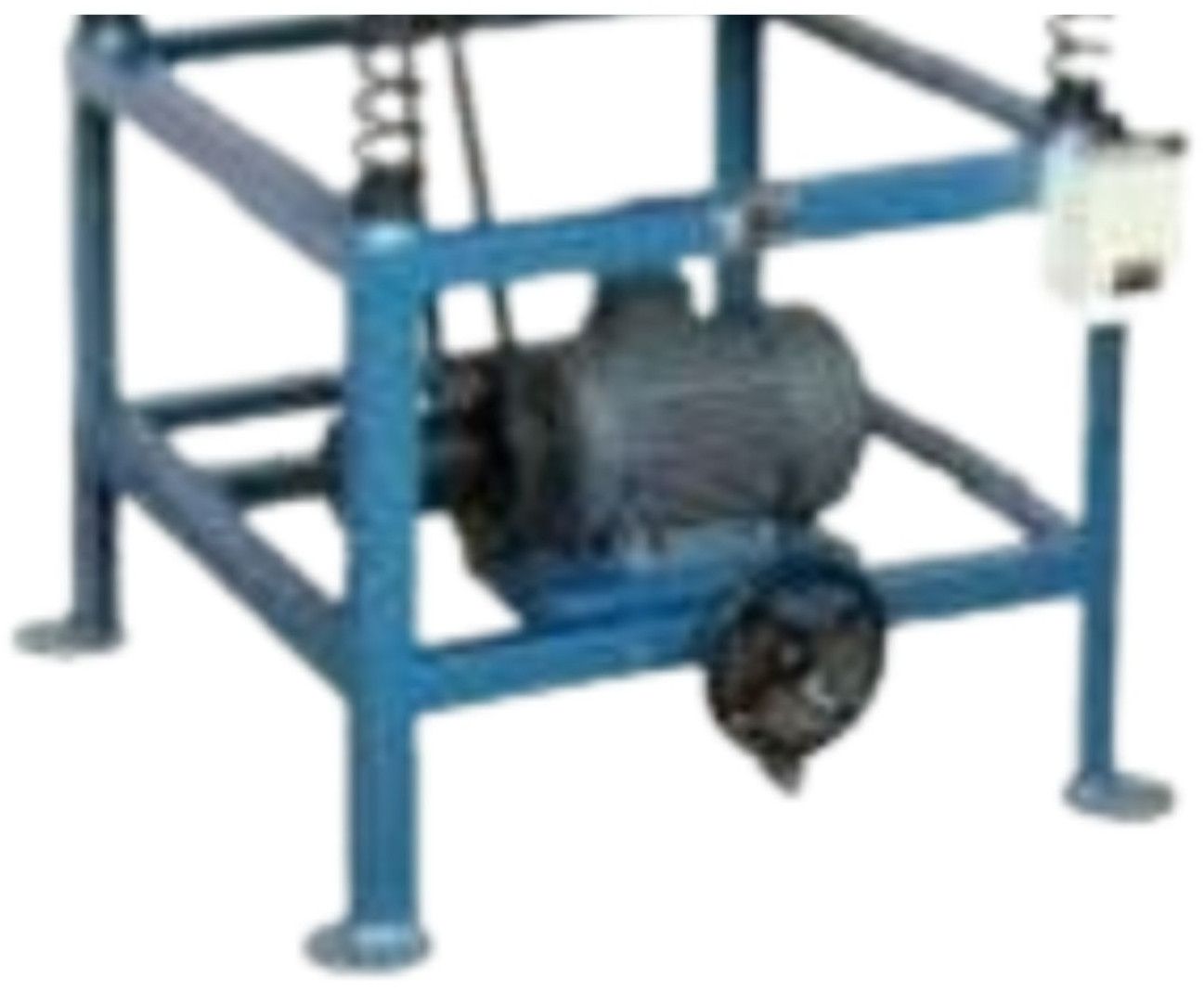
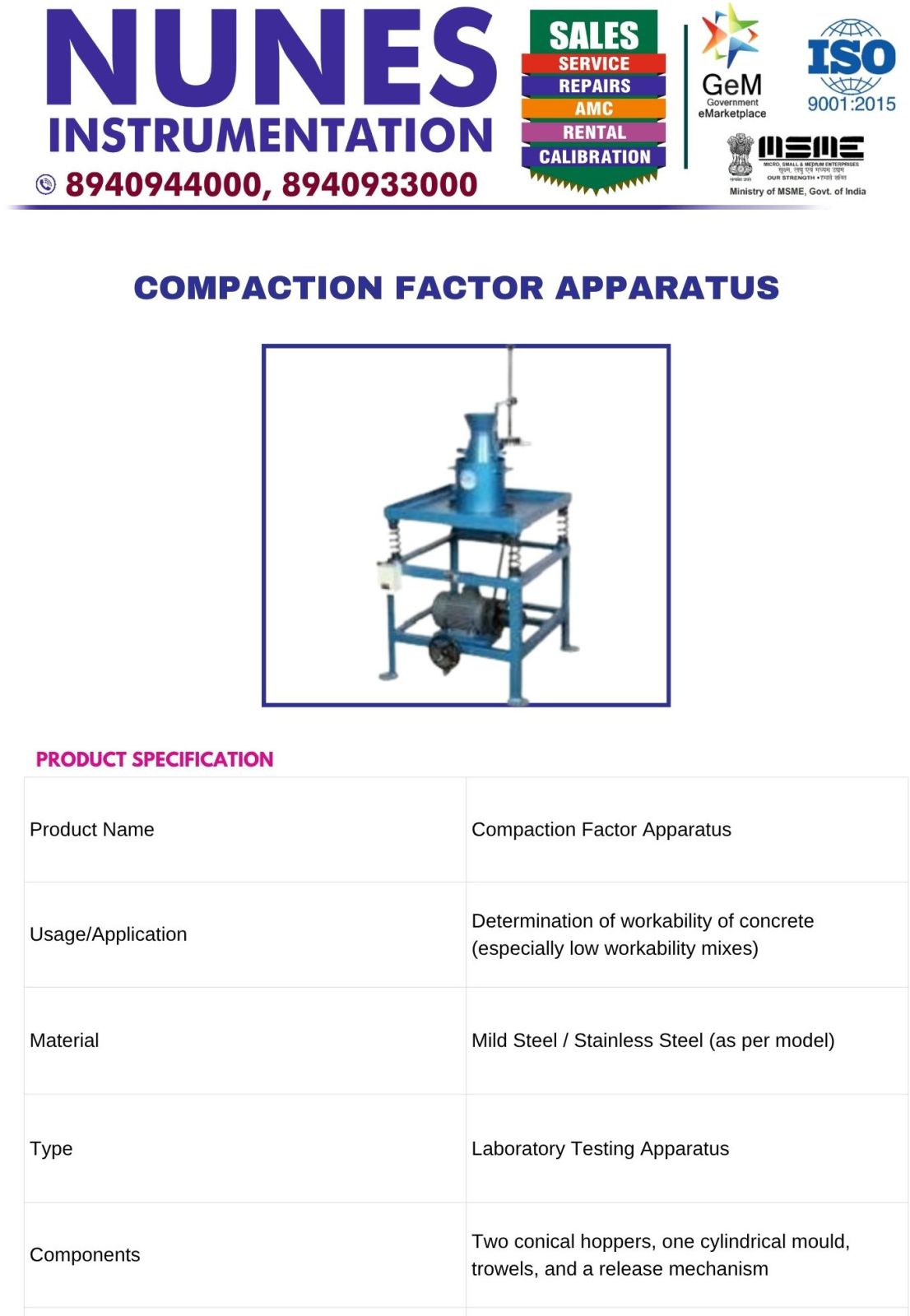
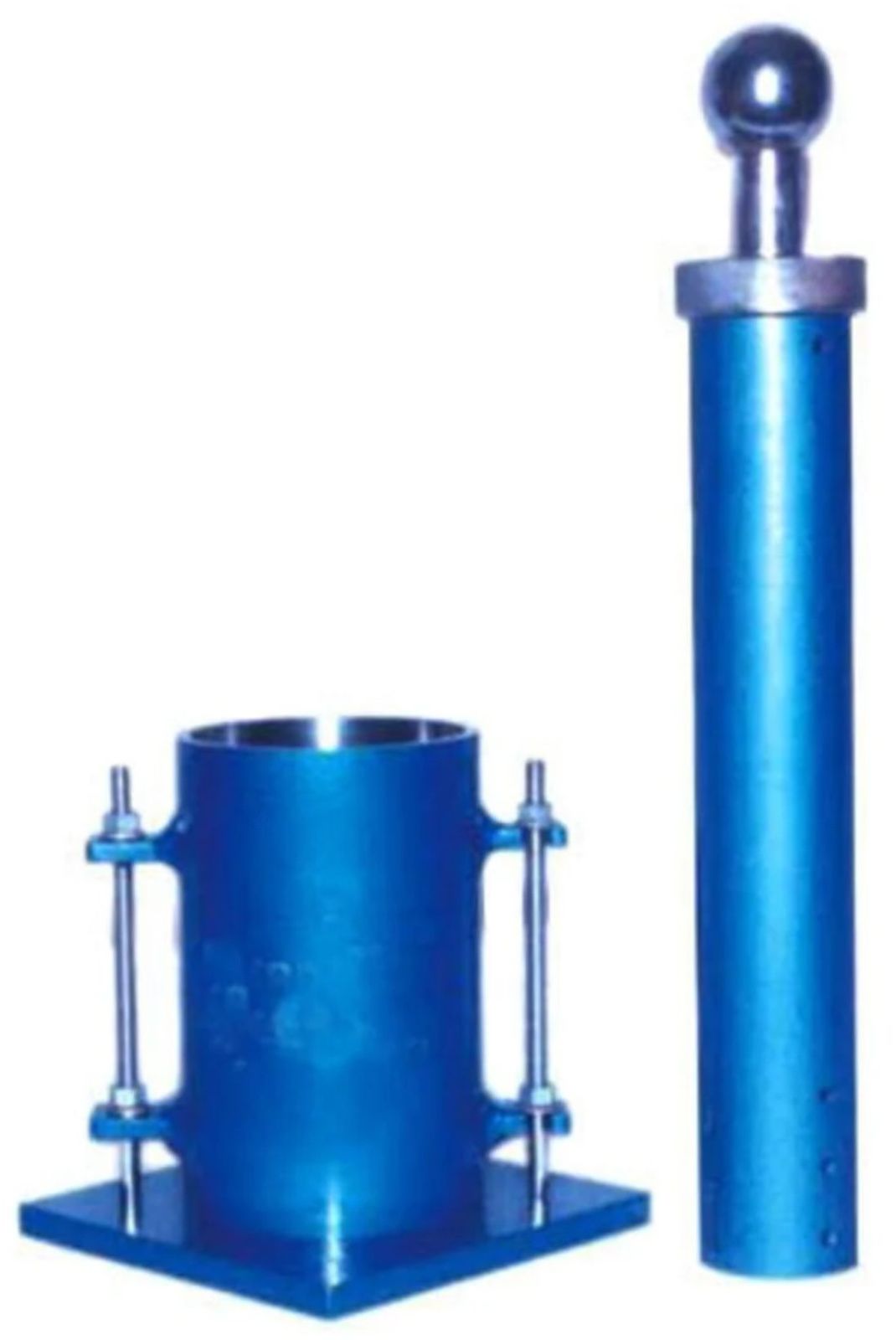
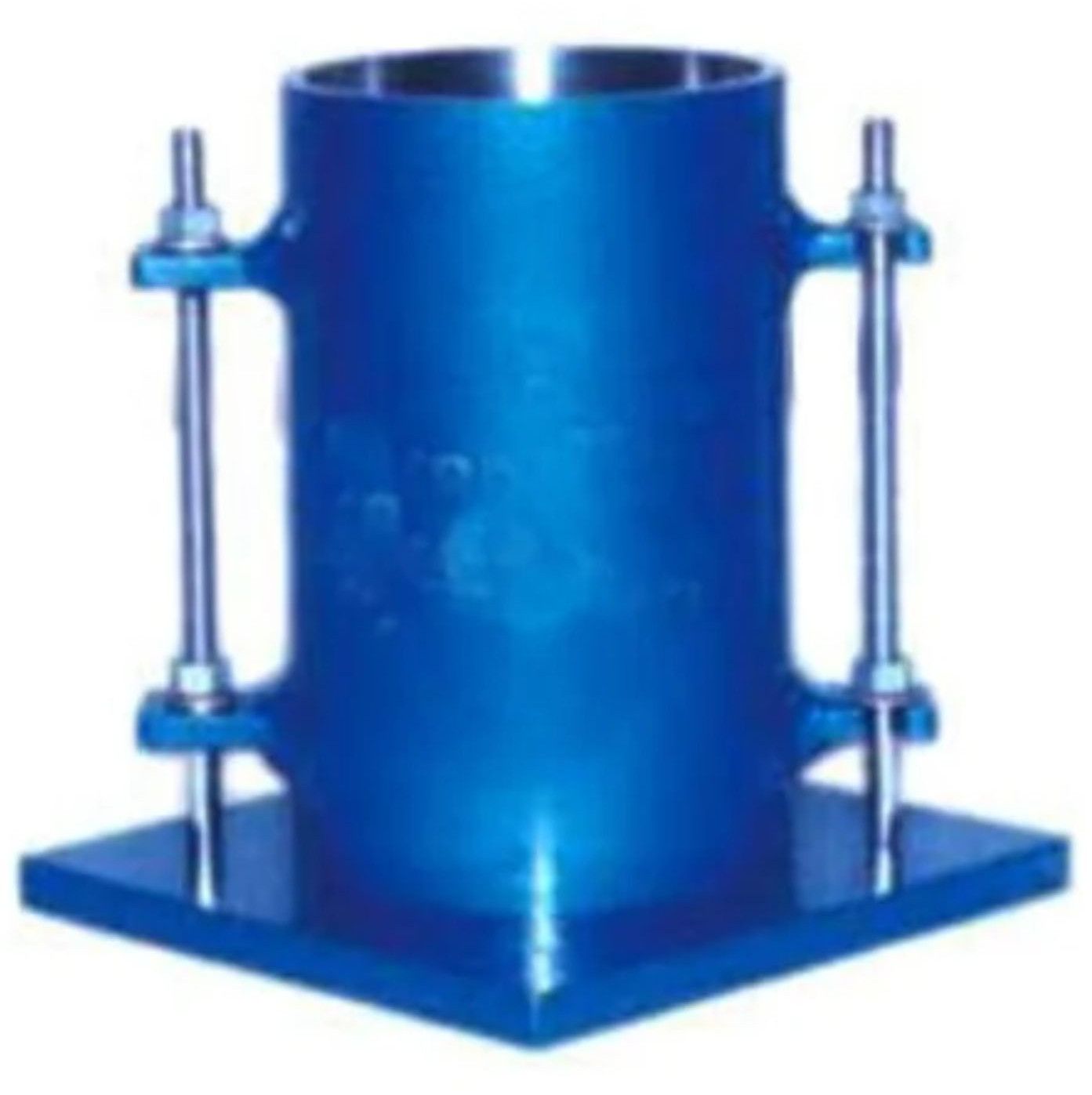
The Compaction Factor Apparatus is a laboratory testing instrument used to determine the workability of fresh concrete, particularly for mixes that are too dry or harsh for the slump test.
It operates on the principle of measuring the ratio of the weight of partially compacted concrete to fully compacted concrete, giving an accurate indication of the concretes workability.
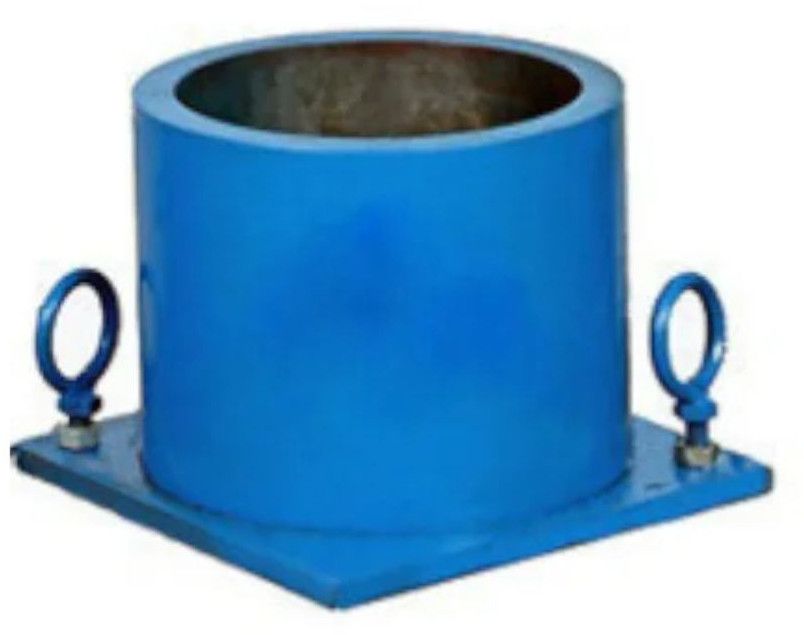
The apparatus consists of two conical hoppers mounted above a cylindrical mould, equipped with quick-release traps that allow the concrete to fall freely from one hopper to another and into the mould.
Suitable for low-workability concrete where slump test fails
Provides quantitative measurement of workability through compaction factor
Rugged and durable construction for repeated laboratory use
Corrosion-resistant metal parts ensure long service life
Portable and easy-to-operate design for field or lab testing
Conforms to IS: 1199 Methods of Sampling and Analysis of Concrete
Used in construction quality control laboratories
Suitable for research and educational institutions
Ideal for testing dry or harsh concrete mixes
Commonly employed in civil engineering and infrastructure testing
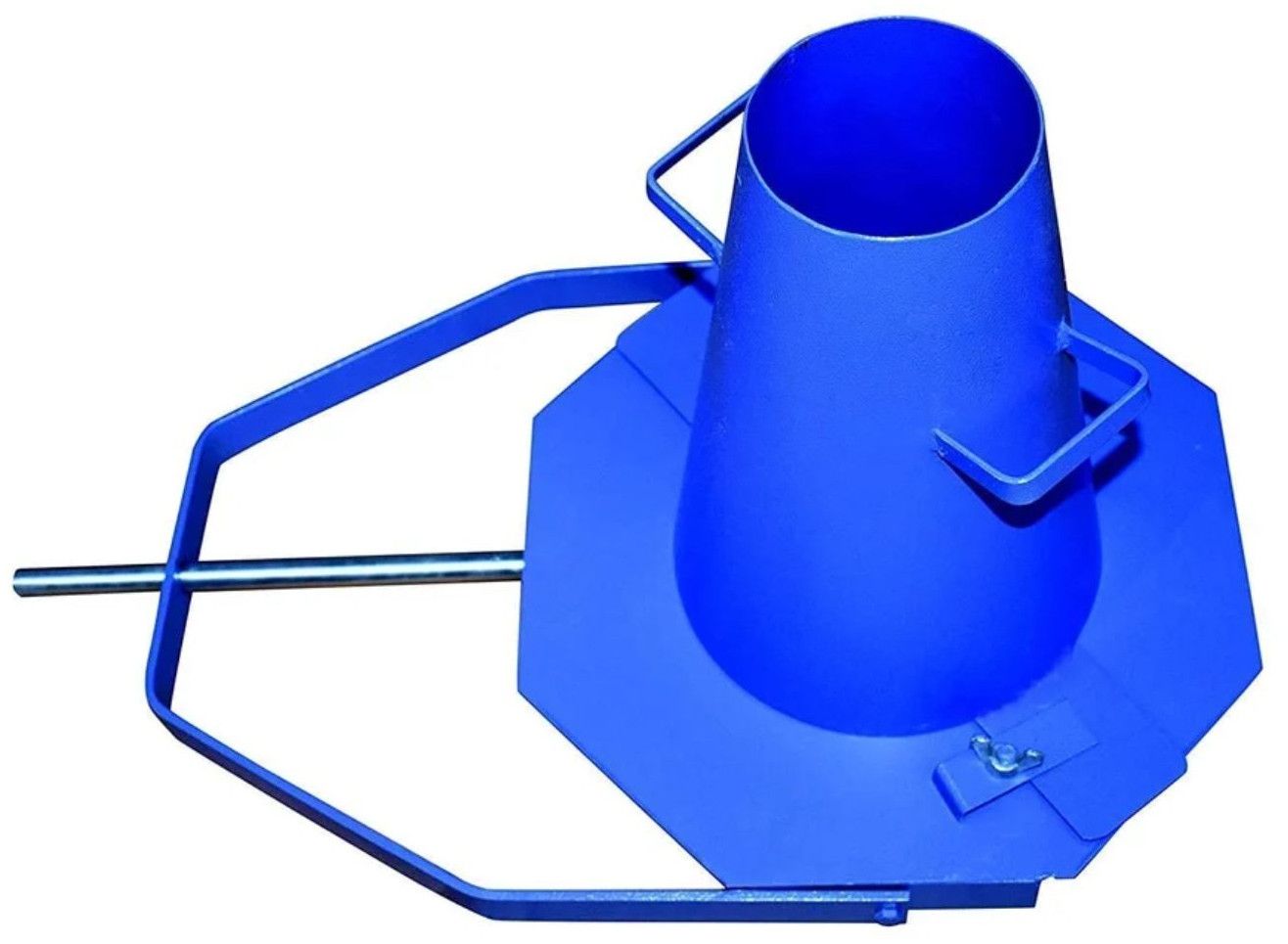
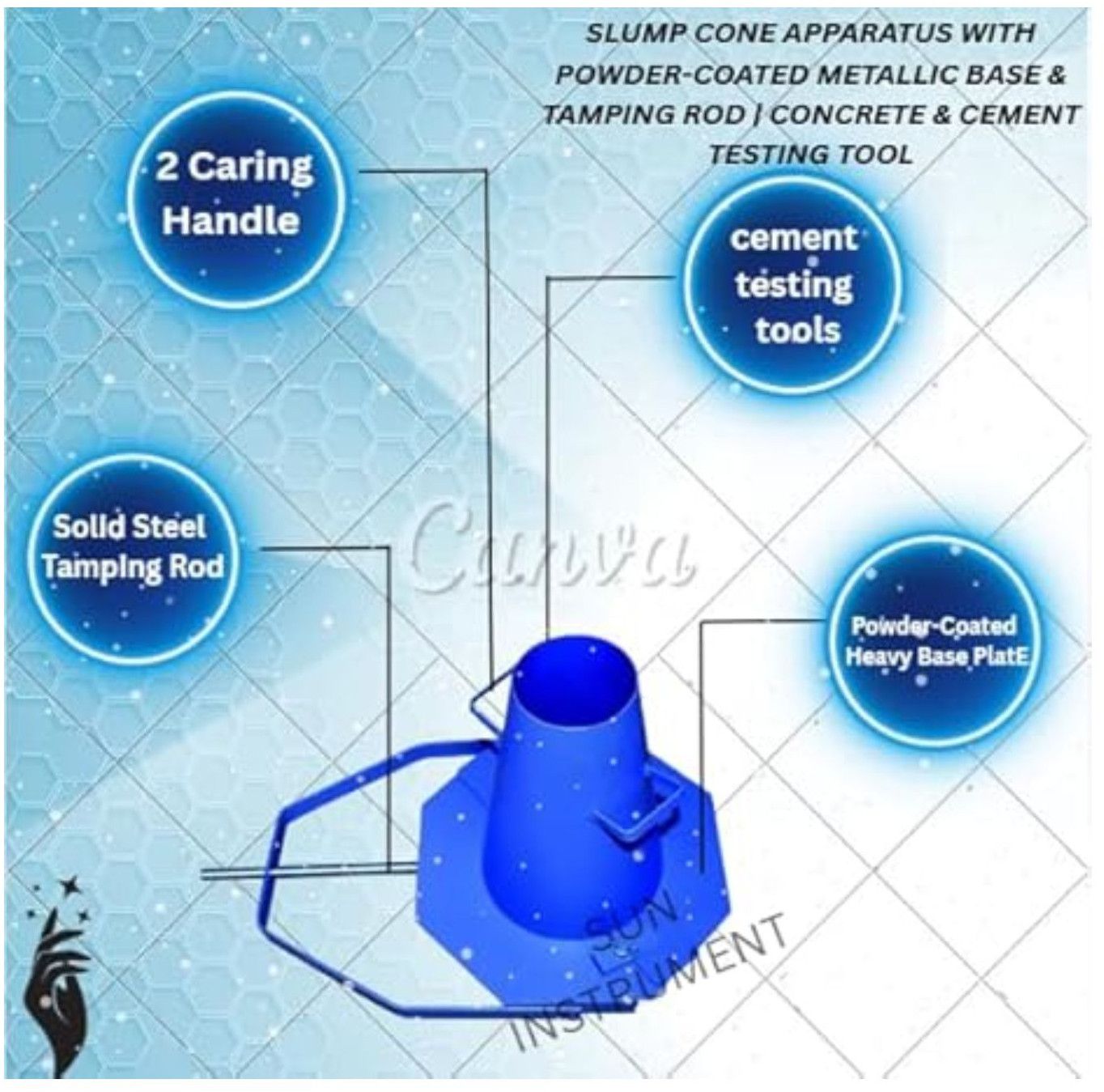
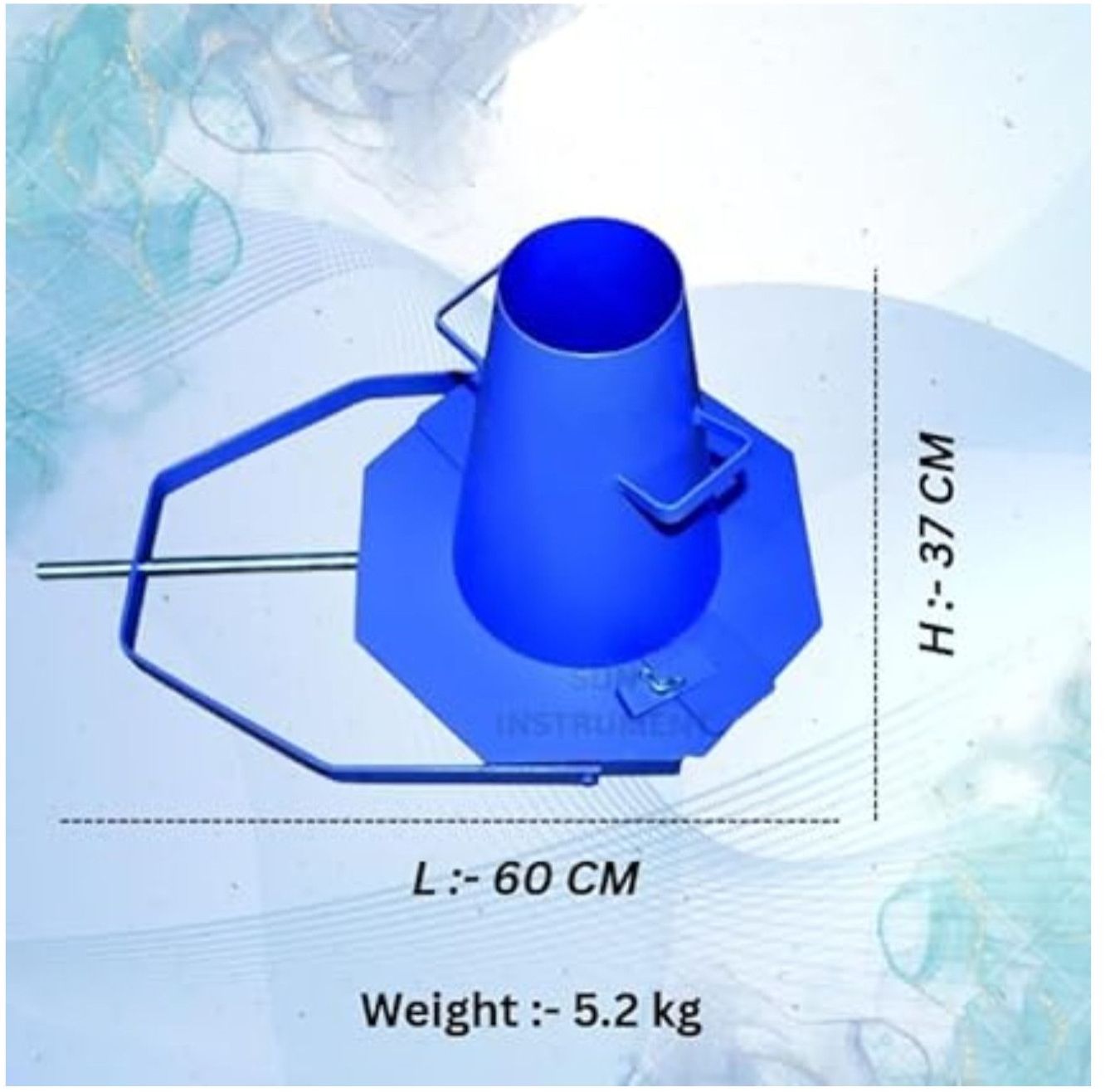
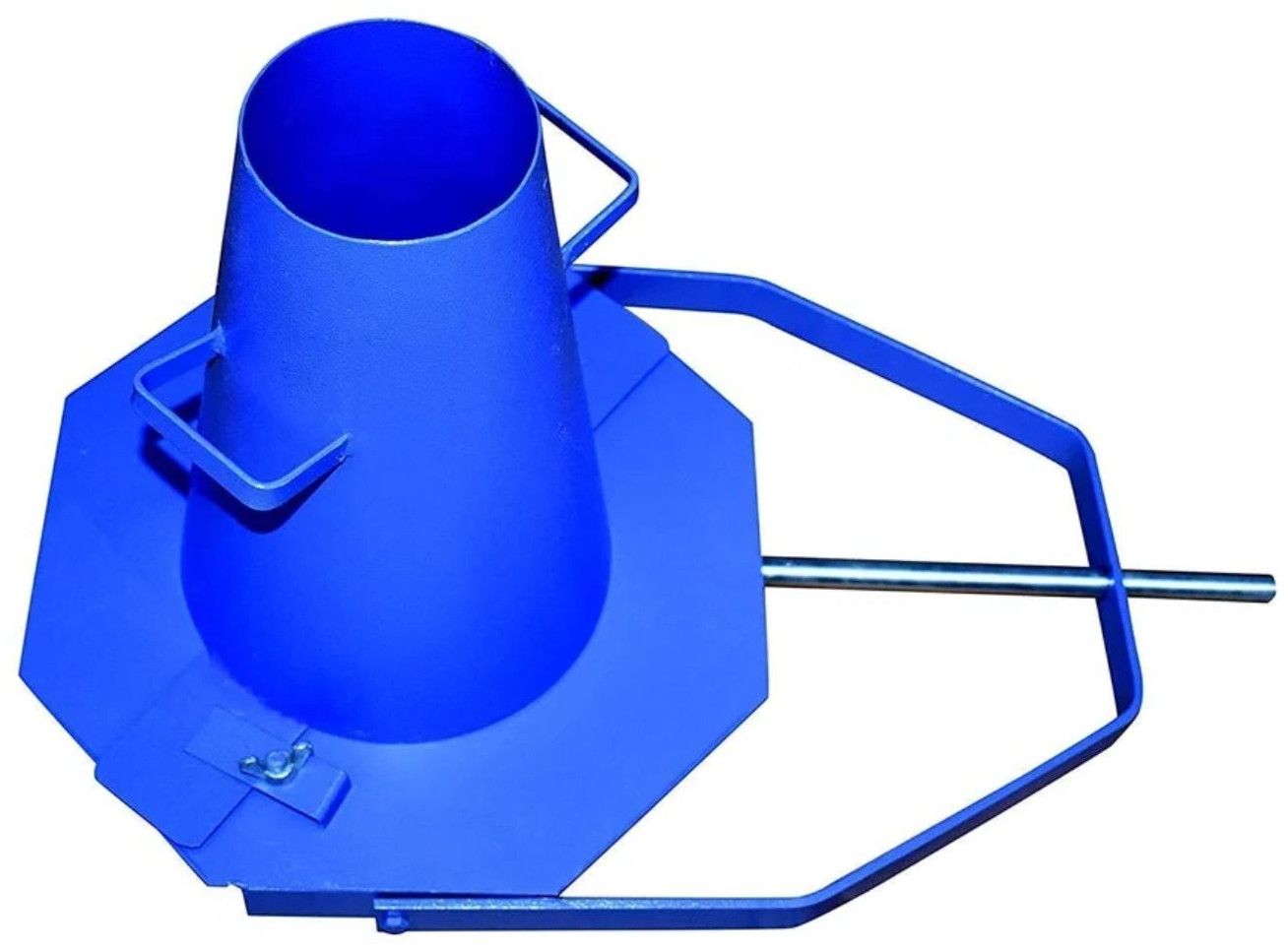
The Slump Cone Apparatus is a standard tool used for determining the workability and consistency of fresh concrete before it sets. The set consists of a metal slump cone, a sturdy base plate, and a tamping rod. The cone has a smooth interior surface to ensure accurate and repeatable results.
The octagonal base plate, equipped with foot pieces and a lifting handle, provides firm support during the test. The tamping rod with a rounded end ensures uniform compaction of concrete layers during testing. This apparatus is suitable for both laboratory and field testing applications.
Key Features
Durable metal construction with smooth interior finish.
Designed according to standard slump test dimensions (30 cm height, 20 cm bottom, 10 cm top).
Octagonal base plate with footrests for stability and ease of use.
Rounded-end tamping rod ensures consistent compaction.
Portable and easy to clean after use.
Applications
Used for measuring the consistency and workability of fresh concrete.
Essential for construction sites, concrete testing laboratories, and educational institutions.
Suitable for quality control in concrete production and field verification.
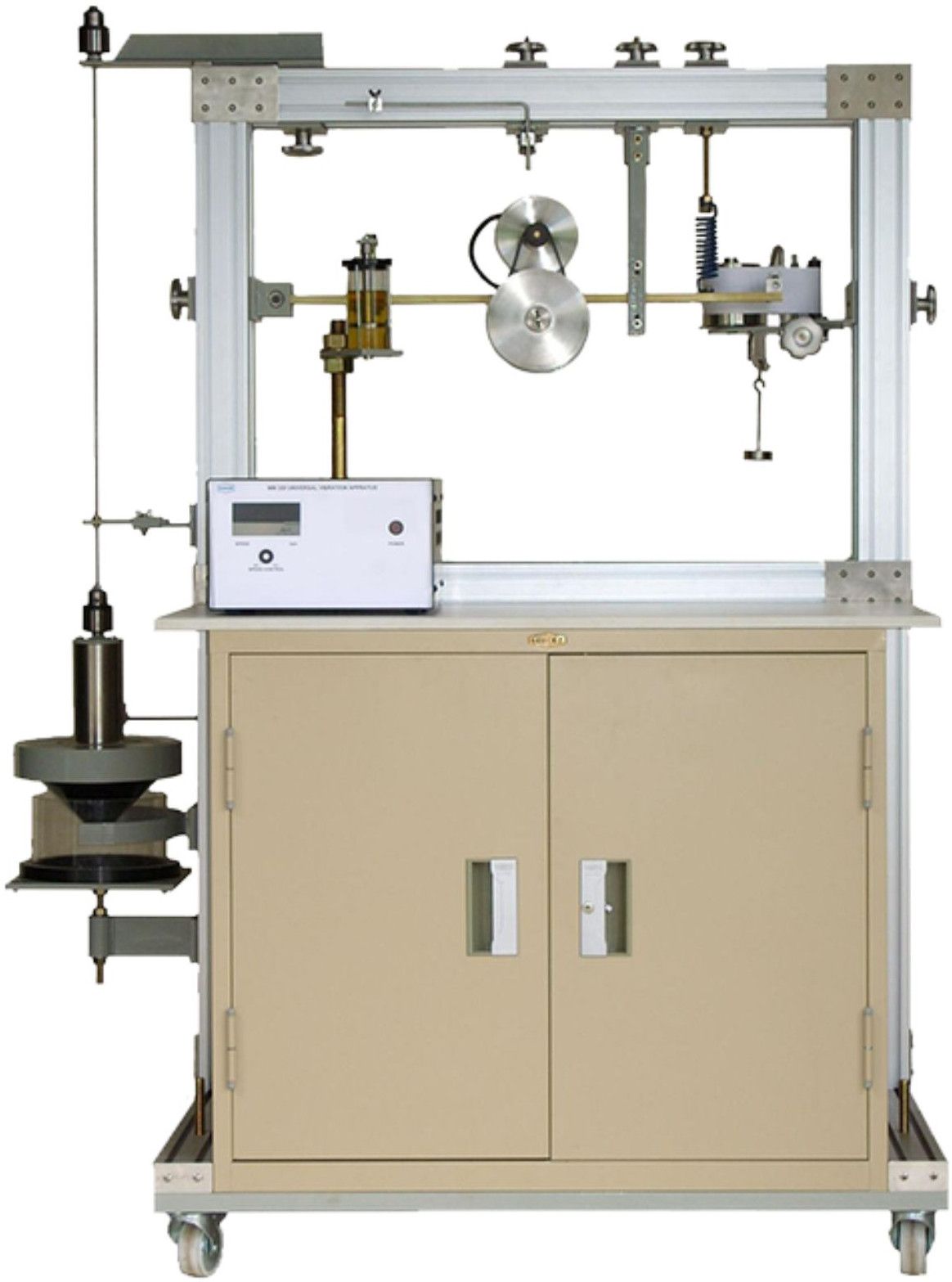
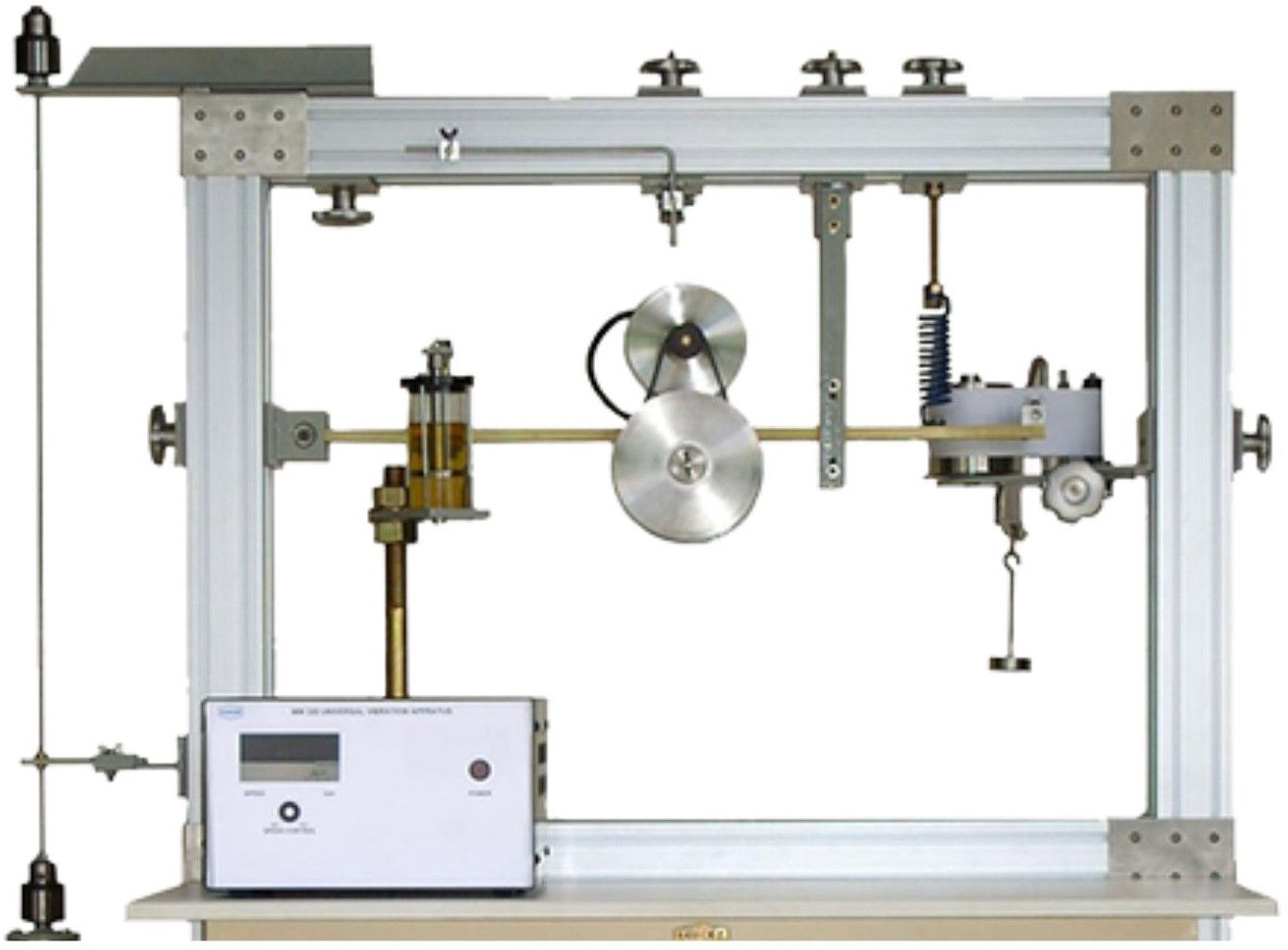
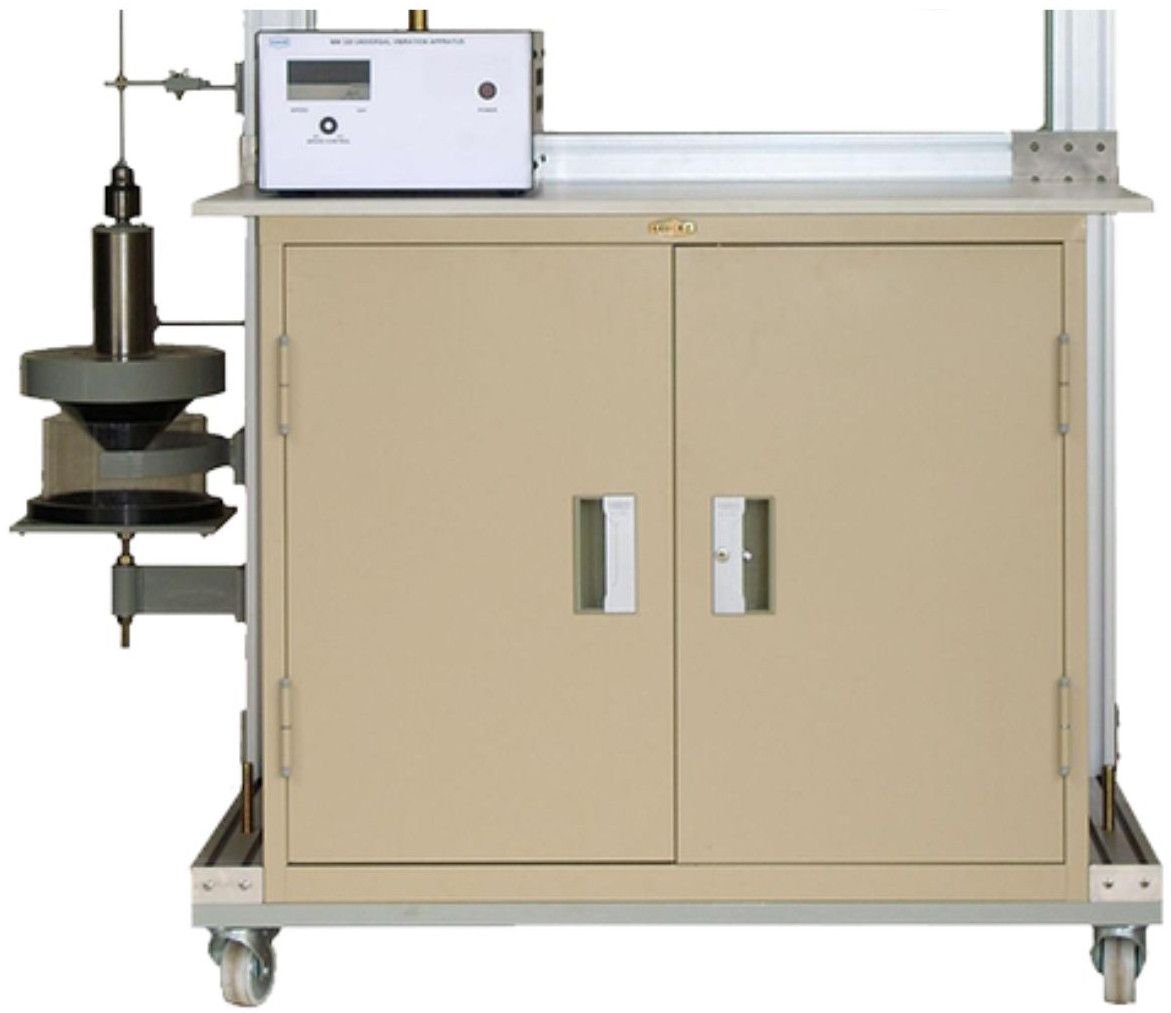
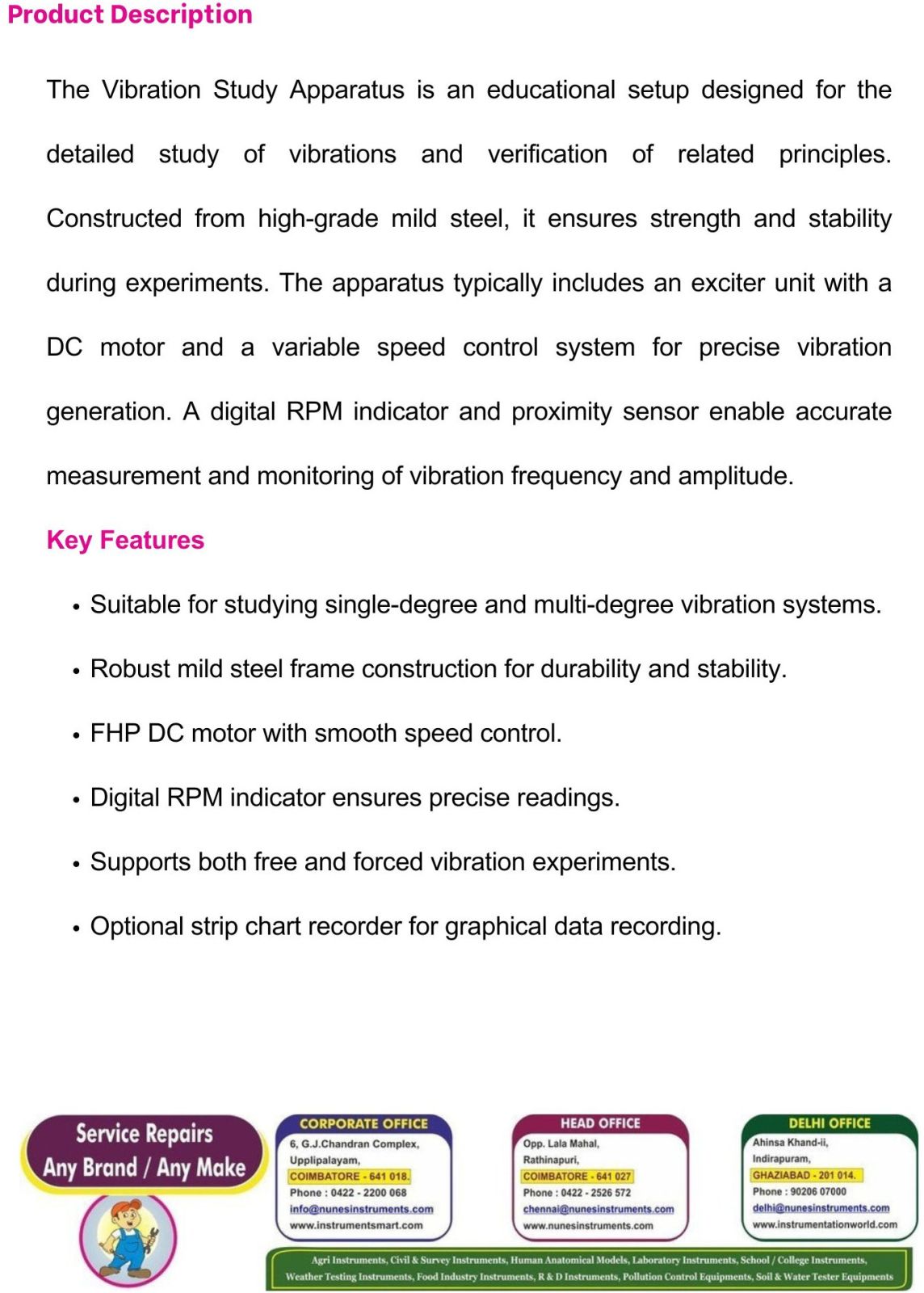
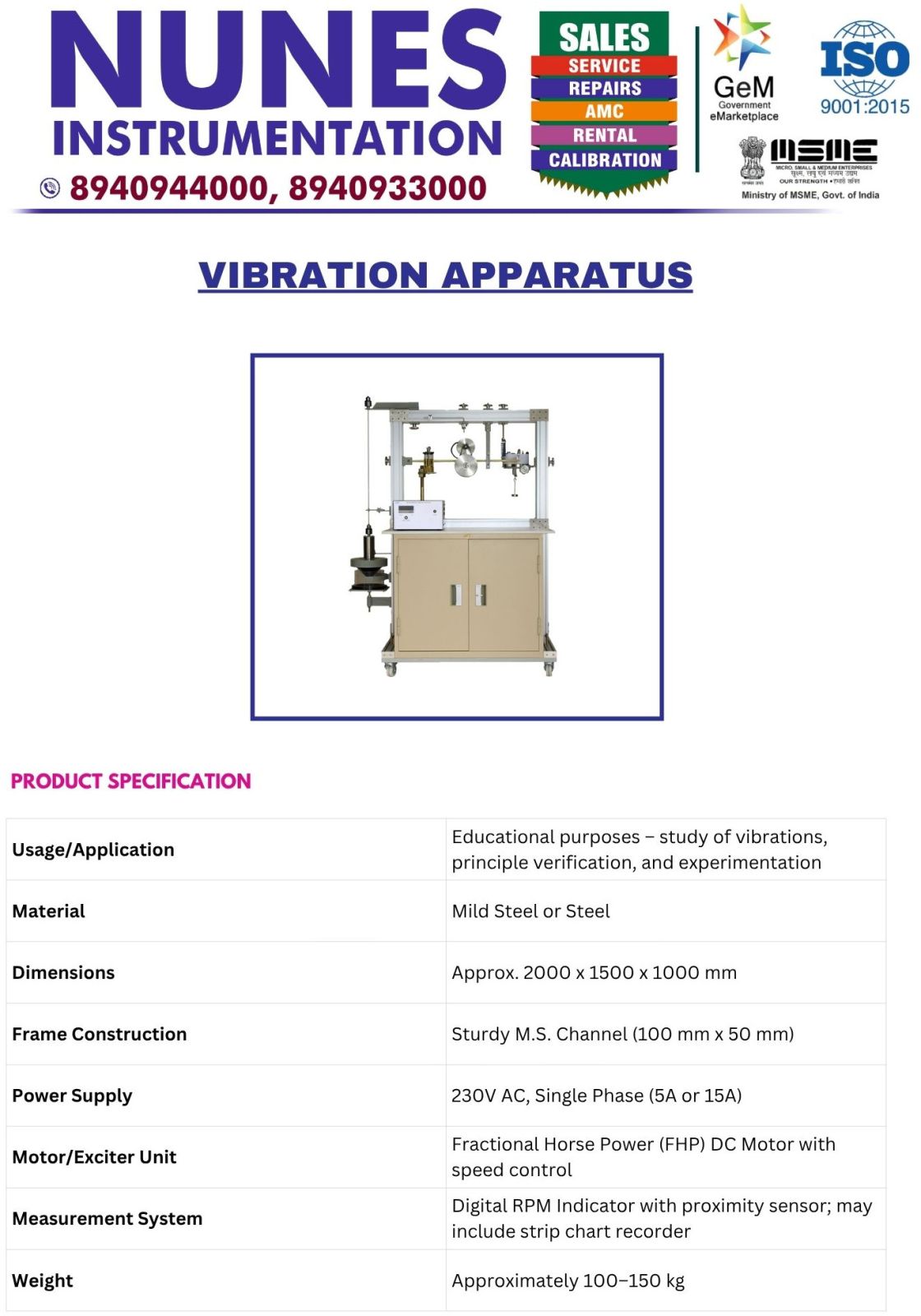
The Vibration Apparatus is designed primarily for educational and laboratory use, enabling the study and experimental verification of various vibration theories. Constructed from durable mild steel or steel, this apparatus ensures structural stability and long service life. It supports a wide range of vibration experiments, including free, forced, torsional, and longitudinal vibrations, making it an essential tool for mechanical and civil engineering studies. The system operates on a standard 230V AC, 5A power supply and features a modular setup that allows for quick assembly and reconfiguration for different experiments.
Key Features
Ideal for studying and verifying vibration principles
Durable steel construction ensures stability
Modular design for easy setup and multiple experiment configurations
Operates on a standard 230V AC, 5A supply
Suitable for educational laboratories and research institutions
Applications
Engineering and technical education institutions
Research and development laboratories
Mechanical and civil engineering experiment setups
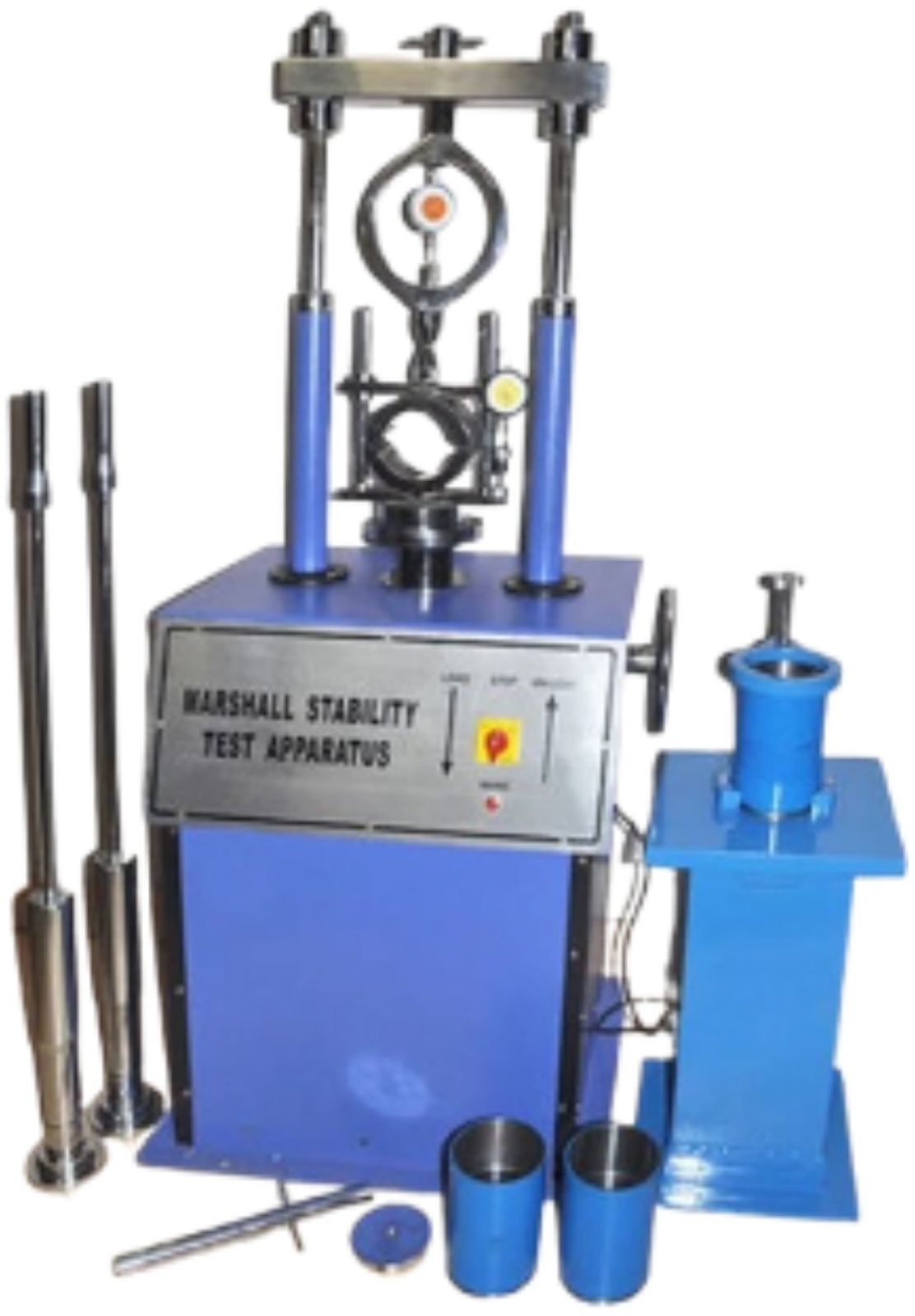
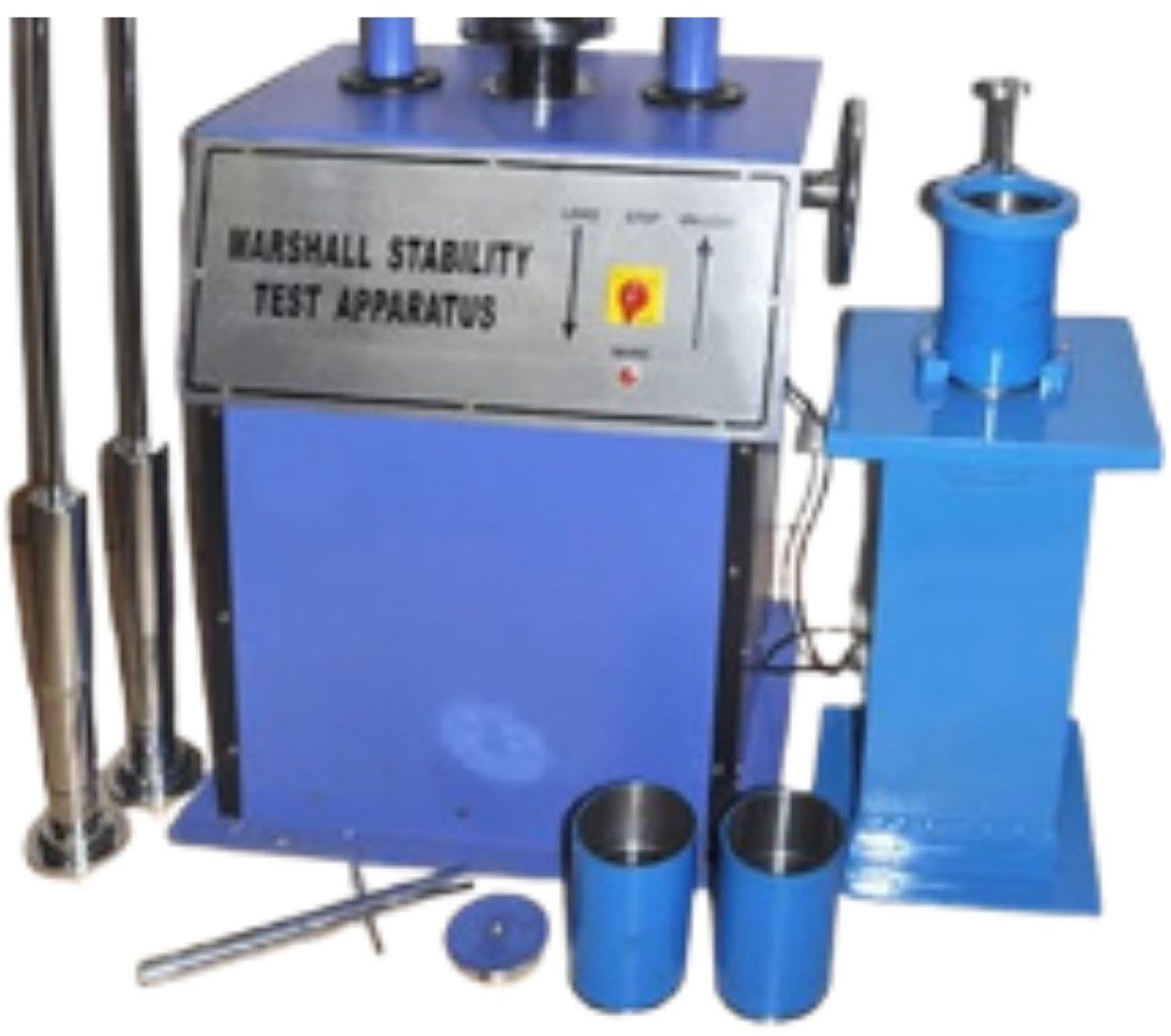
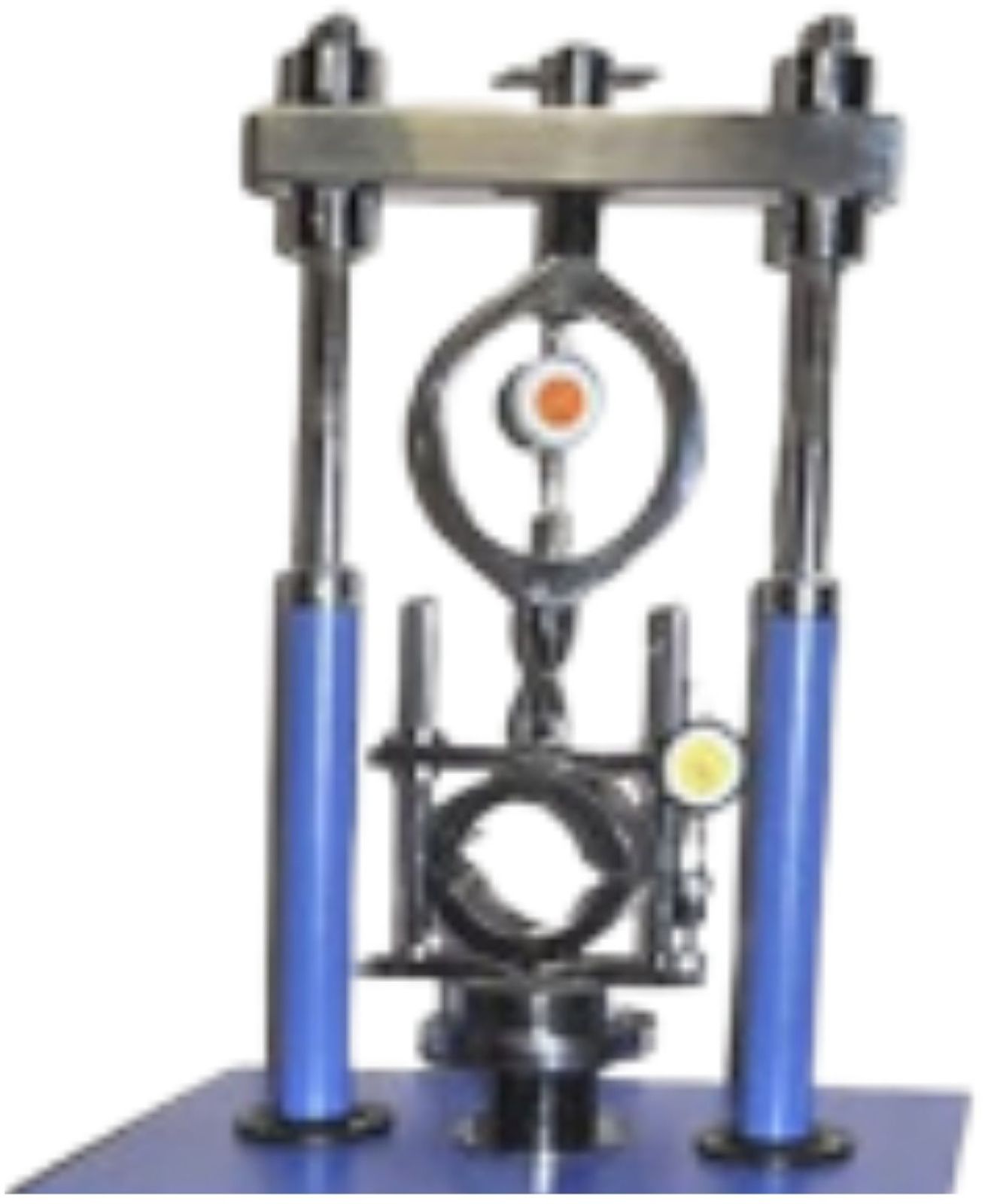
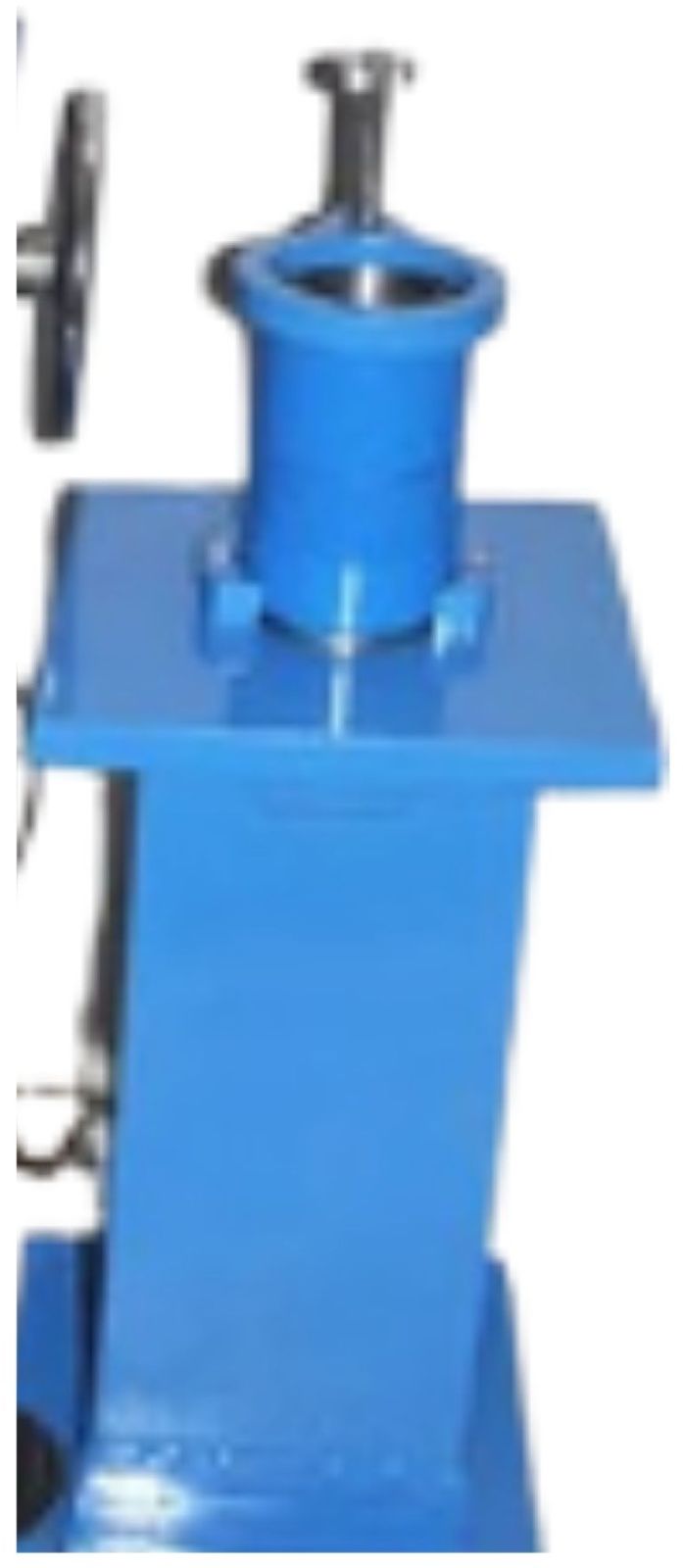
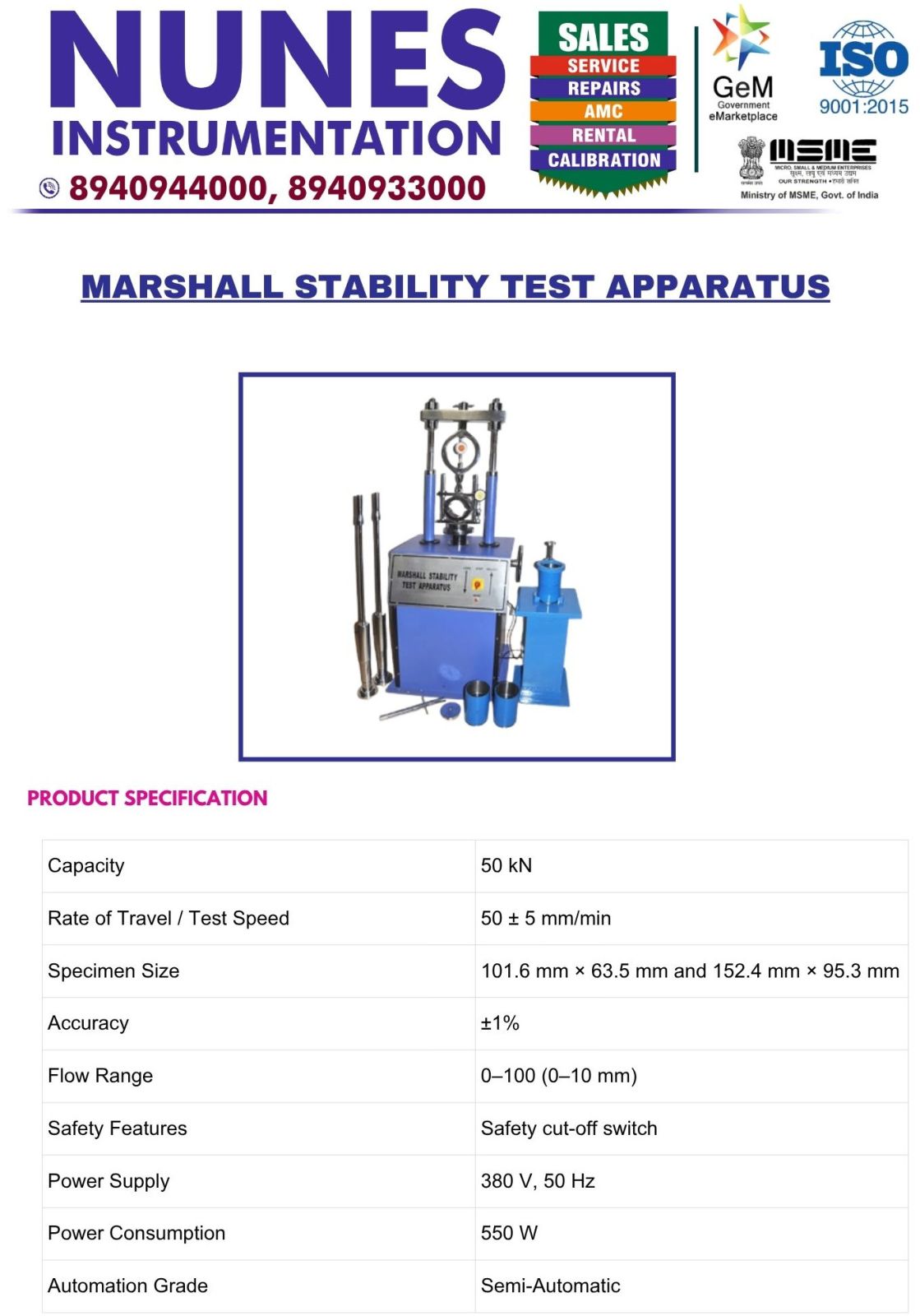
The Marshall Stability Testing Machine is designed for determining the stability and flow values of bituminous mixtures, used in the design and evaluation of flexible pavements. The system measures the resistance of cylindrical bituminous specimens to plastic flow under a specific load, temperature, and deformation rate.
This apparatus features a rugged, heavy-duty frame capable of applying a load up to 50 kN at a controlled rate of 50 5 mm/min. A safety cut-off switch ensures operator protection, and digital indicators precisely display stability and flow values. The unit operates on 380 V AC and is ideal for laboratories engaged in road construction quality control and material testing.
Key Features
High-strength loading frame for accurate and repeatable results.
Controlled loading rate of 50 5 mm/min as per standard requirements.
Safety cut-off switch to prevent overload damage.
Measures Marshall Stability and Flow simultaneously.
Compatible with standard specimen sizes.
Accurate and durable performance with 1% precision.
Suitable for bituminous mix design testing in laboratories.
Applications
Highway and road construction laboratories for mix design testing.
Quality control laboratories for bituminous materials.
Educational institutions for civil engineering training and research.
R&D centers for pavement material performance analysis.
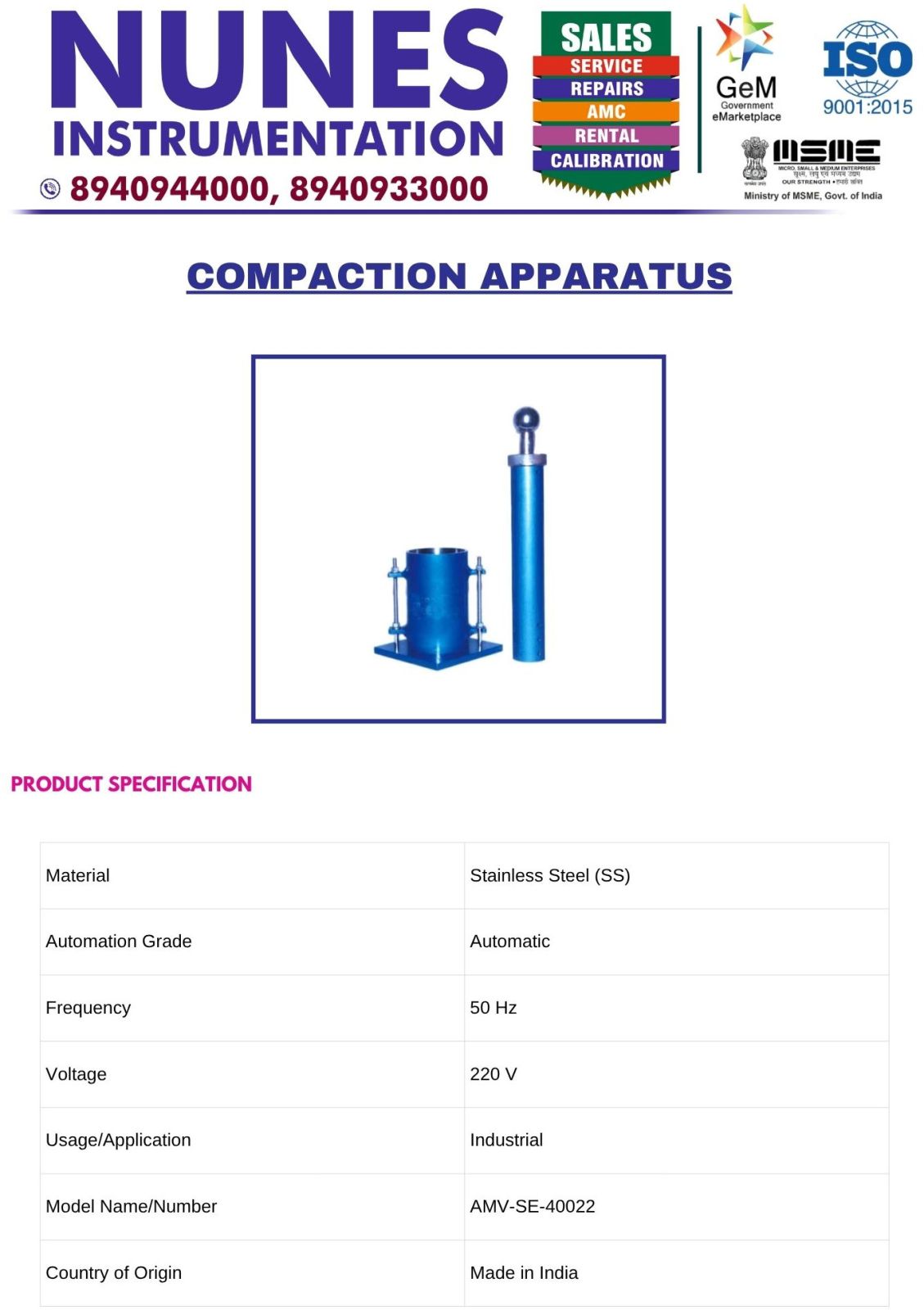
Automatic Industrial Equipment from AMV Scientific Co. is designed for reliable and efficient industrial use. Constructed from durable stainless steel and finished in blue, this fully automatic device operates at 220 V and 50 Hz. Its robust build and automation make it suitable for a variety of industrial applications, ensuring consistent performance and durability.
Key FeaturesAutomatic operation for efficient industrial processing
Durable stainless steel construction
Operates at 220 V, 50 Hz for standard industrial setups
Compact and robust blue design
Made in India with high-quality standards
Ready-to-use and in-stock for immediate deployment
Industrial processing and manufacturing
Laboratory or production automation
Material handling and processing tasks
General industrial usage requiring automated operation
 Mr. Sebastian Francis Nunes (Nunes Instruments)
 11A/1, 11A/2, Sundaram Street, Rathinapuri, Coimbatore, Tamil Nadu - 641027
 https://www.v-techasia.in
 Share us via